
Montessori visual mobiles are often introduced with the intention of supporting calm visual observation. Their effect depends less on the object itself and more on how, when, and where they are offered. Small choices in placement and timing can make a meaningful difference in how a baby experiences them. Below are five common situations families encounter when hanging Montessori visual mobiles, along with gentle considerations that help keep the experience aligned with the baby’s needs.
1. Hanging the mobile above the sleeping area
A baby’s environment carries meaning. Over time, babies begin to associate different places with different states: rest, feeding, care, or alert exploration.
The sleeping area supports settling and rest. Visual mobiles, on the other hand, belong to moments of quiet wakefulness. For this reason, they are best placed in the baby’s waking space — often a simple movement area on the floor — rather than above a sleep surface.
When the mobile appears consistently in the same waking context, the baby encounters it as part of an alert, observant state rather than as background stimulation.
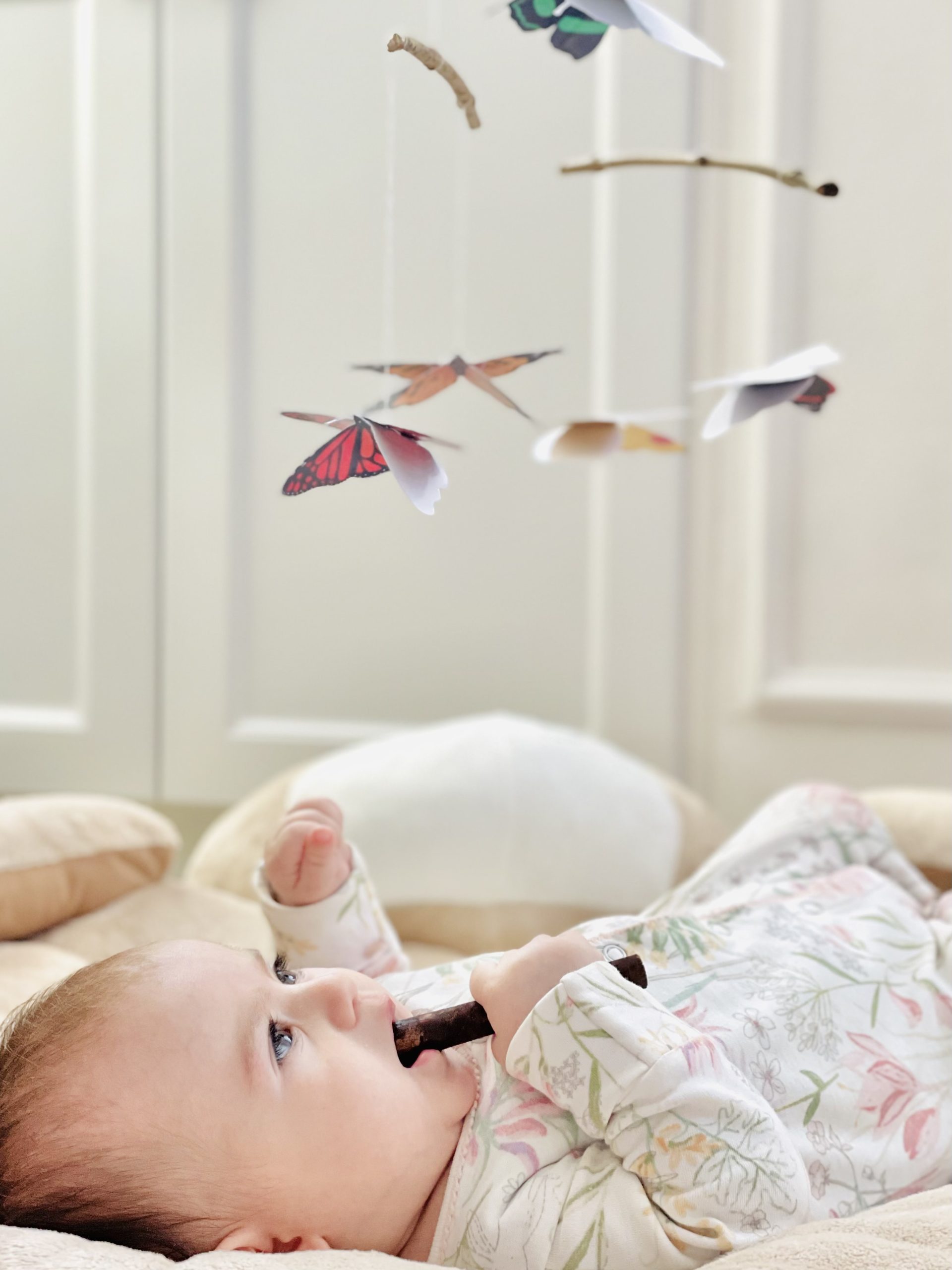
For readers who would like to see how a baby’s waking space can evolve over time, The Kavanaugh Report offers a thoughtful, week-by-week look at a Montessori movement area.
2. Offering the mobile when the baby is not ready
Observing a mobile requires effort. Visual perception is still organising, and sustained looking happens most easily when the baby is comfortable and regulated.
A baby who is hungry, overtired, or unsettled will usually turn away quickly. This is not disinterest; it is self-regulation. The most receptive moments tend to be when the baby is awake, fed, and calm. Observation often ends naturally when attention fades, and that is part of the process.
Vision development ultimately happens in the brain which results in serious brain exercise, neurons connecting and re-connecting all over the place. Not to mention the physical effects. Muscles are strengthening, movements are being controlled, sequences of actions are executed… This is not easy! You need your baby fully awake, well-fed and well-rested for this. A grouchy, hungry, tired baby will not want to do all this work.
If you’d like to know more about the reactions babies make and how they let us know when they are ready to something else, read this post.
3. Hanging Montessori visual mobiles too close to the face
When a mobile is positioned too close, the baby cannot take in the whole form comfortably. Visual materials work best when there is enough distance for the eyes to move and adjust.
A common guideline is to hang the mobile above the baby’s chest, not directly over the face, with a minimum distance of around 30 cm / 12 inches.
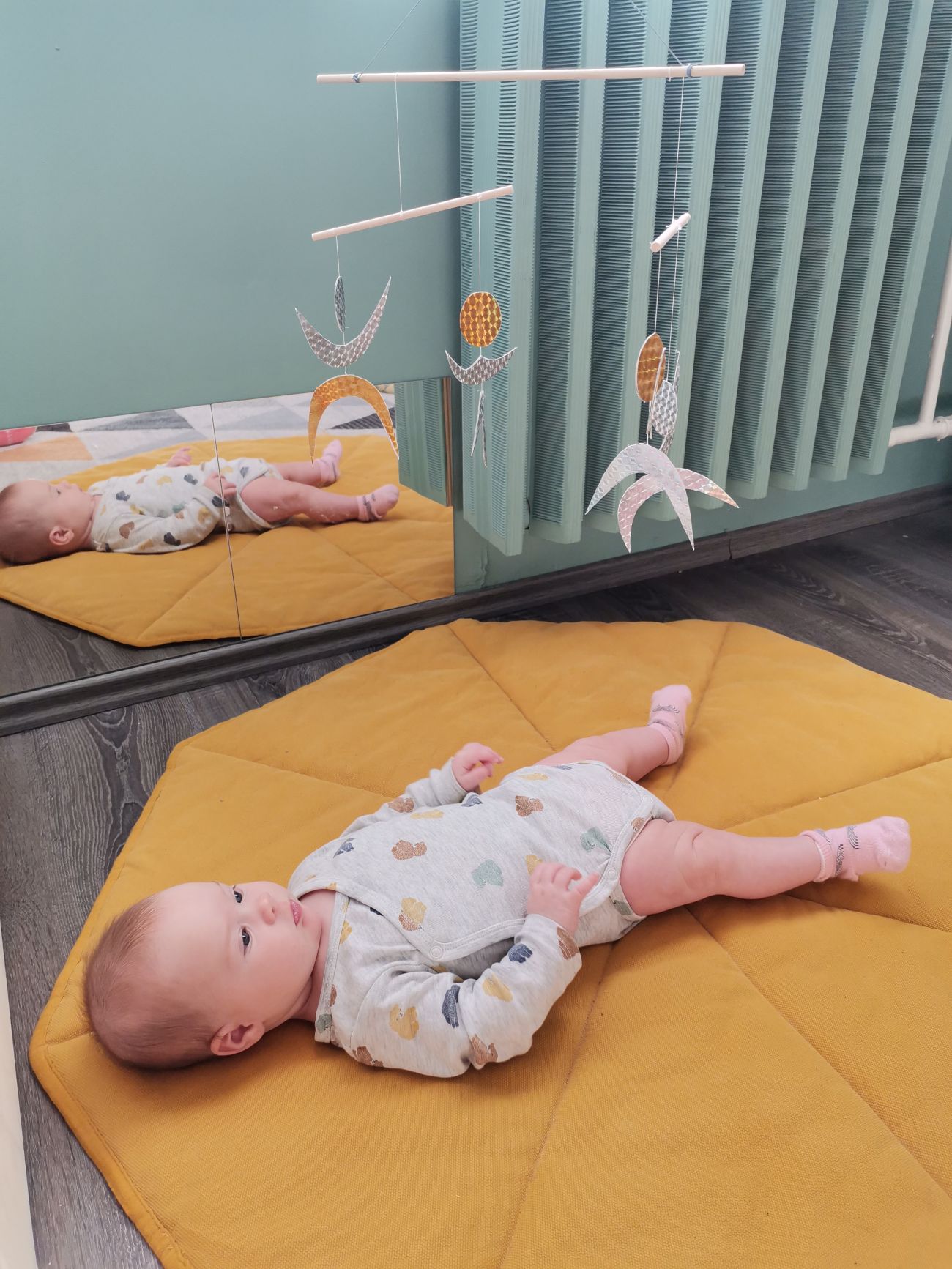
Because visual mobiles are intended to be observed rather than handled, sufficient distance also supports safety. Hanging the mobile above the baby’s chest, rather than within reach, helps ensure it remains a purely visual element and reduces the risk of accidental pulling or entanglement. As with all materials in a baby’s environment, brief visual checks before use help maintain a calm and secure setup.
4. Leaving the baby unattended with a mobile
Visual mobiles can be very compelling. As babies grow, some will naturally attempt to reach toward what they see. For this reason, visual mobiles are always offered with supervision. They are removed when attention shifts toward physical interaction or when the baby needs rest.
Observation remains the focus; the adult’s role is to notice when conditions change.
5. Leaving the mobile in place all the time
Sometimes a mobile remains hanging continuously, becoming part of the background rather than a moment of focused observation. When a mobile is always present, the baby may stop noticing it altogether. Visual observation is most meaningful when it appears during calm, wakeful moments and disappears when attention fades or rest is needed. Offering the mobile intentionally — and then removing it — helps preserve its clarity as a visual experience, rather than letting it blend into the environment as visual noise.
This is not about timing sessions or creating structure. It is about noticing when the baby is receptive, and allowing the experience to begin and end naturally.
Final thoughts
Hanging Montessori visual mobiles is less about precision and more about awareness. When the environment supports calm wakefulness, appropriate distance, and supervision, the mobile can remain what it is meant to be: a quiet visual presence.
What matters most is not how long the baby looks or what they do, but whether the experience feels settled, contained, and responsive to the baby’s state.
For related reading, you may find these helpful:
- Sensory Play for Babies: Observation Before Action
- Montessori Visual Mobiles – A Complete Guide