
Montessori Visual Mobiles (0–3 Months) – Baby Visual Development

Montessori visual mobiles are the first materials introduced to newborns, supporting early visual development through contrast, movement, and simplicity. Each mobile is designed to match a specific stage, allowing the baby to gradually refine focus and tracking without overwhelm.

In this section, you’ll find when and how to introduce each visual mobile, and how they support concentration in the first weeks and months.

Montessori Seagull mobile with broad-winged bird forms suspended in gentle horizontal glide

The Montessori Seagull Mobile – Sustained Movement and Visual Stability

As a baby’s visual system becomes more organised, attention begins to hold for longer periods. Tracking is no longer brief and tentative. The eyes can now follow movement across a wider visual field with greater stability. It is often at this stage that the Montessori Seagull mobile is introduced. Like all Montessori visual mobiles, it […]

The Montessori Seagull Mobile – Sustained Movement and Visual Stability Read More »

Montessori Gobbi Mobile in soft blue gradient tones hanging from a wooden baby gym beside a mirror – Montessori sensory activity supporting newborn vision and depth perception.

The Montessori Crocheted Gobbi Mobile: A Visual Bridge Between Seeing and Moving

The Montessori crocheted Gobbi mobile often appears at a moment in early development that is easy to overlook. Positioned between purely visual materials and later interaction-based objects, the crocheted Gobbi mobile supports a subtle developmental transition where visual attention remains primary while the body begins to respond through gentle, unintentional movement. Its role is not

The Montessori Crocheted Gobbi Mobile: A Visual Bridge Between Seeing and Moving Read More »

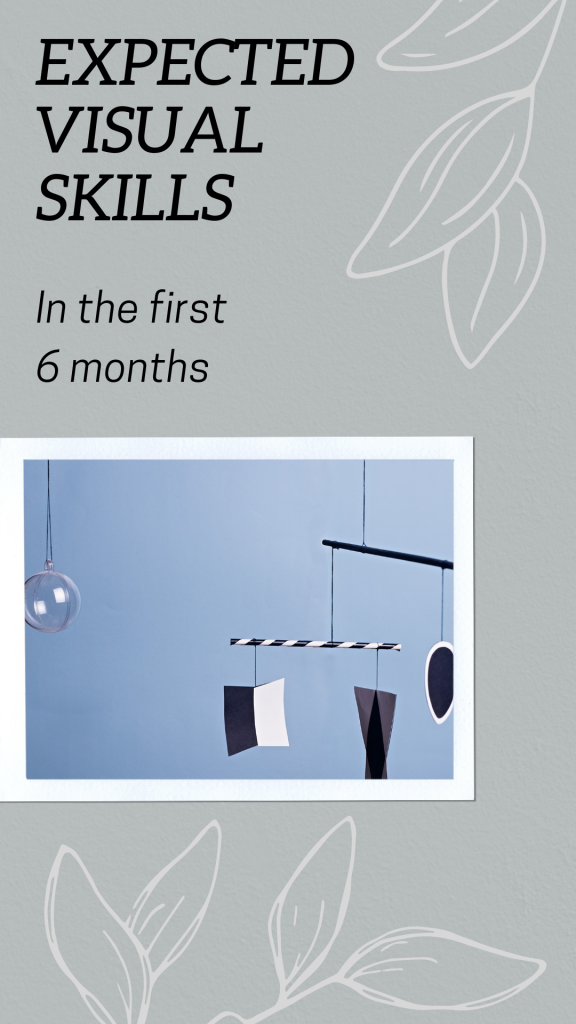
expected-visual-skills in the first 6 months

Babies’ Visual Development in the First Months

When a baby is born, the world does not appear as a clear or detailed place. Vision develops gradually, and in the earliest months it serves a very different purpose than it will later in childhood. Early visual development is not about stimulation or active exploration. It is about orientation, regulation, and quiet connection. Through

Babies’ Visual Development in the First Months Read More »

DIY-Montessori-Animal-Mobiles-set

Montessori Animal Mobiles – Extending Visual Observation

As the first visual mobiles complete their quiet cycle, something subtle shifts. A baby who once focused on contrast, colour gradation, and geometric movement begins to widen their field of interest. Vision no longer rests only on abstract form. It gradually opens toward recognisable shape and flowing motion. Montessori animal mobiles often appear at this

Montessori Animal Mobiles – Extending Visual Observation Read More »

DIY-Montessori-Whale-mobile

Montessori Whale Mobile -Calm Movement and Early Visual Tracking

As a baby’s vision begins to organise, movement becomes increasingly interesting to observe. Objects that glide slowly through space allow the eyes to practise following motion and maintaining focus. Among the animal mobiles, the Montessori Whale mobile stands out for its calm movement and simple, recognisable shapes. Its calm colours and slow movement invite the

Montessori Whale Mobile -Calm Movement and Early Visual Tracking Read More »

DIY-Montessori-Butterfly-mobile

Montessori Butterfly Mobile – Colour, Movement, and Advanced Visual Tracking

Among the Montessori visual mobiles, the Montessori Butterfly mobile is often the most visually striking. Bright colours, delicate shapes, and gentle movement make it captivating not only for babies but for adults as well. By the time this mobile is introduced, babies have already spent several weeks observing earlier Montessori mobiles. Their visual system has

Montessori Butterfly Mobile – Colour, Movement, and Advanced Visual Tracking Read More »

DIY-Montessori-Swallows-main

Montessori Swallows Mobile – Sustained Horizontal Movement

As a baby’s vision becomes more organised, their ability to follow movement gradually strengthens. What begins as brief glances slowly develops into longer moments of focused observation. Earlier Montessori mobiles introduce the foundations of visual perception. The Munari mobile presents strong contrast, while the Octahedron mobile begins to invite visual tracking. Later mobiles gradually refine

Montessori Swallows Mobile – Sustained Horizontal Movement Read More »

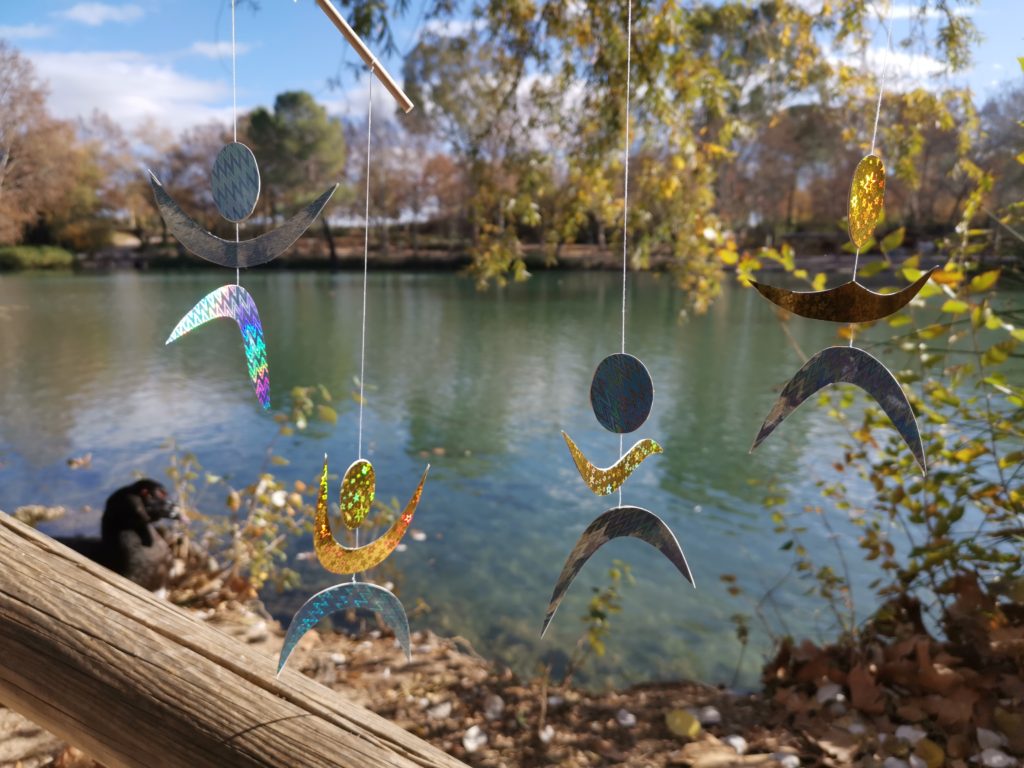
The Dancers mobile outside

The Montessori Dancers Mobile and the Emergence of Depth and Movement (8–12 Weeks)

The Montessori Dancers mobile is typically introduced around 8 to 12 weeks, when a noticeable shift has already taken place in how a baby observes the world. The eyes begin to follow movement through space, and attention can settle for longer, more connected moments. At this stage, many parents think about moving beyond the earlier

The Montessori Dancers Mobile and the Emergence of Depth and Movement (8–12 Weeks) Read More »

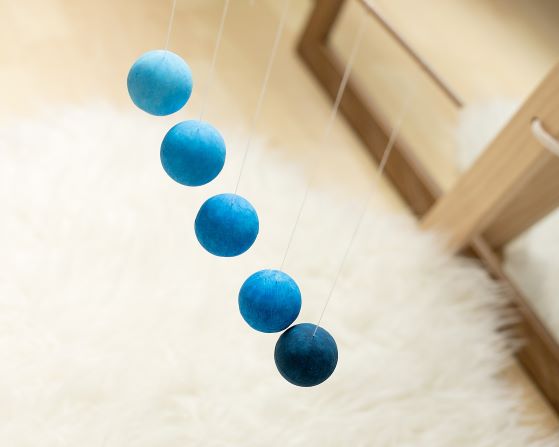
The DIY Montessori Gobbi mobile

The Montessori Gobbi Mobile -When to Use It and How It Develops Colour Vision

The Montessori Gobbi mobile is often the moment when parents notice a clear change in how their baby looks. The gaze lingers longer. The eyes move more deliberately. Attention, while still fragile, begins to settle. Parents often wonder when to introduce the Gobbi mobile — and this shift is usually the sign that the moment

The Montessori Gobbi Mobile -When to Use It and How It Develops Colour Vision Read More »

The Montessori Octahedron Mobile — The First Colour Mobile (4–6 Weeks)

In the weeks following birth, a baby’s visual world begins to change. Around 4 to 6 weeks, what was once limited to light, contrast, and simple movement begins to shift. Parents often notice that the baby’s gaze lingers differently — as if something new is starting to register. Around this time, many Montessori-informed environments introduce

The Montessori Octahedron Mobile — The First Colour Mobile (4–6 Weeks) Read More »