
One of the first things many parents notice when introducing a Montessori mobile is how unexpectedly focused babies become. A newborn who was previously moving constantly may suddenly grow still. Eyes fix carefully on the shapes above. Tiny movements slow down. Sometimes the baby watches quietly for several minutes without looking away.
These early baby reactions to Montessori mobiles often surprise adults because the mobiles themselves appear so simple. But for babies in the first months, they provide exactly the kind of visual experience the developing brain is ready to process. The response is usually not excitement in the way adults often imagine it. It is concentration.
Montessori mobiles are designed to follow visual development gradually. Instead of overwhelming babies with constant stimulation, lights, sounds, or fast reactions, they isolate one visual experience at a time — contrast, colour, movement, reflection, transparency, or depth. This allows babies to focus more comfortably on what they are seeing without needing to process too much sensory information at once.
For many babies, simply observing a mobile is already deeply engaging work. Focusing the eyes, tracking movement, and organising visual attention require enormous effort in the first months. What appears passive from the outside is often intense developmental activity internally.
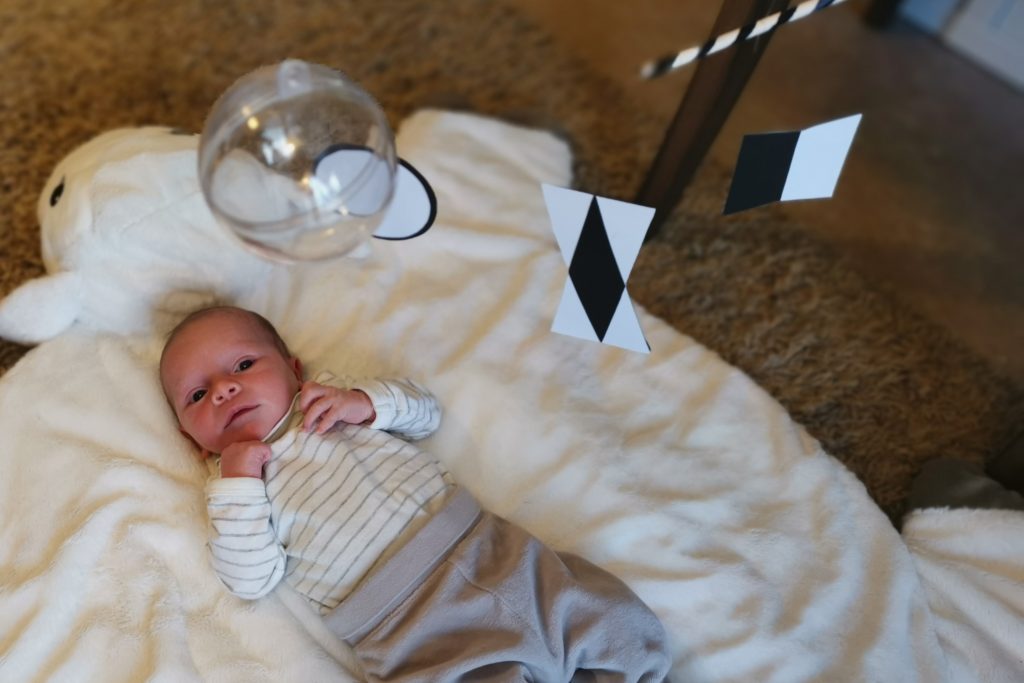
Early baby reactions are often surprisingly quiet
Very young babies sometimes react quietly at first. A baby only a few days old may not immediately look toward the mobile at all. Head movement is still extremely limited in the beginning, and the mobile may not yet fully fall into the baby’s line of sight. Vision is also developing rapidly during this stage, so babies often notice only the lowest hanging element first before gradually becoming able to observe the entire mobile more comfortably over time.
Even short periods of observation can require surprising effort. Babies may briefly focus, lose focus, and refocus again while their visual system is still learning to coordinate itself. Some babies appear slightly cross-eyed during concentration in the early weeks, which is completely normal while visual tracking is still developing.
Over time, baby reactions to Montessori mobiles often become steadier and easier to recognise. Observation lasts longer. The eyes follow movement more smoothly. Concentration deepens.
This is one reason the Montessori mobile by age sequence matters. Different mobiles support different stages of visual development as babies gradually become ready for more complex visual information. The Munari mobile supports early contrast perception, the Octahedron introduces colour and depth, the Gobbi refines visual tracking, and the Dancers mobile later supports more advanced movement perception and spatial awareness.
Stillness is often a sign of concentration
One reaction many parents notice especially strongly is stillness. A baby who normally moves constantly may suddenly stop kicking, waving arms, or turning the head while observing the mobile. The face becomes focused. The eyes remain fixed carefully on movement above. This stillness can feel surprising because babies usually appear physically disorganised in the first weeks. Yet concentration often appears long before physical coordination fully develops.
As babies grow, the length of concentration frequently increases as well. What begins as a few moments of visual attention may gradually become much longer periods of focused observation. Long before babies can manipulate objects intentionally, they are already building attention through observation.
For many tired parents, these quiet moments become small pauses within the rhythm of the day too.
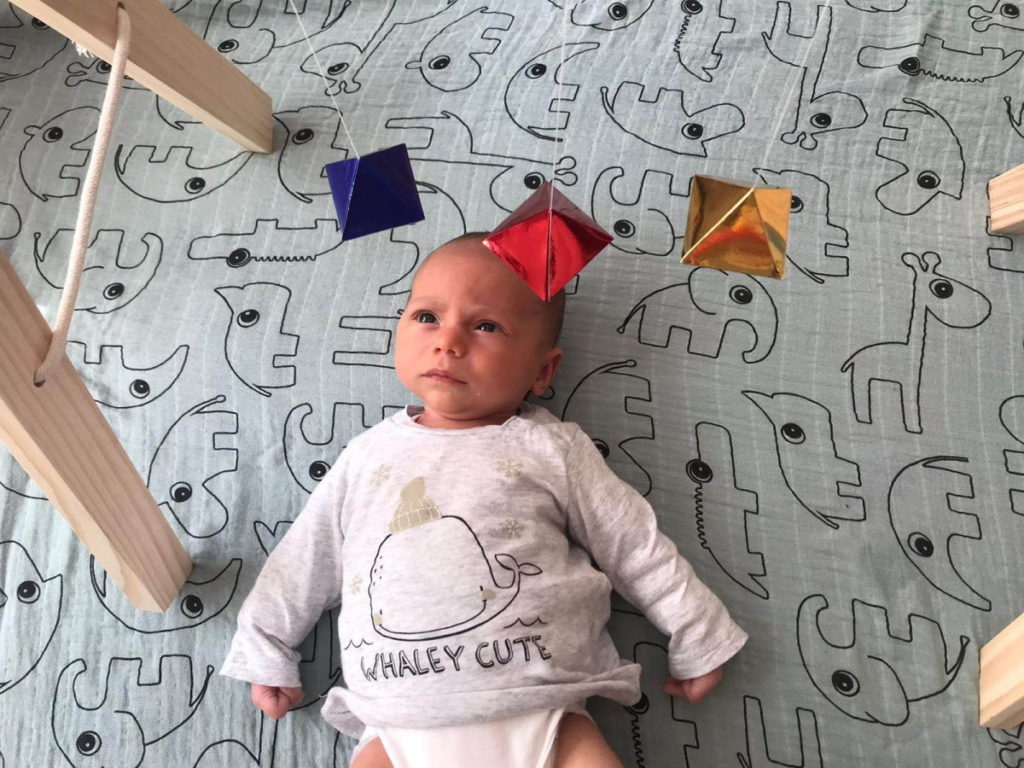
Older babies often become more physically expressive
As babies grow older, their reactions to Montessori mobiles often become more physically expressive. Legs kick more strongly. Hands open and close. Arms move with excitement. Some babies begin vocalising, smiling, or babbling while watching the movement above them.
This growing physical response reflects development itself. Visual attention is gradually becoming connected with movement, body awareness, and eventually intentional interaction with the environment.
The Dancers mobile often makes this shift especially visible. By this stage, babies are usually tracking movement more confidently and beginning to notice transparency, reflection, changing distance, and layered movement in a more organised way. Observation no longer appears entirely passive. The whole body begins participating more visibly in what the baby sees.
Montessori mobiles support more than visual development
Although Montessori mobiles are designed primarily for visual development, babies often respond with their entire bodies. Observation encourages head turning, which gradually strengthens neck muscles. Kicking and shifting movements engage the core. Visual focus slowly begins connecting with movement awareness and coordination.
This whole-body response happens because a baby’s early physical movements and sensory observations are deeply connected, with vision acting as a primary motivator for physical discovery (Zero to Three). Eventually, babies may also begin showing interest in reaching toward movement itself.
This does not mean mobiles should become grasping toys. Montessori visual mobiles remain visual materials and should always stay safely out of reach. But the body’s growing response to visual attention is part of what makes these early experiences so developmentally rich.
The goal is not entertainment or constant stimulation. It is to offer visual experiences that babies can process deeply and comfortably at their own pace.
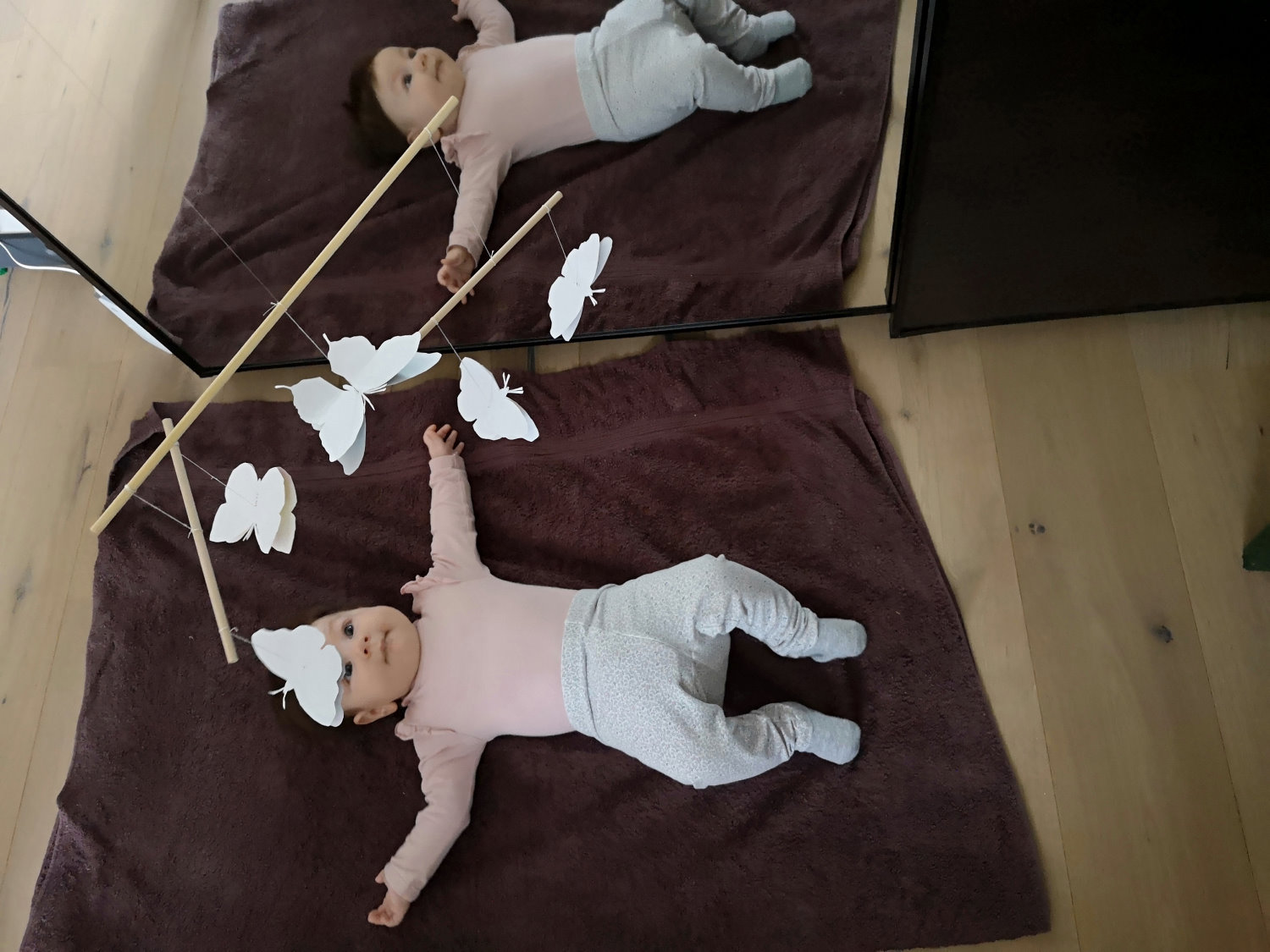
Why simpler mobiles often hold attention longer
Many modern baby toys are designed to constantly capture attention through lights, sounds, music, and fast reactions. Montessori mobiles work differently. Rather than competing continuously for attention, they offer slower and clearer visual experiences that babies can return to repeatedly. This often allows concentration to deepen naturally instead of being constantly redirected.
In the first months especially, babies are already processing an enormous amount of sensory information. Simpler visual experiences are often easier to organise and observe comfortably. This is one reason baby reactions to Montessori mobiles can appear surprisingly intense despite the mobiles themselves remaining visually calm and simple.
The reactions babies have to Montessori mobiles are often quieter — and more meaningful — than many parents expect. Some babies become completely still. Others kick excitedly or begin vocalising. Some watch only briefly at first before gradually building longer concentration over time. These reactions are not performances or milestones to achieve. They are simply signs that babies are actively processing movement, contrast, colour, depth, and visual relationships in the way their developing brains are ready to experience them.
This is part of the reason Montessori mobiles continue to feel so powerful despite their simplicity. They do not ask babies to do more than they are ready for. They simply meet visual development where it already is.
Final thoughts
Baby reactions to Montessori mobiles often appear simple from the outside, but they reflect an enormous amount of developmental work internally. Stillness, concentration, kicking, vocalising, visual tracking, and growing body awareness are all part of how babies gradually begin organising their relationship with movement and the world around them.
Montessori mobiles do not try to entertain babies constantly or overwhelm them with stimulation. Instead, they offer visual experiences that match development more gradually and clearly. Sometimes the most meaningful reactions are also the quietest ones.
Further Reading
If you’d like to understand how visual development and movement continue unfolding through the first months, these articles may also be helpful:
- Flying With a Baby
How calmer environments, rhythm, and observation can help support babies even during unfamiliar or overstimulating situations. - Crochet Baby Toys – Safety Tips Every Parent Should Know
What to look for when choosing crochet materials for babies, including safety, supervision, and developmental appropriateness.