
When people hear “Montessori baby routine,” they sometimes imagine a strict schedule — fixed feeding times, rigid naps, carefully timed activities. That is not what Montessori means.
A Montessori baby routine is not about control. It is about rhythm.
In the first months of life, babies are not meant to follow the clock. They are learning to regulate sleep, hunger, movement, and attention. A Montessori-informed routine does not impose structure from the outside. It gradually shapes the day around the baby’s natural patterns, offering predictability without rigidity.
The aim is simple: security through rhythm, freedom within that security.
Understanding Montessori Principles for Infants
Montessori for babies begins with three core ideas. Respect for the child’s pace. Respect for movement. Respect for concentration.
In practice, this means slowing down everyday care.
Feeding is not something to rush through. Dressing is not a task to complete quickly. Bathing is not merely functional. These daily moments are the baby’s primary experiences of the world.
Routine emerges from observation. When does your baby seem most alert? When does attention fade? When does their body begin to slow? Rather than imposing a structure, the parent begins to notice patterns and gently support them.
The rhythm grows from what is already there.
Why Rhythm Matters More Than Schedule
Babies thrive on predictability — but not on strict timetables.
When certain sequences repeat — waking, feeding, movement, rest — the baby begins to anticipate what comes next. The body relaxes because the world feels coherent. Transitions become smoother, not because they are forced, but because they are familiar.
It is not the exact hour that matters. It is the order of experiences.
A predictable rhythm supports sleep, concentration, and emotional regulation. But these are natural outcomes. They are not goals to chase.
The arrival of a baby often changes routines for the whole family, including older siblings. Creating predictable moments of connection can help children adjust during this transition. You may also find Helping Your Firstborn Feel Included When a New Baby Arrives helpful.
Key Elements of a Montessori Baby Routine
1. Morning Transition
Rather than abrupt waking, allow the baby to transition gradually.
Soft light. Quiet voice. Slow movements.
A diaper change becomes a moment of connection. Dressing becomes a conversation. Narrate what you are doing. Pause. Wait for small responses.
This is not about stimulation. It is about orientation — helping the baby enter the day calmly.
2. Feeding
Feeding follows hunger cues in the early months. Over time, it begins to settle into a gentle pattern. What remains constant is presence.
Eye contact. Slowness. Responsiveness.
As solids are introduced, the child gradually participates. But even before that stage, feeding is more than nourishment. It is connection.
Care moments — diaper changes, dressing, bathing — follow the same principle. They are not interruptions to the day. They are the day.
3. Movement as the Anchor of the Day
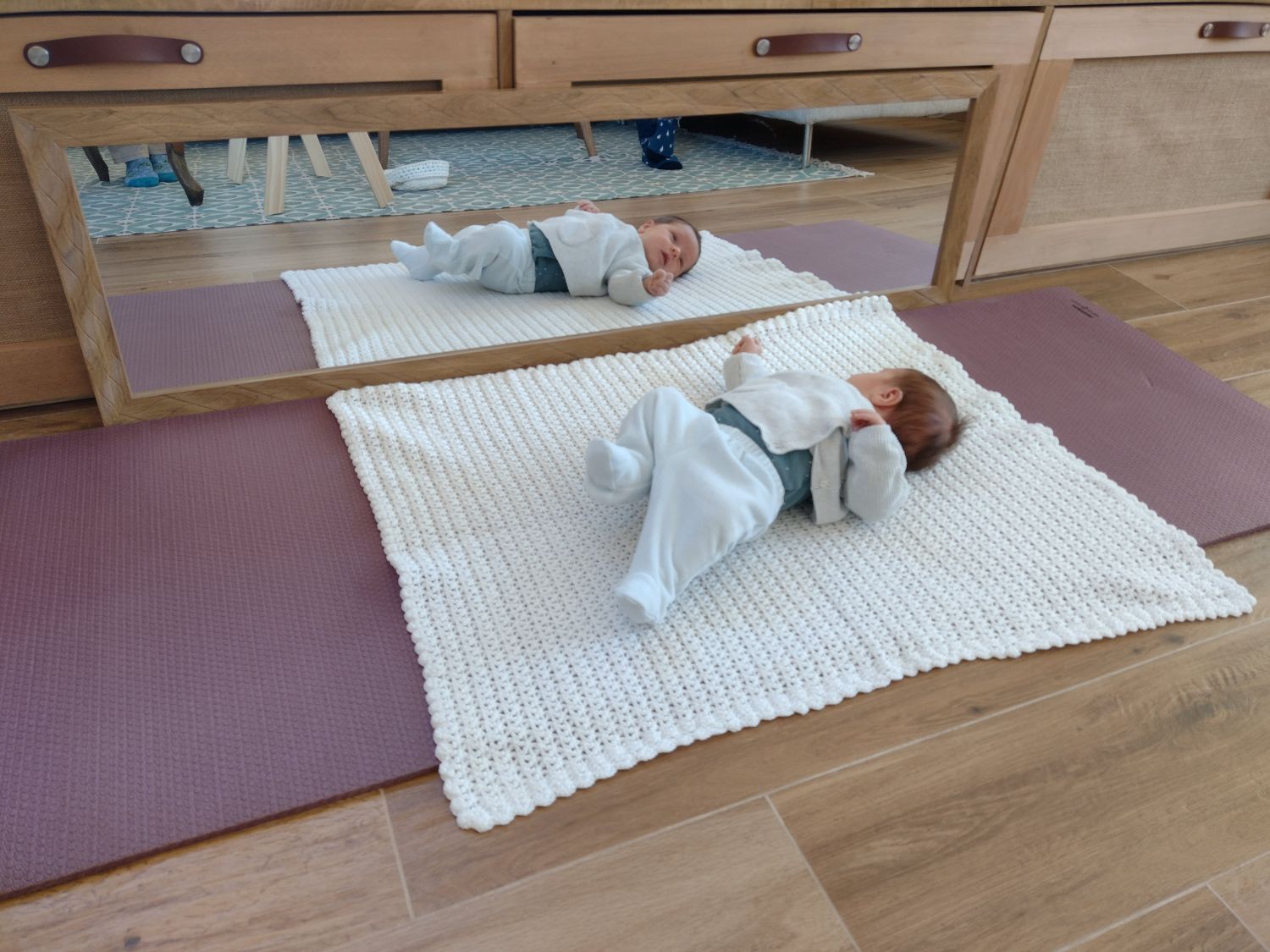
In a Montessori-informed home, the centre of the baby’s routine is not an activity table or a set of toys. It is the movement space.
Time on a firm floor surface allows rolling, stretching, reaching, observing. A visual mobile may hang above. A mirror may reflect movement. The adult remains nearby — present, but not directing.
Independent play at this stage is quiet. It may look like stillness. It may look like brief, repeated movements. This is not passive time. It is work.
During periods of alertness, providing a prepared environment is essential. You can incorporate some activities especially for newborns to offer purposeful visual and physical engagement that respects the infant’s natural development.
The routine makes space for it every day.
4. Rest
Sleep cues matter more than the clock. Yawning. Slower movement. Turning the head away. A consistent pre-nap sequence — dimming the light, a quiet phrase, gentle handling — helps the baby recognise that rest is coming.
Some families choose a Montessori floor bed, which allows continuity between movement and sleep space.
The goal is not perfect naps. The goal is respectful transitions.
5. Evening Rhythm
As the day closes, stimulation decreases.
Bath.
Massage.
Quiet song.
Soft voice.
Repetition creates recognition. Recognition creates security.
Over time, the body begins to associate these signals with sleep.

Frequently asked questions
Where do I start?
Start with observation.
Notice when your baby is naturally alert. Notice when they withdraw. Build the day around those moments.
Do not introduce everything at once. Small adjustments are enough.
What if my baby doesn’t “follow” the routine?
The routine follows the baby — not the other way around.
Flexibility is not failure. If your baby is hungry earlier, feed them. If they are tired sooner, rest.
Rhythm adapts. It does not dictate.
Can multiple caregivers maintain a Montessori routine?
Yes — if the principles are shared.
Explain the importance of:
- calm transitions
- free movement time
- responding to cues
- limiting overstimulation
Consistency of approach matters more than identical timing.
How do I handle disruptions (travel, illness)?
Keep anchors.
Even if the day changes, maintain small constants:
a familiar phrase before sleep
a consistent feeding posture
a quiet moment before rest
Security comes from recognisable patterns, even in unfamiliar places or during travelling.
Common Mistakes to Avoid
- Over-scheduling
- Confusing stimulation with enrichment
- Filling every quiet moment
- Interrupting focused observation
- Limiting floor time in favour of equipment
Montessori rhythm is spacious, not busy.
What Does a Working Routine Look Like?
It does not look perfect. It looks like:
- a baby calmly observing a mobile
- unhurried diaper changes
- time on the floor
- predictable transitions
- flexibility when needed
You may notice:
longer stretches of focus
smoother sleep transitions
less fussiness
greater body awareness
But these are by-products — not goals.
Final Thoughts
A Montessori baby routine is not a productivity system. It is a way of honouring the baby’s biological need for rhythm, repetition, and free movement.
You do not need a perfect schedule.
You need attentiveness.
Start small. Observe closely. Adjust gently. Development unfolds in its own time.
And that is enough.
Further reading
If you’d like to explore how a Montessori baby routine connects with movement, visual development, and the prepared environment, these articles offer deeper context:
- Timeline of the Montessori Mobiles – Mobile Progression by Age Explained
An in-depth look at how Montessori visual mobiles follow the natural development of infant vision, and how they fit into the daily rhythm of observation, movement, and concentration in the first months. - A Word About Baby Gear — Movement, Containers, and Everyday Reality
A thoughtful perspective on baby containers, free movement, and why limiting restrictive equipment supports healthy motor development within a Montessori-informed home.