
In the first months, play does not look like play in the usual sense. When thinking about Montessori baby play, the question often arises: is this really play at all? A baby watches, pauses, moves their hands, misses, and tries again. Focus appears for a few seconds, then fades. From the outside, it can seem minimal.
What looks like play is, in reality, development in progress.
Why play matters—before it looks like play
Play is often described as essential for development, and that is true. It supports how the brain forms connections, how movement becomes coordinated, and how early understanding begins. But in the first months, this process does not look like play in the way it is usually imagined. There are no games, no clear outcomes, no visible achievements. Instead, there is repetition, observation, and small, incomplete movements that gradually become more controlled.
This is where development begins.
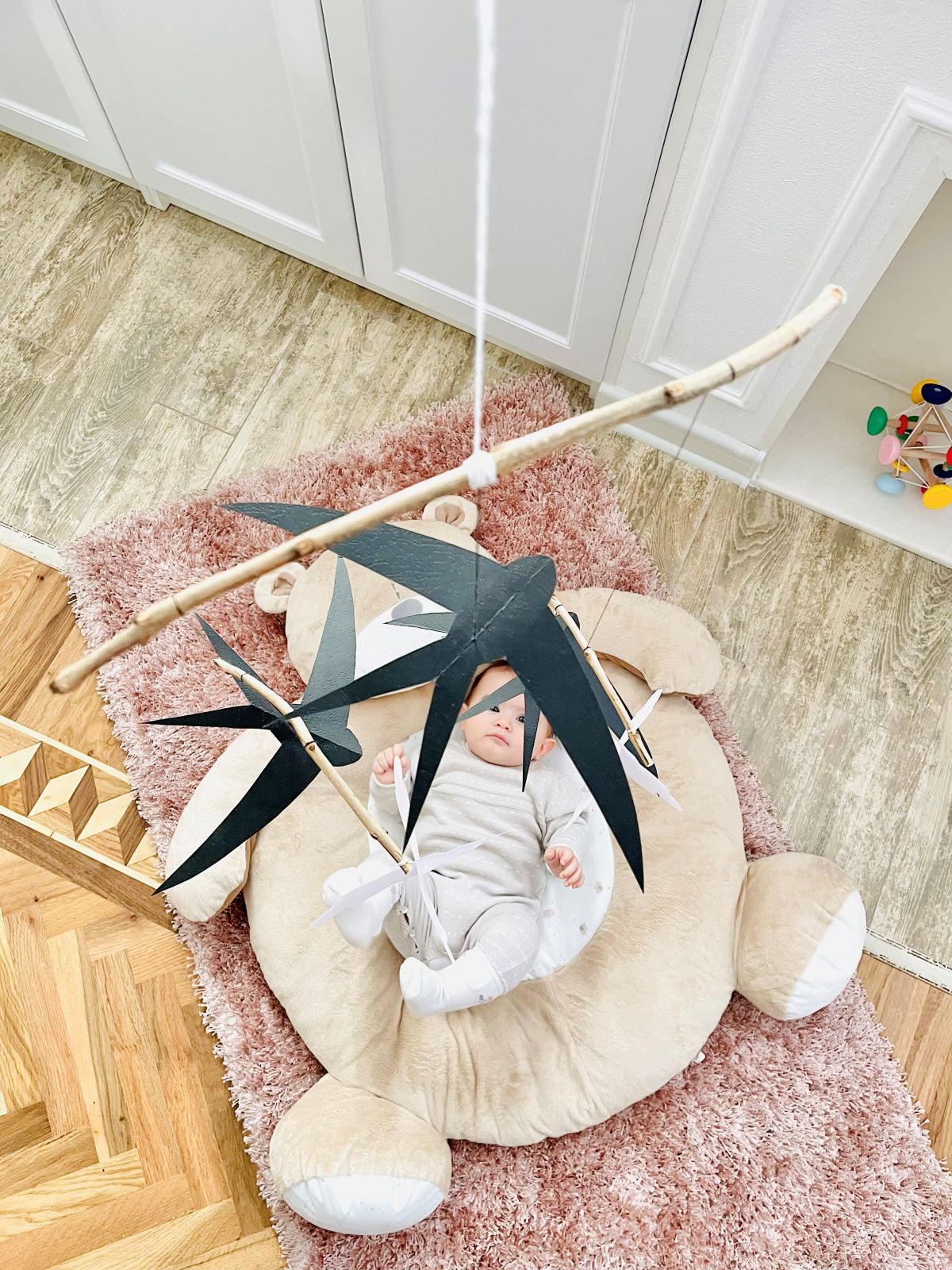
Do babies actually play?
Within Montessori, the distinction between play and learning becomes less relevant. Everything the baby does is part of development. Every movement, every attempt, every moment of observation contributes to building coordination and understanding. This is why the word work is sometimes used. Not as effort or pressure, but as purpose.
A baby is not playing to pass time. They are fully engaged in learning how their body works, how their senses connect, and how the world responds. What appears simple from the outside is often a complex internal process.
What this looks like in everyday moments
The early signs are easy to overlook.
A baby watches something for a few seconds, then turns away.
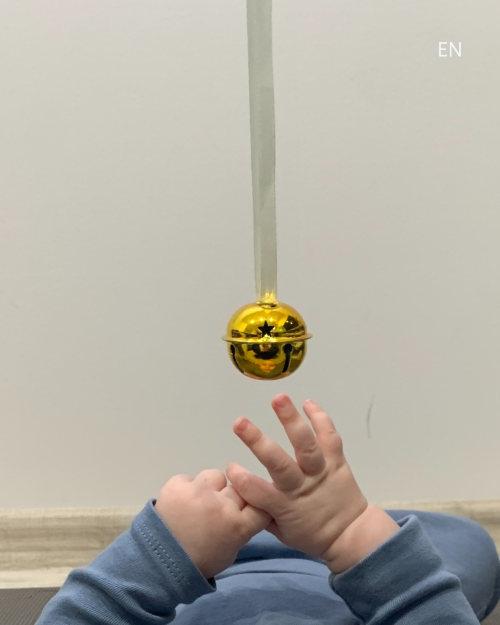
A hand moves toward an object but does not quite reach it.
A brief grasp is followed by an immediate release.
These moments are not incomplete attempts. They are the process itself. They are repeated, adjusted, and gradually refined. This is what Montessori baby play looks like in the beginning—quiet, short, and often barely noticeable.
A process that unfolds gradually
Development does not happen all at once. It builds in small steps. Before a baby can pick up an object, they first learn to focus their eyes. Then to follow movement. Gradually, they begin to notice their hands, attempt to reach, and refine those movements over time. Each step depends on the one before it.
What appears to be a simple action is often the result of many smaller processes coming together. This is why early development rarely looks impressive from the outside—but it is constant.
When interaction begins to change
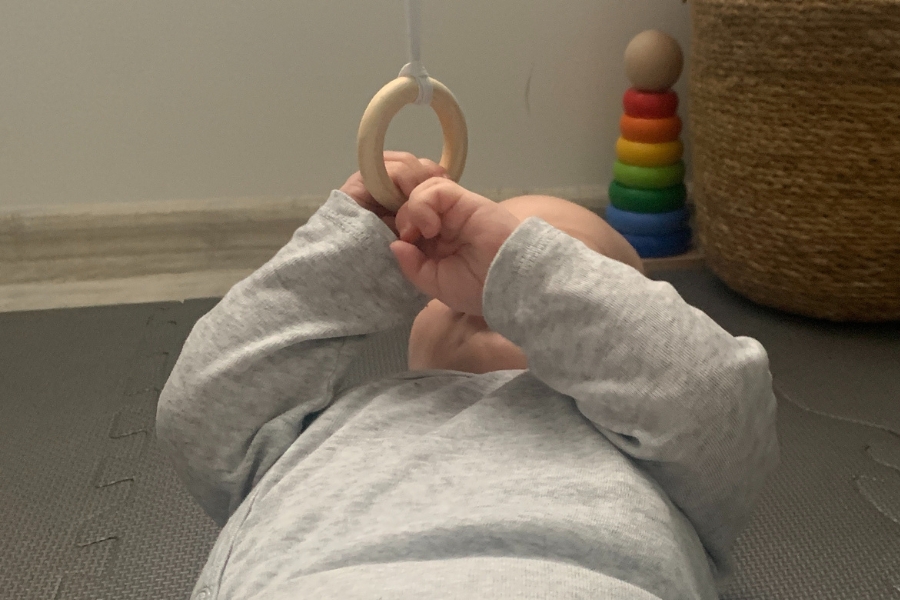
As coordination develops, the way a baby interacts with the world begins to shift. Movements become more directed. Reaching becomes more accurate. Objects are held for longer, and attention starts to extend beyond a few seconds. This is often the point where interaction begins to feel more recognisable.
But it is still the same process—repetition, adjustment, and gradual control. What changes is not the intention, but the ability.
So, is there such a thing as Montessori baby play?
The question becomes less important when seen this way. Whether it is called play or work, the activity remains the same. The baby is engaged in development, moment by moment.
There is no need to create play. It is already happening. The role of the adult is not to entertain, but to prepare the environment—offering what is accessible, and removing what is not. When the environment matches the stage of development, the baby continues the process independently.
Final thoughts
In the early months, development is not driven by stimulation or variety. It is built through observation, repetition, and small movements that gradually become more controlled. What looks like simple play is often the beginning of something much more complex.
Understanding Montessori baby play shifts the focus—from trying to add more, to recognising what is already happening.
Further Reading
If you’d like to explore how these ideas connect to the wider environment around your baby, these articles offer a broader perspective: