
Before buying Montessori baby materials, many parents fall into the same pattern without even noticing. A few searches about Montessori mobiles or sensory toys quickly turn into long wishlists, carefully saved posts, nursery inspiration, and the growing feeling that babies need more and more specialised materials in order to develop “properly.” Social media especially can make it seem as though every stage requires a new developmental toy, a perfectly prepared shelf, or a constant stream of sensory activities.
But Montessori philosophy was never meant to become a race to buy more things.
In Montessori-informed environments, the materials are only one small part of a much bigger picture. Observation, developmental timing, simplicity, and understanding the child remain far more important than owning large collections of Montessori baby toys. This is one reason it often helps to slow down before buying Montessori baby materials and first spend time understanding what your baby is actually working on developmentally.
Montessori is not the materials alone
One of the biggest misconceptions around Montessori is the idea that the method exists mainly through the materials themselves.
In reality, Montessori philosophy begins much earlier — with observation, preparation, movement, concentration, and respect for development. A Montessori mobile does not support a baby simply because it hangs beautifully in the room. What matters is whether the material matches the child’s current developmental stage, visual abilities, movement patterns, and readiness for that particular experience.
Sometimes a baby may spend long periods calmly observing a simple visual mobile. At other times, they may lose interest quickly because their attention has already shifted toward movement, grasping, or a completely different developmental focus altogether.
The material itself is never the whole point.
Observation comes before buying Montessori baby materials
Before buying Montessori baby materials, it often helps to spend a few quiet minutes simply observing the child. What currently holds their attention? Are they focusing mostly on contrast and movement? Beginning to track objects visually? Watching their hands? Reaching intentionally? Repeating the same movement again and again?
Observation usually reveals far more than age recommendations alone.
This is one reason Montessori environments tend to introduce materials gradually rather than all at once. Babies do not all progress at exactly the same pace, and development rarely follows a perfectly predictable timeline.
Over time, many parents notice something surprising: once observation begins guiding decisions more than checklists or social media recommendations, the pressure to constantly buy something new often starts to fade. A small number of carefully chosen Montessori baby materials frequently holds attention far longer than a large collection introduced too quickly.
For parents who want a broader overview of developmental timing, this Montessori mobiles by age guide can help place the visual and tactile mobiles within the wider sequence without replacing observation itself.
Simplicity often supports concentration better
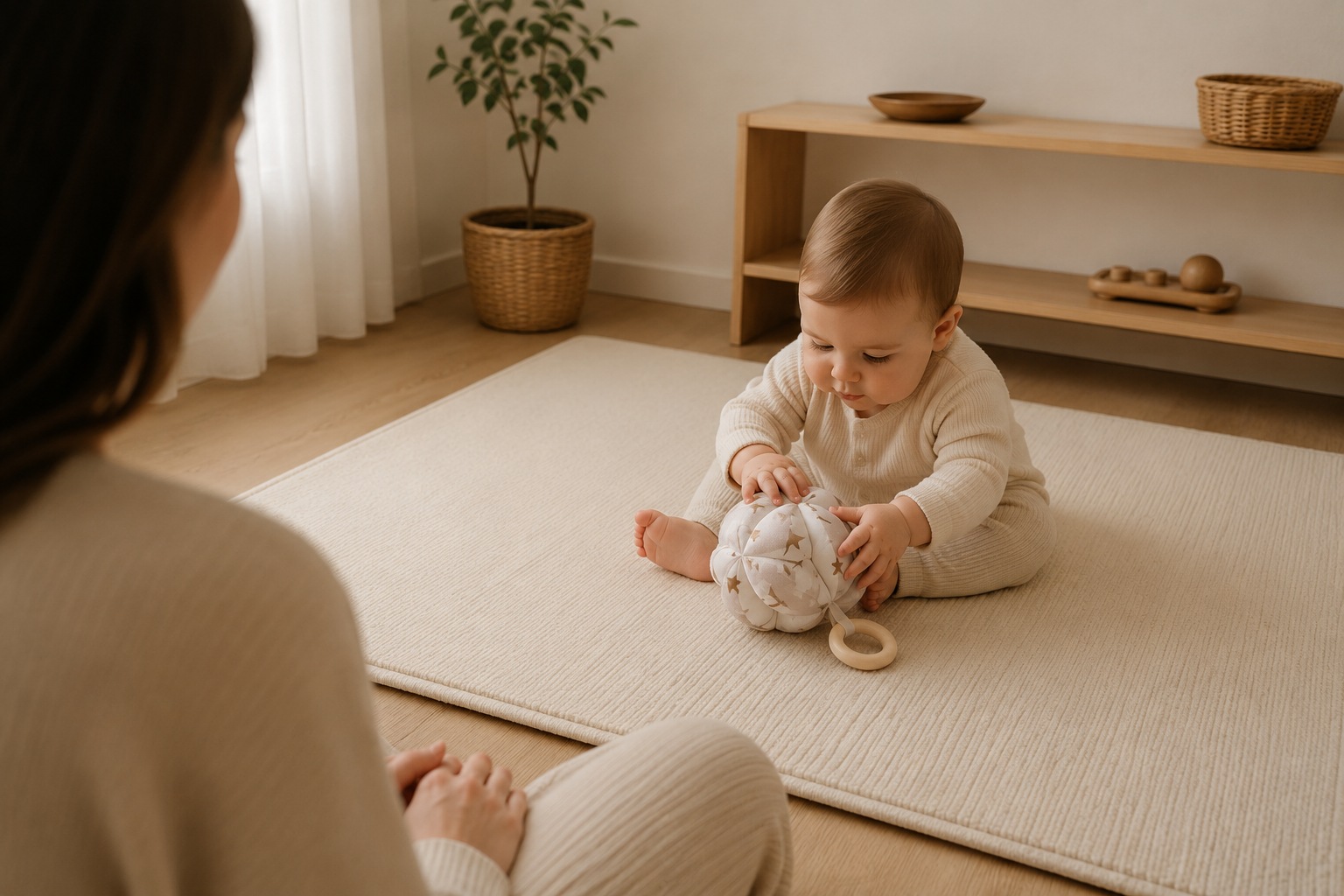
In the first months, babies are already processing an enormous amount of sensory information. Light, movement, sound, touch, temperature, faces, and body awareness are all still being organised gradually. Additional stimulation does not always lead to deeper engagement.
This is one reason many Montessori baby materials appear surprisingly simple at first glance.
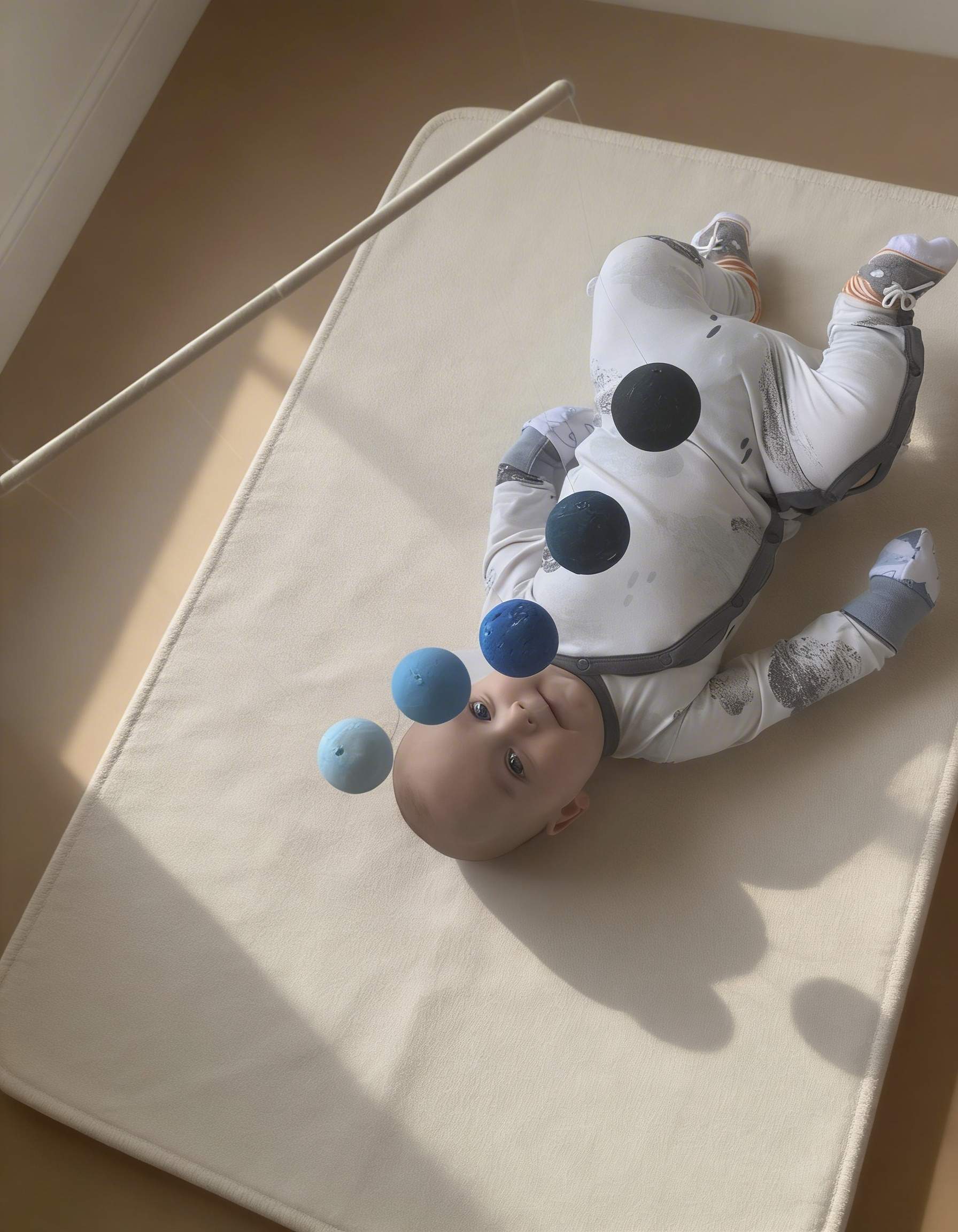
A single mobile moving gently in natural light may hold a baby’s attention far longer than a brightly coloured toy filled with flashing lights, multiple sounds, or competing sensory inputs. Not because the baby is doing “less,” but because concentration often becomes easier when sensory information feels clearer and less fragmented.
In Montessori philosophy, simplicity is not emptiness. It is clarity.
Fewer Montessori baby materials can still be enough
Once observation begins guiding decisions more than age charts or online recommendations, many families notice another shift: babies often need far fewer materials than expected.
It is very common for parents to worry that they are not offering enough. Parenting content and online shops can easily create the impression that babies constantly need new developmental toys, sensory activities, or carefully curated play spaces. Many parents quietly carry the feeling that they should always be doing more. Yet babies usually benefit far more from repetition, movement, observation, connection, and time than from endless novelty.
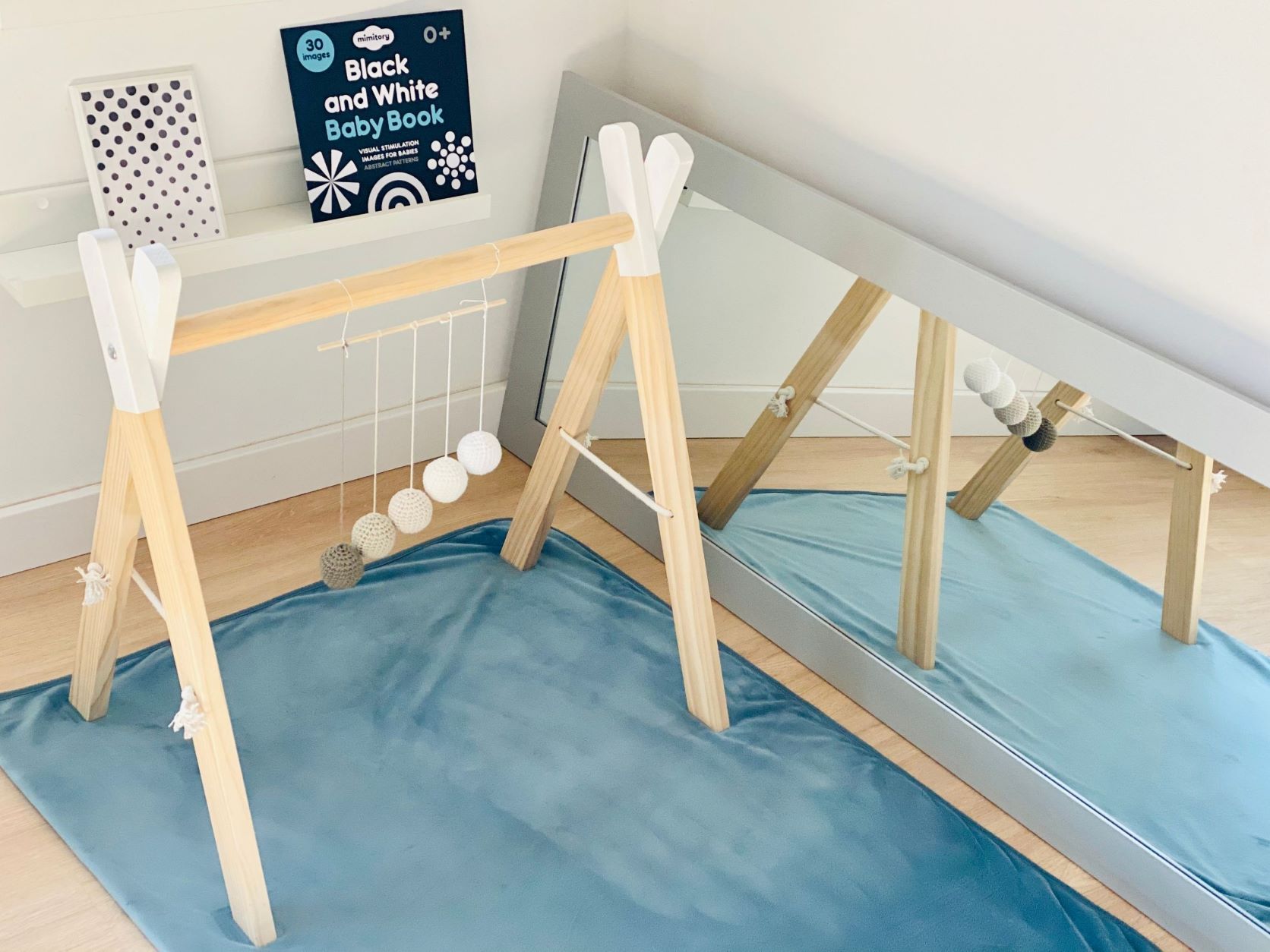
Sometimes one carefully chosen Montessori mobile or grasping material becomes deeply meaningful simply because it is introduced at the right developmental moment and given enough time for concentration and repetition to unfold naturally.
This is also why some families choose Montessori DIY kits or printable Montessori mobiles more intentionally rather than accumulating large numbers of finished toys all at once. The focus gradually shifts from owning more materials to understanding why a particular material is being offered in the first place.
Choosing Montessori materials more thoughtfully
Before buying Montessori baby materials, it can help to pause and ask a few quieter questions first.
What is my baby currently working on developmentally? Does this material match that stage? Is this introducing clarity or more stimulation? Will this support observation, concentration, movement, or grasping? And sometimes the most useful question becomes: am I choosing this because the baby truly needs it — or because I feel pressure to constantly provide more?
These questions are often far more valuable than searching endlessly for the “best” Montessori toy.
For some families, preparing Montessori materials themselves becomes part of slowing down and observing more carefully. You can read more about how to practice this shift in perspective in this Montessori Parenting guide on the power of observation. Assembling a mobile gradually or preparing a few simple baby materials often changes the focus from consumption toward preparation, observation, and understanding.
Babies do not need constant upgrading
One of the quieter ideas within Montessori philosophy is that development cannot be accelerated through more materials.
Babies develop through repetition, movement, concentration, observation, connection, and time. This is why Montessori baby environments often feel slower and calmer than many modern baby spaces. Materials are introduced gradually, transitions happen carefully, and observation guides what comes next rather than pressure to constantly “advance” the child.
This is also one reason Montessori philosophy places such importance on repetition and uninterrupted engagement. In Play Is the Work of the Child, Maria Montessori described how children build understanding not through constant novelty, but through deep involvement with meaningful experiences repeated over time.
Sometimes the most supportive thing a parent can do is not introduce something new immediately, but allow the baby to return to the same experience again and again until interest naturally fades.
Final thoughts
Before buying Montessori baby materials, it often helps to slow down first. Observation, developmental timing, simplicity, and understanding the child usually matter far more than owning large numbers of Montessori toys. Montessori philosophy was never intended to become a collection of products, but a way of preparing environments that support concentration, independence, movement, and natural development.
For many families, this shift brings a surprising sense of calm. The goal is no longer to constantly provide more, but to notice more carefully what the child already needs.
Further Reading
If you’d like to explore Montessori baby development and preparation more deeply, these articles may also be helpful:
- Montessori Alternatives to Popular Baby Toys (0–6 Months) – Explore simple Montessori alternatives to common baby toys that support focus, movement, and early development.
- How to Tell Your Firstborn About a New Baby – A clear, stage-by-stage guide to choosing the right materials at the right time.