
In the early weeks of life, babies do not experience the world in colour and detail. Vision is still organising, and what a newborn perceives is shaped mainly by light, contrast, and simple forms. This is why black and white for babies appear so often in materials designed for very young babies. Not because they are fashionable, and not because babies “need stimulation,” but because high contrast is easier for an immature visual system to process.
Understanding the role of black and white visuals helps parents offer appropriate visual experiences without rushing development or adding unnecessary input.
Why black and white matters in the early weeks
At birth, a baby’s visual system is still developing. The retina and the pathways responsible for processing visual information are immature, which means that what babies see is limited and soft.
Studies show that high-contrast visuals, especially black-and-white images with sharp edges and bold patterns, are easier for newborns to detect and track, helping support early visual processing and the development of neural connections in the visual system.
In the earliest stage:
- vision is blurry beyond a short distance
- contrast is easier to perceive than colour
- large, simple shapes stand out more than detail
Black and white patterns provide clear visual information at a time when subtle differences would simply be lost. They support visual organisation by offering something the eyes can reliably register.
This is not about teaching or entertaining the baby. It is about matching the visual environment to what the baby is actually able to see.
Visual experience begins with closeness
There is also a very simple, biological reason why high contrast is so familiar to newborns.
In the early days, much of a baby’s visual experience happens at close range — most often while feeding. At this distance, what babies see most clearly is the human face, especially the strong contrast between the dark pupil and the white of the eye.
This early visual familiarity helps explain why bold contrast feels meaningful rather than overwhelming. It reflects what the baby already encounters naturally, not something artificially introduced.
Black and white as visual organisation, not stimulation
It is easy to assume that black and white images are meant to “stimulate” babies. In reality, they do the opposite: they simplify.
High-contrast visuals reduce visual noise. They allow the baby to focus briefly, then rest. This rhythm of looking and pausing is an important part of early visual development.
Black and white resources do not need to be used actively, rotated constantly, or presented as activities. Their value lies in being present, visible, and simple.
Examples of black and white visual resources
Black and white visual elements can take many forms. What matters is not the object itself, but how it fits into the baby’s visual world.
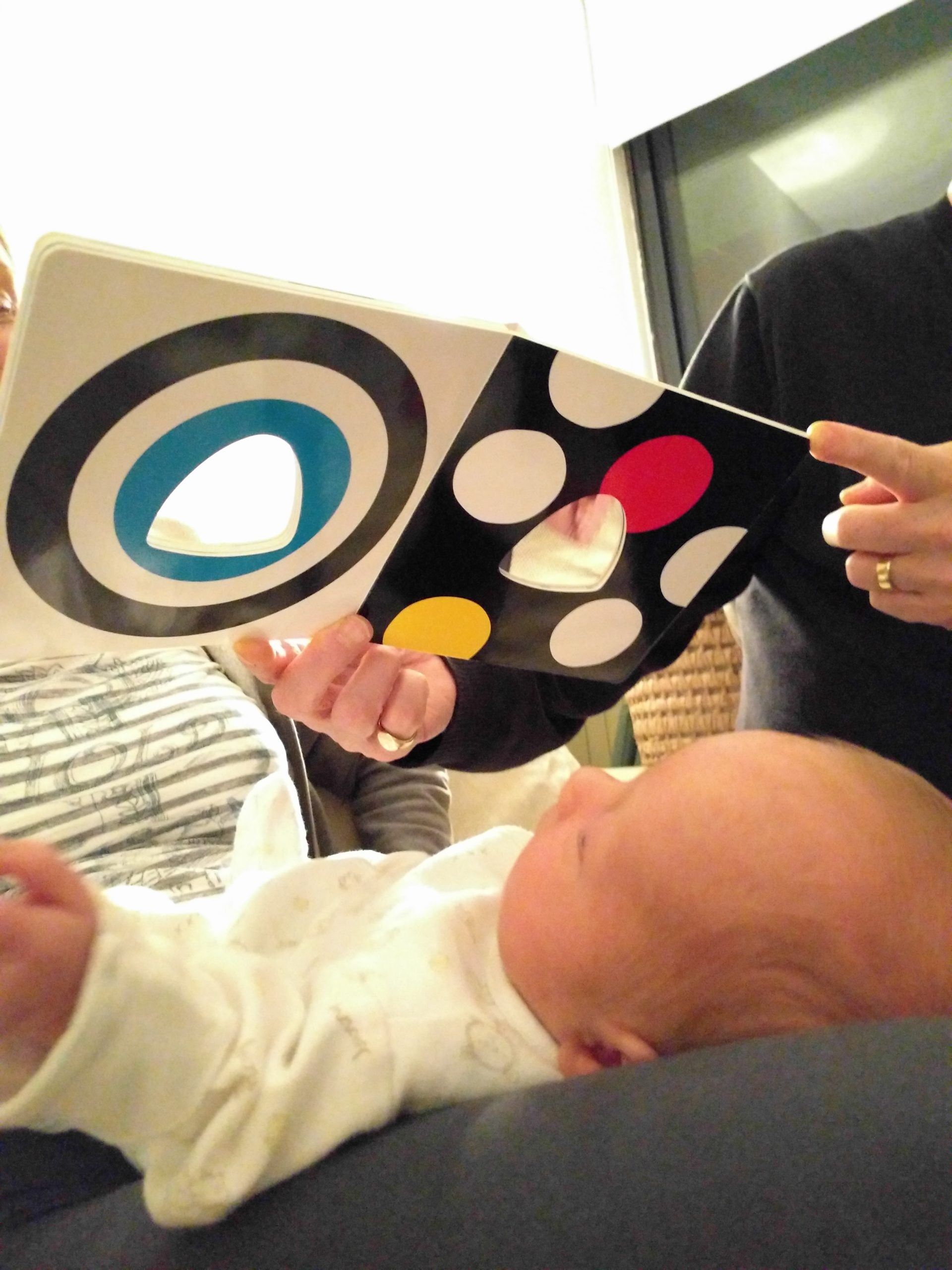
Books and images
Simple black and white images or books offer clear shapes and contrast. Babies may look at them only for short moments, and that is enough. Prolonged attention is not the goal at this stage.
For those who prefer a concrete example, this is a simple black and white board book designed for early visual observation.
Cards and framed images
Single images with strong contrast can be placed within the baby’s visual field, allowing quiet observation. These do not need to change frequently. Familiarity supports visual organisation.
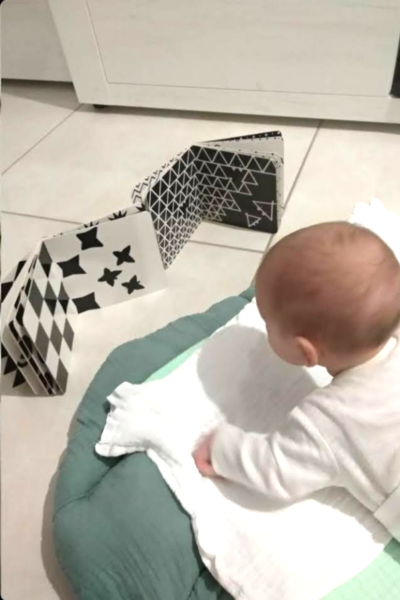
You can print and laminate the images, or place them in a simple picture frame and position them within your baby’s visual field. During tummy time, these high-contrast images can offer a calm point of visual interest, supporting brief periods of focused observation. Changing the position of the image from time to time also allows your baby to naturally adjust head orientation as their body develops.
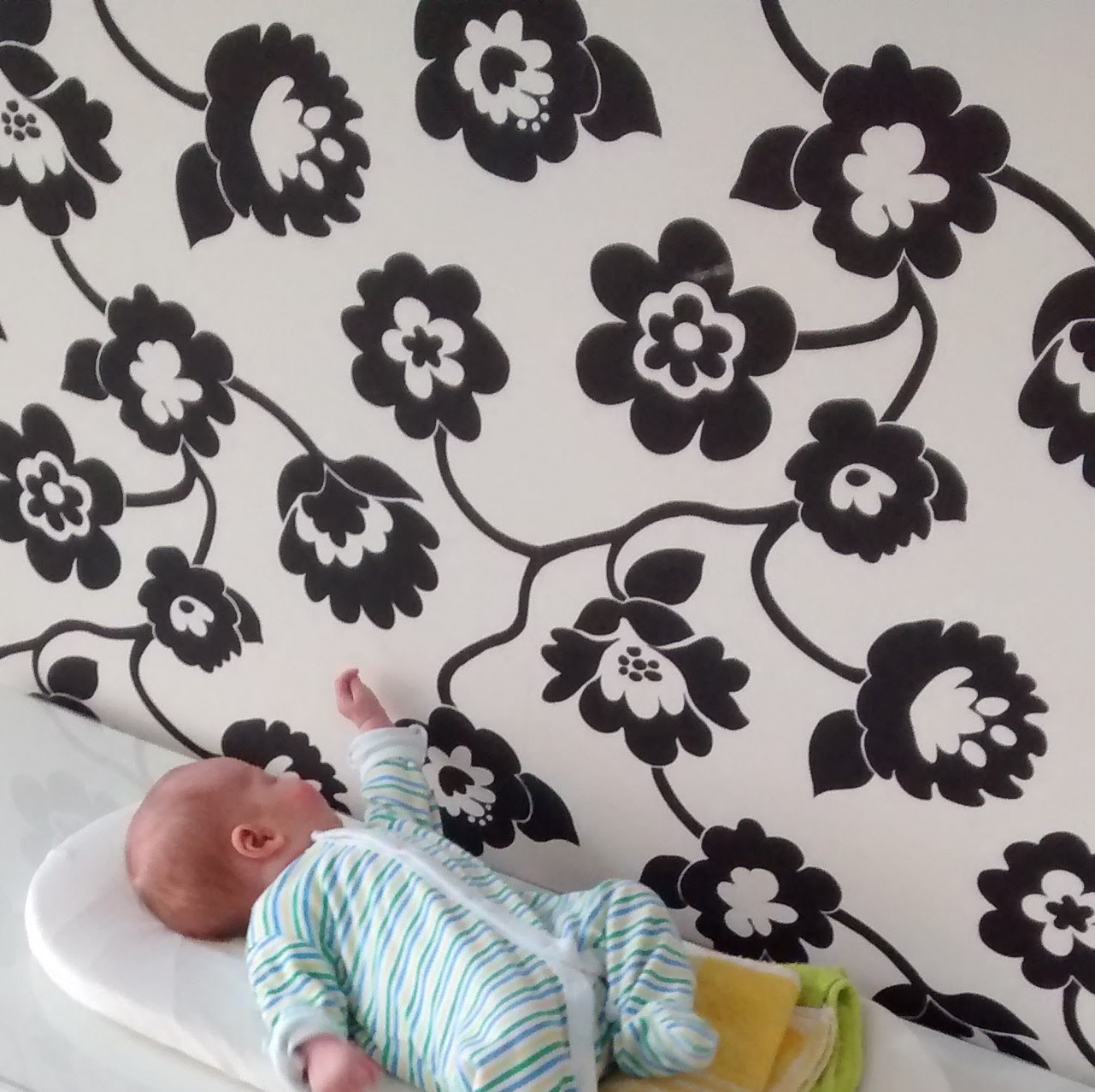
Everyday objects and patterns
High contrast already exists in many homes: striped fabrics, patterned cushions, curtains, or even shadows created by light. These natural visual elements often attract attention without any deliberate setup.
Black and white visual mobiles
In Montessori-informed settings, the earliest visual mobiles are designed specifically for calm observation. Black and white elements, such as those found in the Munari mobile, offer contrast and gentle movement without inviting interaction.
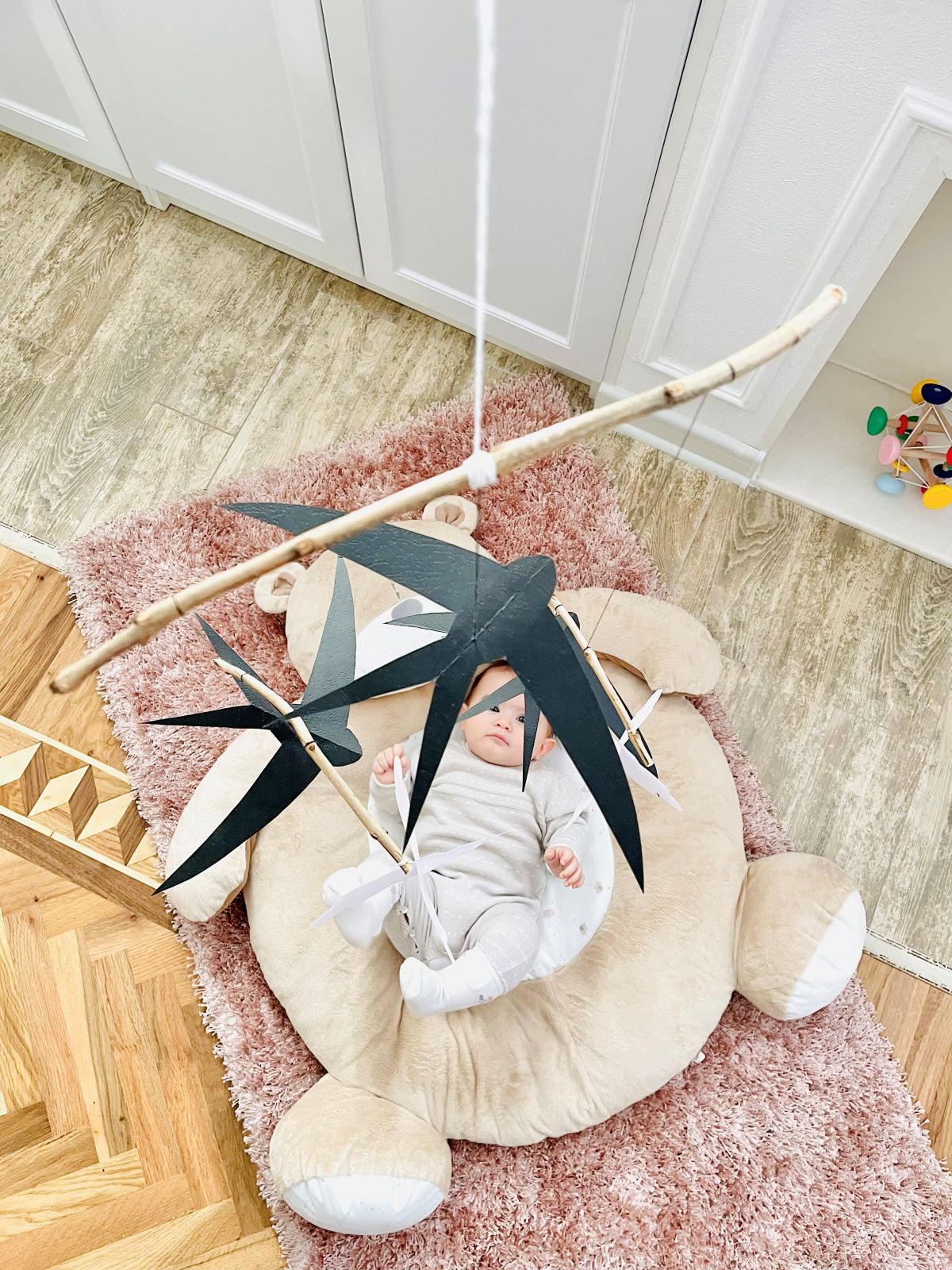
For readers looking to see how these early visual mobiles are typically presented, a newborn Montessori mobile set is available.
Looking beyond the indoors
Visual contrast is not limited to objects. Outdoor environments also offer rich, high-contrast experiences. Light filtering through leaves, branches moving against the sky, or shadows shifting on the ground can all become quiet points of visual interest. These experiences are unstructured, natural, and perfectly suited to early perception.

Final thoughts
Black and white visuals play a simple but important role in early visual development. They meet the baby where they are, offering clarity without excess. Rather than adding more, the aim is often to simplify: to notice what is already visible, and to allow the baby time to look, rest, and slowly organise their visual world.
Further reading
For readers interested in related aspects of babies’ visual and environmental experience:
- Montessori Whale Mobile — a closer look at how simple, high-contrast animal forms continue to support visual perception as babies grow.
- What Montessori Baby Toys Are Worth It? An Honest Breakdown by Age — a thoughtful reflection on how different materials relate to developmental needs as babies grow.