
How to tell your firstborn about a new baby is not always as simple as choosing the right moment or finding a creative announcement idea. For many parents, it feels surprisingly emotional. Alongside excitement, there is often uncertainty, protectiveness, guilt, and the quiet awareness that family life is about to change for everyone.
Questions naturally begin to appear as well. How will the older child react? Will they understand what is changing? And how can the transition be prepared gently, without creating pressure or overwhelming expectations? In Montessori philosophy, preparation usually begins gradually rather than through one big moment. Young children often process change more comfortably when they are given time to observe, ask questions, and slowly build familiarity with what is coming. This is one reason many families find that telling a firstborn about a new baby works best when it feels calm, natural, and connected to everyday life rather than overly dramatic or performative.
The goal is not to create the “perfect announcement.” It is to help the child begin forming a relationship with the idea of the baby before birth.
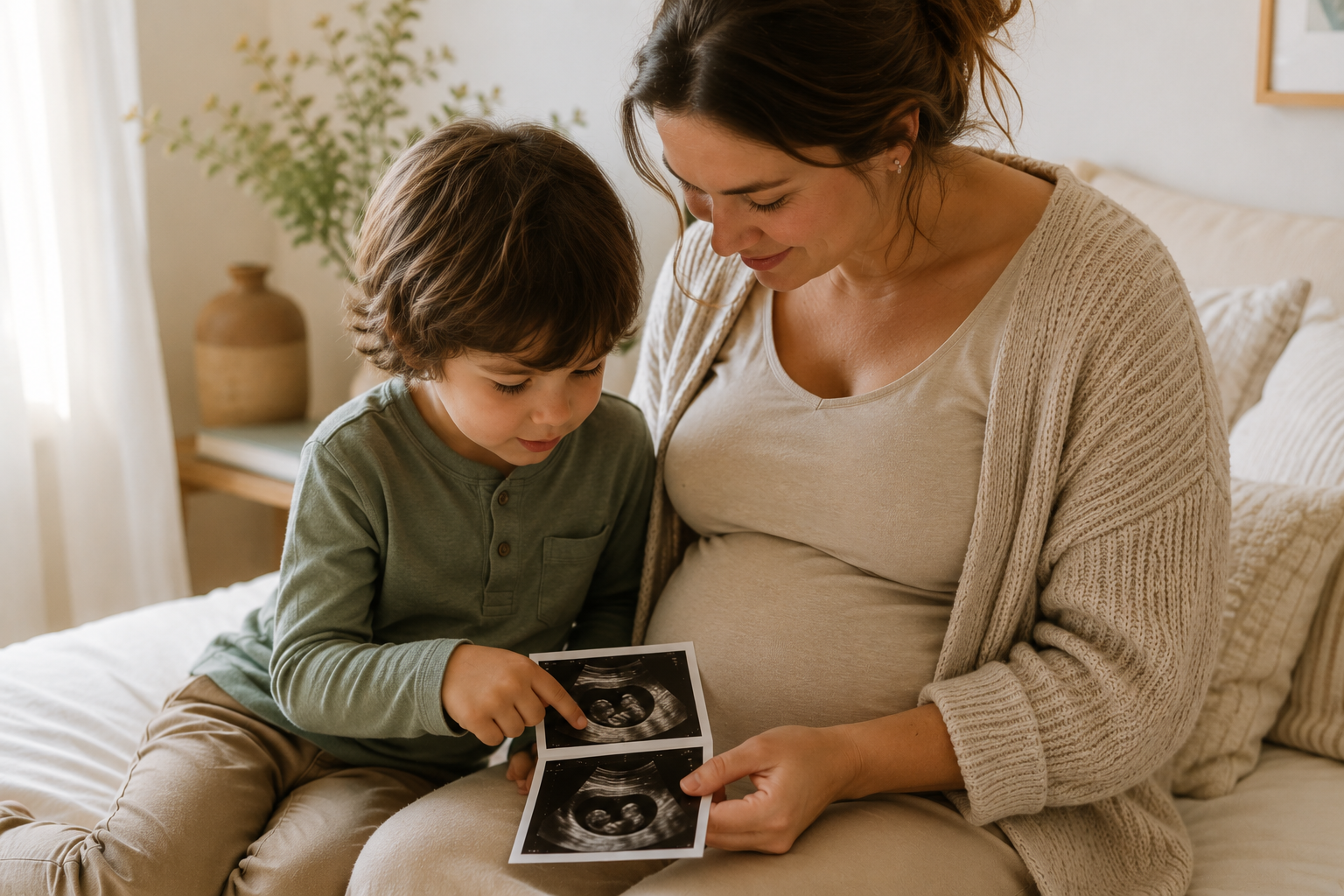
Young children often understand more than we expect
Children are usually very sensitive to changes within the family long before adults explain them fully. Routines shift. Parents become more tired. Conversations change. A growing belly becomes noticeable. Sometimes children begin asking questions before the pregnancy is even mentioned directly.
In Montessori-informed homes, this early awareness is often treated with honesty and simplicity rather than secrecy or distraction. Young children do not necessarily need long explanations at first. What helps most is often calm, concrete language that matches their stage of understanding.
For some children, hearing that a baby is growing inside mummy’s tummy may be enough initially. Others may become interested in how babies grow, what newborns are like, or how life may change after birth. The conversation usually unfolds gradually over time rather than happening only once.
Involving children often makes the transition feel more real
Many children process the idea of a new baby more comfortably when they are included naturally in parts of the pregnancy. Some families bring older siblings to midwife appointments or ultrasounds when appropriate. Hearing the heartbeat, seeing ultrasound images, or feeling the baby move can help the pregnancy feel more concrete and understandable.
Looking at the child’s own baby photos or ultrasound pictures can also help create continuity. It reminds them that they were once small too, and that they already belong within the story of the family.
Books can help as well, especially for younger children who understand best through stories and repetition. Rather than focusing only on becoming a “big brother” or “big sister,” calmer books that show the everyday reality of babies often feel more reassuring and easier to relate to. One book many families enjoy is Mama’s Belly by Kate Hosford, which introduces pregnancy and the arrival of a new baby in a gentle and emotionally grounded way.
Some children also benefit from spending time around real babies before the birth. Watching a newborn sleep, cry, feed, or move slowly can quietly prepare expectations in a more realistic way than abstract explanations alone.
Young children also tend to understand change more easily through concrete experiences than abstract conversations. Feeling the baby move, seeing baby clothes appear gradually, helping prepare the baby’s environment, or choosing simple baby materials together can sometimes communicate more than long explanations do.

How to tell your firstborn about a new baby without pressure
One of the most important things to remember when thinking about how to tell your firstborn about a new baby is that there is no “correct” reaction. Some children become excited immediately. Others seem uninterested. Some ask endless questions, while others continue playing as though nothing happened. Excitement may later turn into uncertainty, or worry may slowly become curiosity over time.
It is also very common for different emotions to exist together. A child may feel excited about the baby one moment and unsettled by change the next. Some children ask every day when the baby will arrive. Others seem distant for weeks before suddenly becoming protective or emotional later on. Younger children sometimes return briefly to more baby-like behaviour themselves, while others become unusually clingy without fully understanding why. Young children usually process large changes gradually.
In Montessori philosophy, emotions are not rushed or corrected immediately. The goal is not to force enthusiasm, but to create enough emotional safety for the child to experience the transition honestly. Sometimes children simply need time to observe the idea before responding to it fully.
This often becomes even more important after the baby arrives, when older siblings are adjusting not only to the idea of the baby itself, but also to changes in rhythm, attention, noise, and family dynamics.
Many parents carry quiet worries too
Preparing an older child for a new baby is emotional for parents as well.
Many quietly wonder whether the firstborn will feel pushed aside, lose closeness, or struggle with the changes in attention that naturally happen after birth. Even when the pregnancy is joyful, these worries are extremely common.
In Montessori philosophy, preparation is not about preventing every difficult emotion. It is about creating enough security, honesty, and connection for the transition to unfold gradually and realistically for everyone involved.
Small rituals can help children feel included
Some families enjoy creating small moments around the pregnancy that help the older child feel involved without turning the experience into pressure or performance.
This might mean:
- choosing a small gift for the baby
- helping prepare part of the baby’s space
- reading books together about babies
- talking to the baby together
- comparing baby photographs
- noticing movements during pregnancy
- the first Montessori mobiles or simple baby materials together
What matters most is usually not the activity itself, but the feeling of inclusion and continuity it creates.
Young children often cope with transitions more comfortably when they still feel securely connected to the family rather than suddenly expected to become “grown up.” This is one reason Montessori environments tend to avoid placing too much emotional responsibility on older siblings. Becoming a sibling is already a significant transition in itself.
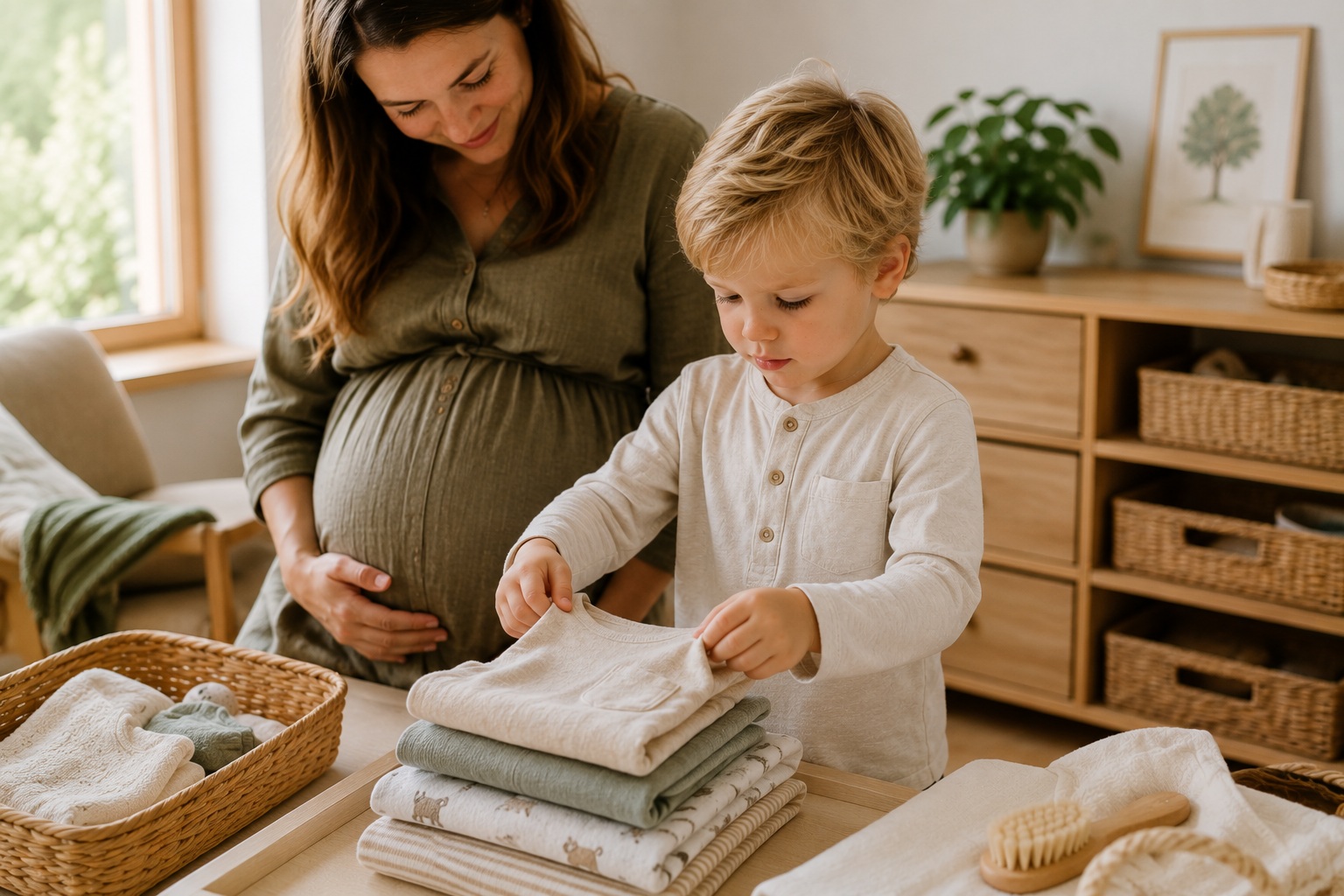
Preparing for the baby often begins before birth
One of the quieter ideas within Montessori philosophy is that preparation often begins long before the baby arrives.
Children gradually prepare themselves through observation, repetition, conversation, and everyday participation in family life. The process is rarely linear. Understanding deepens little by little over time. This is also why calmer, slower preparation often feels more supportive than trying to create one perfect announcement or emotional moment.
The relationship between siblings often begins long before birth — through familiarity, observation, and the growing awareness that someone new is slowly becoming part of the family.
The transition continues after the baby arrives
The arrival of a new baby often changes the rhythm of family life for a while.
Tiredness, feeding, interrupted routines, and less uninterrupted time together can feel like a major adjustment for older siblings too. Some children become more emotional, more sensitive, or briefly more dependent again during this period.
This is one reason gradual preparation before birth can feel so valuable. Familiarity, participation, and emotional connection often help the transition feel less sudden once the baby finally comes home.
Final thoughts
How to tell your firstborn about a new baby is rarely just one conversation. For most families, it becomes a gradual process of helping the child slowly build familiarity with change before the baby arrives. Some children react immediately, while others need much longer to process what the new baby will mean for their world.
In Montessori philosophy, preparation usually happens through calm observation, inclusion, honesty, and time. There is no perfect reaction and no perfect way to share the news. What matters most is helping the child feel secure within the changing rhythm of the family while allowing the relationship with the new baby to grow naturally over time.
Further Reading
If you’d like to explore pregnancy, preparation, and family transitions more deeply, these articles may also be helpful:
- Play Is the Work of the Child
Why independent play, repetition, and concentration remain important even during major family transitions. - A Word About Baby Gear
Why calmer, simpler preparation often feels more supportive than accumulating more things before the baby arrives.