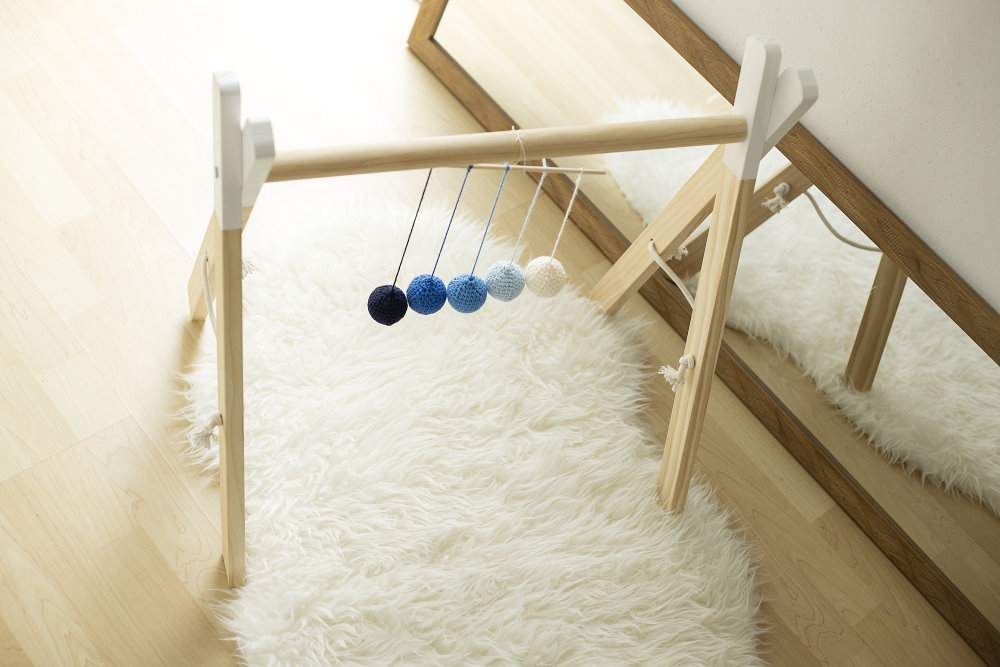
Montessori Philosophy for Babies – Understanding Early Development

Montessori for babies begins with a way of seeing the child. Rather than focusing on tools or outcomes, it is rooted in observation, respect, and trust in natural development.

In this section, you’ll find foundational ideas such as the work of the child, concentration, and the role of the adult. These principles help make sense of everything else — from environment to materials.

The prepared environment for a baby

Montessori Prepared Environment: What It Really Means for Babies 0–6 Months

When parents first encounter Montessori for babies, it often feels both appealing and confusing at the same time. The language promises calm, respect, and natural development — yet the reality online is frequently overwhelming, visually loud, and filled with rules that seem hard to live up to. This article clarifies what the Montessori prepared environment […]

Montessori Prepared Environment: What It Really Means for Babies 0–6 Months Read More »
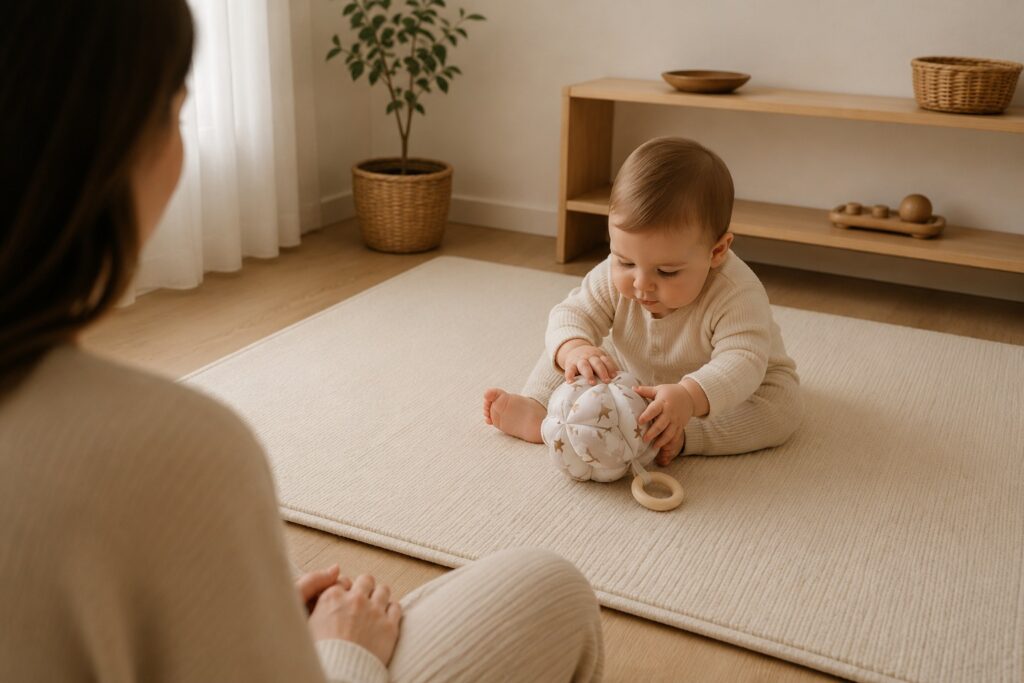
baby independently exploring Montessori puzzle ball while mother quietly observes

Montessori Observation for Babies in the First Year

In the first year of life, much of development happens quietly. A baby watches something for slightly longer than before. A movement repeats itself again and again over several days. Hands begin reaching with more intention. Attention settles for a brief moment where previously there had only been quick glances and movement. These changes are

Montessori Observation for Babies in the First Year Read More »

child-centered approach to learning, are montessori baby toys worth it

Child-Centered Approach to Learning – a guest post from Launa Schweizer

Whether you’re a parent or an educator, you’ve likely come to realize a vital truth about education: it should all be about the child. Despite the standardized methods of many traditional schools, child-centered approaches to learning are gaining recognition throughout the world – and for good reason. “Child-centered” describes an educational philosophy that places the

Child-Centered Approach to Learning – a guest post from Launa Schweizer Read More »

játék a gyerekek munkája, a tapintható tárgyak, tactile mobiles, open-ended and closed-ended toys,

Open-Ended and Closed-Ended Toys: Understanding How Babies Learn Through Play

In the first months, play does not look like play in the usual sense. When looking at open-ended and closed-ended toys, the difference is not always obvious at first. A baby watches, pauses, moves their hands, misses, and tries again. Moments of focus appear briefly, then fade. From the outside, it can seem minimal. In

Open-Ended and Closed-Ended Toys: Understanding How Babies Learn Through Play Read More »

Gobbi mobile

Montessori myth busting – 6 common misconceptions about Montessori mobiles

There are so many Montessori misconceptions out there that seem to get stuck in people’s mind! We believe that all we need to do is grab a few wooden sticks, make a baby gym out of them, hang a Montessori baby mobile off it and – TA DA! – our baby will be happily lying

Montessori myth busting – 6 common misconceptions about Montessori mobiles Read More »

Child-centered approach to learning

Montessori Baby Play: What Looks Like Play Is Actually Development

In the first months, play does not look like play in the usual sense. When thinking about Montessori baby play, the question often arises: is this really play at all? A baby watches, pauses, moves their hands, misses, and tries again. Focus appears for a few seconds, then fades. From the outside, it can seem

Montessori Baby Play: What Looks Like Play Is Actually Development Read More »