
Pregnancy often begins with practical questions. What does the baby need? What should be prepared before birth? Which things matter, and which ones only seem important because everyone else is talking about them?
At first, it can feel as though preparation is mostly about gathering enough — enough clothes, enough equipment, enough reassurance that everything will be ready in time. But over time, preparation often becomes less practical and more emotional.
This is where trust before birth begins to take shape.
Not as confidence that suddenly appears all at once, but as something quieter. A slower way of preparing. A growing ability to notice what feels meaningful, what supports calm, and what simply adds more noise.
The more I read about Montessori during pregnancy, the less interested I became in creating a “perfect” setup. Instead, I started paying more attention to how things actually felt to live with — whether they supported daily life, whether they created unnecessary pressure, and whether they would still make sense once the baby arrived.
Trust before birth begins with the parent
Before the baby arrives, Montessori preparation is often imagined as a space: a calm room, natural materials, a place for movement, a few carefully chosen objects. These things can matter, but they are not the beginning.
The beginning is the adult.
During pregnancy, preparation is also internal. It is the gradual shift from trying to control every detail to learning how to observe, simplify, and trust. This does not mean ignoring practical needs or pretending uncertainty disappears. It means noticing that readiness is not created only by buying, arranging, or completing. Some of the more practical aspects of Montessori pregnancy and preparation before birth begin to unfold gradually alongside this emotional shift.
Sometimes readiness begins by becoming less reactive to pressure. That pressure often appears gently. A question from a family member. A comment about what “everyone” does. A checklist that seems reasonable until it starts to feel endless. The Montessori lens does not remove these questions, but it changes the way they are held. Instead of following every expectation automatically, there is space to pause.
That pause is important. It allows preparation to become more intentional.
When choices look different
Some decisions are easy to hold privately, until they are spoken aloud. Choosing a simpler baby space, fewer objects, or a different sleep arrangement can invite questions. Often they come from care, not criticism, but they can still create doubt. Pregnancy is a vulnerable time to defend choices, especially when those choices do not match what others expect.
This is where trust before birth becomes practical. Not loud trust. Not certainty that every decision is perfect. A quieter kind of trust: the ability to return to the reason behind a choice.
Montessori does not ask parents to be different for the sake of being different. It asks them to observe the child, respect development, and prepare an environment that supports independence gradually. During pregnancy, that begins with learning to trust thoughtful decisions before there is a baby in the room to confirm them.
A calm explanation is often enough. Not every choice needs to become a debate.
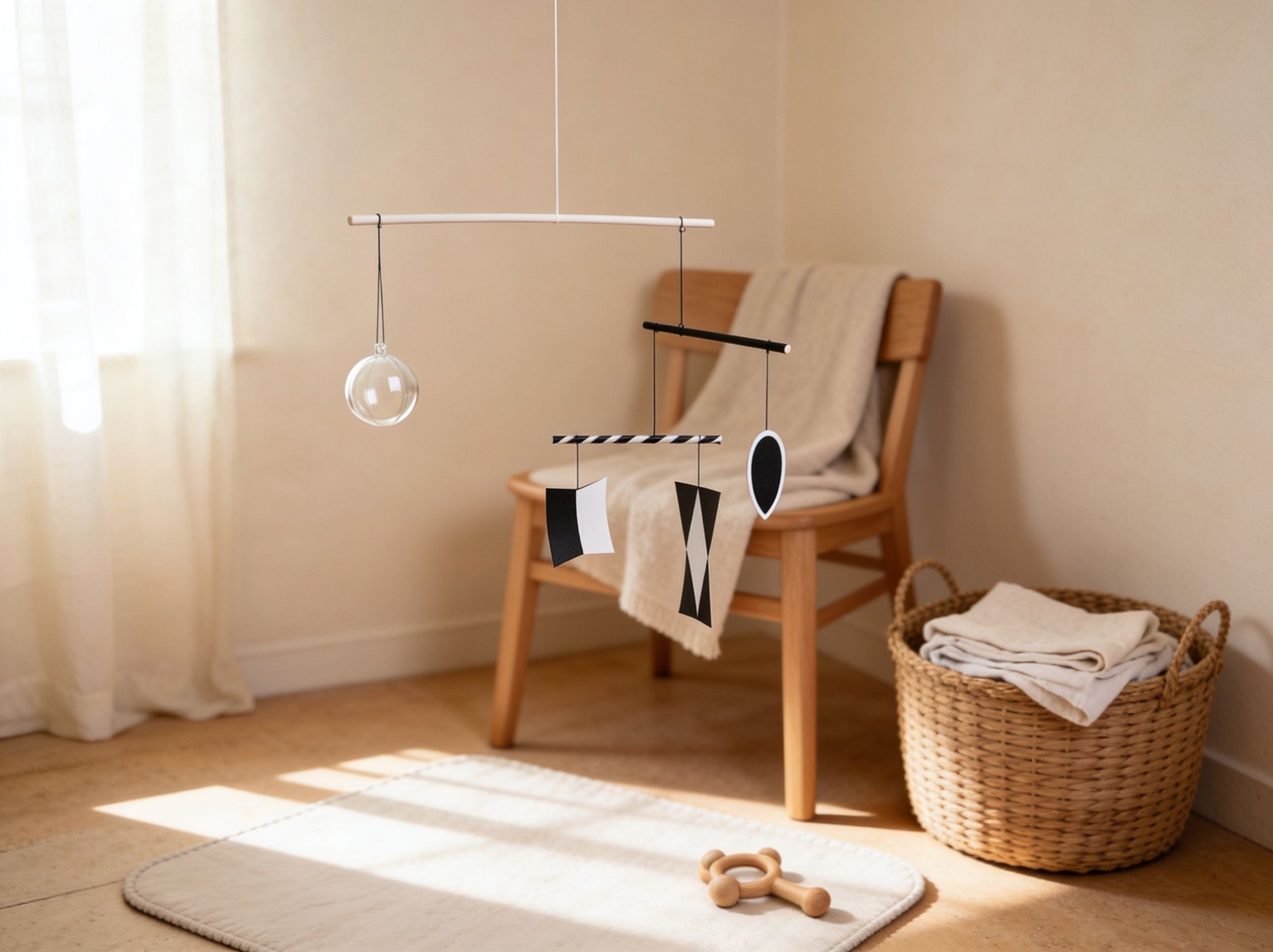
The emotional side of simplicity
Before pregnancy, simplicity can sound like an aesthetic preference. During pregnancy, it can feel much more emotional.
Many baby preparations are built around the fear of not having enough. Enough equipment, enough options, enough solutions ready before the first difficult night arrives. It is easy to understand why. A new baby brings uncertainty, and buying things can briefly make uncertainty feel managed. The pressure to buy more before birth can be surprisingly strong, which is why many parents begin questioning what is actually necessary and which items simply create more noise. This is explored more deeply in A Word About Baby Gear, and practitioners like Megan Kavanaugh often highlight how preparing a Montessori environment can actually simplify the transition for both the parent and the newborn.
But more does not always create calm. Sometimes it creates more decisions, more visual noise, and more pressure to use things that were never truly needed. Montessori preparation gently challenges this. It asks what supports the baby, what supports the adult, and what simply fills space.
This does not mean preparing an empty environment. It means preparing a thoughtful one.
A quiet corner. A comfortable place for feeding. A simple area where the baby can lie, observe, and move. A few meaningful materials introduced when they become relevant. These choices are not dramatic, but they can change the feeling of the home. For many families, this eventually leads into creating a calmer, more intentional Montessori baby space built around simplicity and movement rather than excess.
An often overlooked but imporant part of trust before birth is that emotional relief of simplicity is often underestimated.
Pregnancy as the first practice of observation
Observation is usually discussed after birth, but part of it begins earlier. Pregnancy teaches it slowly. Energy changes. The body asks for different things on different days. The baby’s movements become familiar, then less random. Some moments invite activity; others ask for rest. There is already a rhythm, even before it becomes visible from the outside.
This kind of noticing is quiet preparation. It is not about tracking everything or turning pregnancy into a project. It is more ordinary than that. Pausing when the baby moves. Noticing which parts of the day feel calmer. Becoming aware of how the environment affects the body and mind.
These small acts matter because they prepare the adult for what comes later. After birth, this gradual observation naturally becomes part of finding a Montessori baby routine, where rhythm develops through noticing patterns rather than imposing schedules too early. During pregnancy, the parent is already learning to notice without immediately controlling.
That is another form of trust before birth.
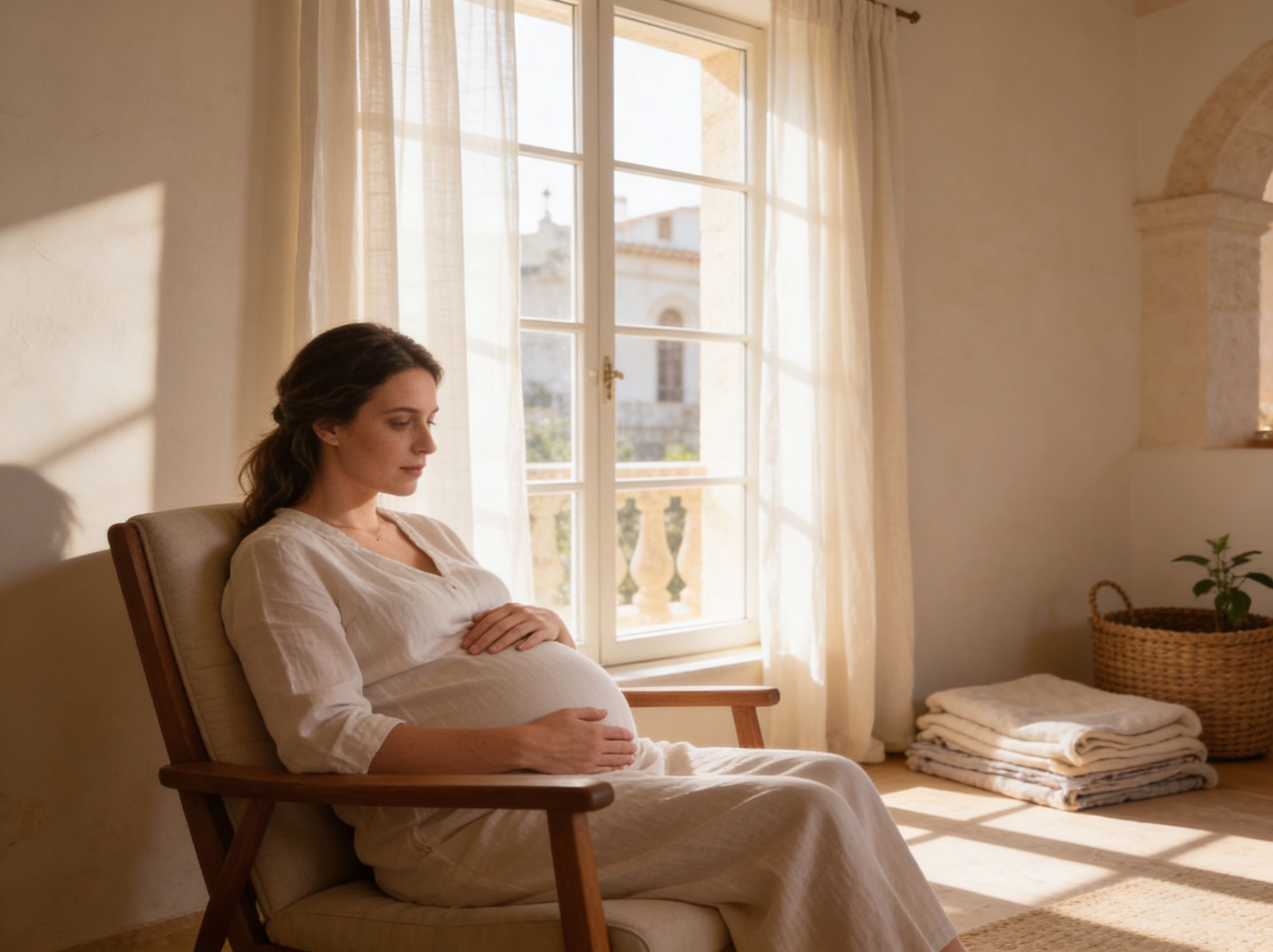
Preparing without trying to perfect motherhood
There is a point where preparation can quietly become performance. The perfect list. The perfect space. The perfect beginning. It can all look calm from the outside while creating pressure underneath.
Montessori preparation offers a different direction. It does not ask for perfection. It asks for attention. The question becomes less about whether everything is ready and more about whether the essentials are clear. What supports rest? What supports movement? What helps the home feel calm enough for a baby and an adult who are both adjusting? This is where the practical and emotional sides of preparation meet. A simplified environment is not only for the baby. It also supports the parent who will spend long hours inside that environment, recovering, feeding, observing, and learning.
The environment did not need to feel finished. It only needed to feel livable. That difference mattered more than I expected during trust before birth.

What Montessori changes before birth
Montessori did not make pregnancy free from uncertainty. It did not make every decision obvious or remove the need for practical preparation. What it changed was the perspective beneath those decisions. It shifted the focus from accumulation to intention. From comparison to observation. From proving a choice to understanding it. Over time, these smaller decisions started to feel less uncertain: learning to prepare without rushing, simplify without deprivation, and make room for a relationship that has already begun.
By the time the baby arrives, not everything will be known. It cannot be. But something can already be practiced: the habit of noticing, adjusting, and trusting the child’s development as it unfolds.
Families who already have children often find themselves preparing for more than the birth itself. Helping older siblings understand and participate in the transition can make the experience feel less overwhelming for everyone. You can read more in Helping Your Firstborn Feel Included When a New Baby Arrives.
Final thoughts
Looking back, the most important preparation during pregnancy was not practical. It was learning to slow down enough to notice what actually mattered. Not every decision became easier. Not every doubt disappeared. But over time, preparation felt less connected to having the “right” things and more connected to creating enough calm to begin.
That trust before birth did not arrive fully formed . It grew slowly through smaller decisions, quieter spaces, and the gradual understanding that motherhood would not begin perfectly organised. It would begin one day at a time, inside the environment we had already started learning how to live in.
Further Reading
If you’d like to explore how these early Montessori ideas continue after birth, these articles may also be helpful:
- Are Montessori Toys Worth It? — a closer look at why fewer, more intentional materials often support development better than overstimulation
- Visual Development in the First Months — how newborn vision develops gradually, and why early visual experiences are kept simple in Montessori environments