
The Montessori crocheted Gobbi mobile often appears at a moment in early development that is easy to overlook. Positioned between purely visual materials and later interaction-based objects, the crocheted Gobbi mobile supports a subtle developmental transition where visual attention remains primary while the body begins to respond through gentle, unintentional movement. Its role is not to introduce touch or accelerate motor skills, but to acknowledge the emerging connection between seeing and sensing movement, making it a quiet bridge within the sequence of Montessori visual materials.
Why parents are often unsure about the crocheted Gobbi
Parents frequently pause when they encounter the crocheted Gobbi mobile. Is it still visual, or is it already tactile? Does it belong with the classic Gobbi, or does it signal the start of grasping and touch?
The uncertainty usually comes from its material. Crochet looks soft. Softness is often associated with hands, not eyes. But this assumption can blur the real purpose of the crocheted Gobbi and place it too early—or too late—in a baby’s environment.
This article exists to clarify that specific nuance.
A brief developmental moment that often goes unnoticed
In the earliest weeks, babies relate to the world almost entirely through observation. Vision leads. Movement follows, slowly and without intention. Then, subtly, something shifts.
The baby still watches, but the body begins to participate. Legs kick. Arms drift. The whole body responds to what the eyes are taking in—without reaching, without grasping, without purpose yet.
This moment matters. It is not the beginning of touch. It is the beginning of connection between seeing and moving. Rushing this stage—or skipping over it—can quietly overwhelm a system that is still organising itself.
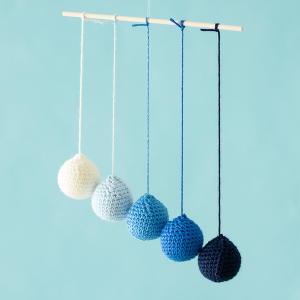
Understanding the crocheted Gobbi as a bridge material
The Montessori crocheted Gobbi mobile is still primarily visual. It remains suspended. It presents a continuous progression of colour.
It invites calm visual tracking, just like the classic Gobbi. What changes is not the purpose, but the response.
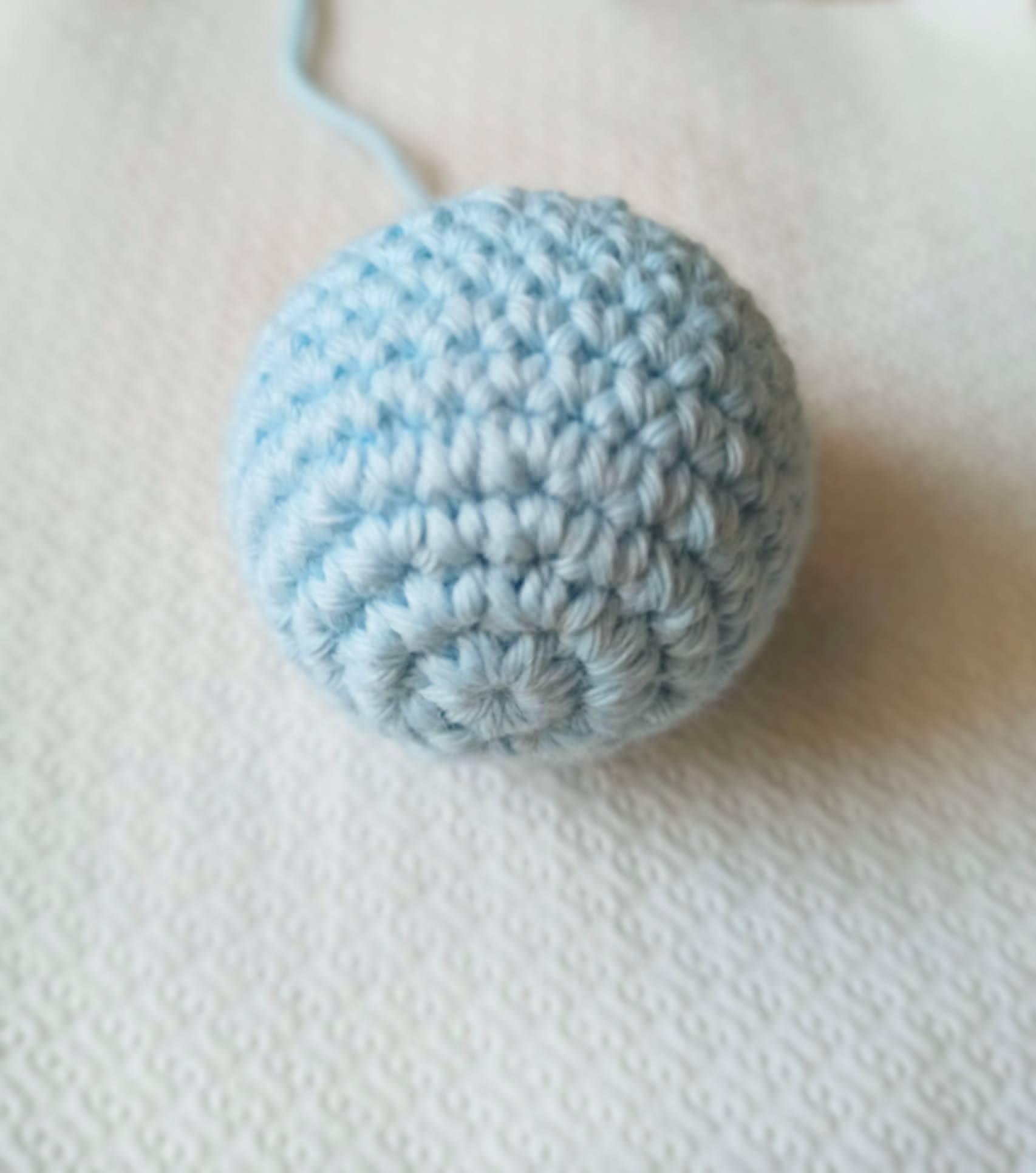
Because of its lighter structure and softer surface, the crocheted Gobbi may respond gently to the baby’s own movement. A small shift in the body can create a subtle change in motion. The baby does not cause this intentionally—but may begin to notice the relationship.
This is why the Montessori Crocheted Gobbi mobile functions as a bridge. Not between looking and touching, but between seeing and sensing one’s own movement in space.
What the crocheted Gobbi is not
Clarifying this point often brings relief.
The Montessori Crocheted Gobbi mobile is not a tactile toy. It does not replace grasping materials. It does not accelerate hand use or motor milestones.
Compared briefly:
- Classic painted Gobbi: purely visual, stable, predictable
- Crocheted Gobbi: visual, softly responsive, transitional
- Later tactile materials: designed for hands, weight, grip, and intention
Each exists for a different developmental purpose. One does not improve the other by doing “more.”
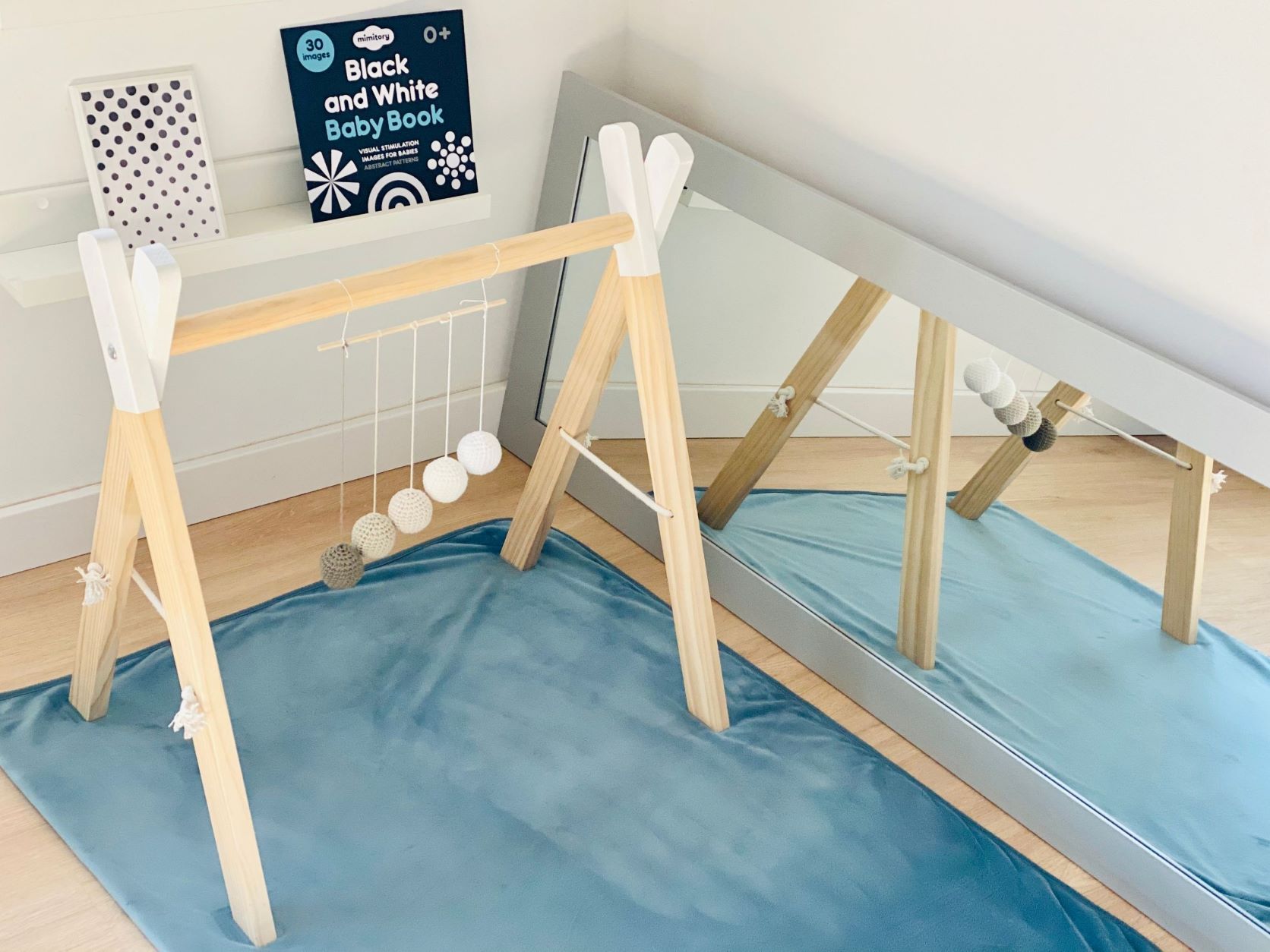
This transitional role of the crocheted Gobbi remains the same across its colour variations. The beige Gobbi offers a soft, restrained visual presence that blends easily into calm environments, while the blue one provides a clearer colour focus that supports visual tracking and sustained attention. Both accompany the same developmental moment, differing only in visual emphasis rather than purpose.
Timing is not a rule, but a relationship
Some families encounter the crocheted Gobbi naturally after the classic Gobbi. Others never feel the need for it at all. Both are valid.
In Montessori-informed environments, timing is not about schedules or checklists. It is about watching closely enough to notice when observation begins to include the body—without pushing toward interaction too soon. Not every material needs to do everything. And not every transition needs to be marked by a new object.
For parents who want the wider context, this article complements the broader Montessori mobile timeline without repeating it.
Observation over categories
It can be tempting to classify every material: visual, tactile, motor, sensory. But babies do not experience development in categories. They experience continuity.
The crocheted Gobbi mobile exists for a narrow, often brief moment—when vision is still leading, movement is emerging, and touch is not yet asking to take over. When that moment is honoured, nothing more is required.
Final thoughts
The Montessori Crocheted Gobbi mobile exists for a narrow developmental moment, and that is precisely why it can feel ambiguous. It does not introduce a new skill, and it does not replace what comes before or after. Instead, it acknowledges a gentle shift already underway, when visual attention remains central and the body is beginning to register its own movement.
In Montessori-aligned environments, not every transition needs to be marked loudly. Sometimes, the most supportive materials are the ones that simply meet the child where they are, without asking them to do more.
If you’re interested in how visual perception continues to develop after the Gobbi stage, you may also find these articles helpful:
– The Montessori Dancers Mobile
– Montessori Visual Mobiles: A Complete Guide
I always love seeing babies enjoy the mobiles you create. If you would like to share, you can tag @montessoriedited on Instagram.