
Flying with a baby can feel overwhelming before you’ve done it. The airport environment, the noise, the confined space, and the uncertainty of how your baby will respond can all make the experience seem much more difficult than it actually is. In reality, most journeys are far more manageable than expected. Babies do not need perfect conditions — they need closeness, a familiar rhythm, and a calm adult. With some preparation and realistic expectations, flying with a baby can become just another part of everyday life with a baby.
Before You Travel
If you are planning to fly with a newborn, it is worth checking your airline’s specific policies, as minimum age requirements can vary. Many airlines allow travel from around one or two weeks of age, but it is always sensible to confirm with your paediatrician, especially if there were any complications at birth.
It is also worth thinking carefully about the timing of your flight. Whenever possible, choosing a flight that loosely aligns with your baby’s natural sleep rhythm can make the journey significantly easier. Avoiding tight connections and prioritising direct flights can reduce unnecessary stress, even if it means paying slightly more.
Moving Through the Airport
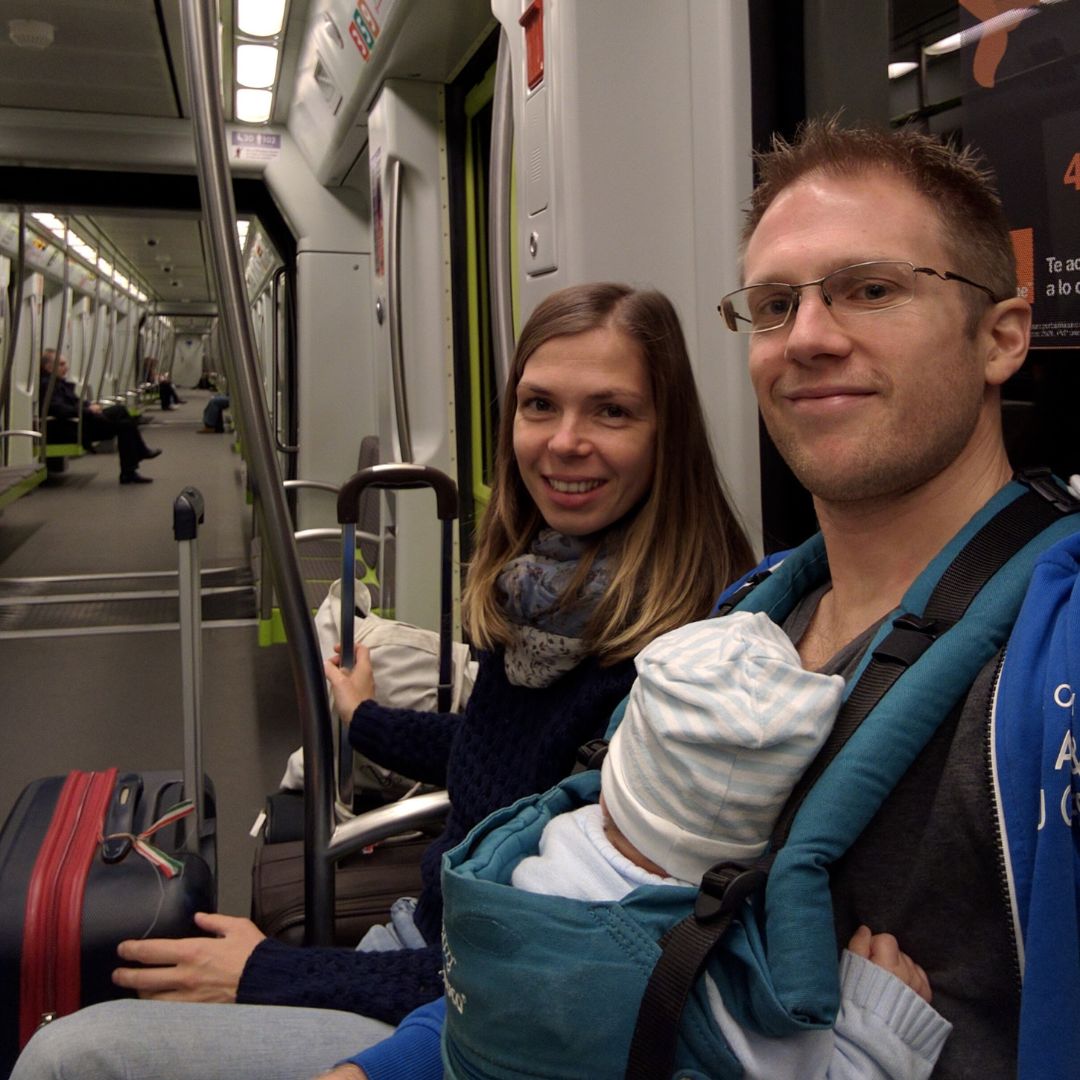
One of the simplest ways to make the airport experience easier is to use a baby carrier. It allows you to move freely through security, navigate crowded spaces, and keep your baby close and settled at the same time. While a pram can still be useful, especially in larger airports, it is often the carrier that makes the biggest difference in practice.
If you are travelling with another adult, it can help to approach boarding strategically. One person can board first to organise bags and prepare the space, while the other stays outside with the baby for as long as possible. This reduces the amount of time your baby spends confined on the plane before take-off.
During the Flight
Take-off and landing are often the moments parents worry about most because of the change in air pressure. Babies may find this uncomfortable, but sucking can help regulate the pressure in their ears. Feeding — whether breastfeeding or bottle feeding — or offering a pacifier during these moments can make a noticeable difference. It is best to start feeding when the plane actually begins to take off rather than during taxiing, which can sometimes take longer than expected.
When it comes to keeping your baby occupied, it is easy to overprepare. At this stage, babies are often most engaged by simple objects they can hold and explore. Soft sensory items, such as fabric balls, grasping toys, or small textured objects, tend to work particularly well during a flight because they invite movement and attention without overstimulation.

Feeding and Changing
Packing for a flight with a baby is often a balance between being prepared and carrying too much. A practical approach is to think about your baby’s usual routine and bring what you would normally need for that period, with a small buffer in case of delays. Flights do not always run exactly on time, and having a little extra can make the experience much less stressful.
Changing nappies on a plane is not ideal, but it is manageable with a simple setup. A compact changing mat and a small pouch with essentials are usually enough. Even families who prefer cloth nappies often choose disposable ones for travel, simply because they are more convenient in a limited space.
It is also easy to forget your own needs during the journey. Having water, a few snacks, and a spare top within reach can make a significant difference, especially on longer flights.
Keeping Expectations Realistic
One of the most helpful things to remember is that every journey will be different. A baby who sleeps through one flight may be unsettled on the next. A newborn, a three-month-old, and a seven-month-old will all experience travel in completely different ways.
It also helps to remember that most people around you are more understanding than you might expect. Many have been in the same situation before, and a baby on a plane is not unusual.
Rather than aiming for a perfectly smooth experience, it is often more helpful to approach the journey with flexibility. The goal is not perfection, but a manageable and calm experience for both you and your baby.
FAQ – Flying with a Baby
Is it safe to fly with a newborn baby?
In most cases, yes. Many airlines allow babies to fly from around one to two weeks old, but it is always best to check with your paediatrician before travelling, especially if your baby was born early or had any complications.
What helps with a baby’s ears during a flight?
Because of the change in air pressure, babies’ little ears often hurt during take-off and landing. Try to time the feeding times at these crucial moments.
To understand the physiology of why this happens and see further medical tips for preventing ear pain during flights, this expert summary offers clear, clinical guidance.
What should I pack when flying with a baby?
A practical approach is to pack what you would normally need for the same amount of time, plus a small extra buffer. This usually includes nappies, wipes, a change of clothes, feeding essentials, and a few simple objects to keep your baby occupied.
What are the best toys for flying with a baby?
Simple objects tend to work best. Babies are usually more engaged by items they can hold and explore, such as soft sensory toys or small grasping objects, rather than complex or noisy toys.
How early should I arrive at the airport with a baby?
It’s best to allow extra time. Moving through the airport with a baby often takes longer than expected, especially at security and boarding.
Final Thoughts
Flying with a baby is rarely as difficult as it seems beforehand. With each trip, you become more familiar with what your baby needs and what works for your family. Over time, what once felt overwhelming becomes something you can approach with much more confidence.
In the end, it is not about having everything perfectly organised. It is about creating an environment where your baby feels secure and where you feel prepared enough to adapt to whatever the journey brings.
Further Reading
If you’d like to explore more about baby development and everyday life with a baby, these articles may also be helpful:
Tummy Time – Why It Matters for Your Baby’s Development
Why free movement on the floor is essential for early development, especially when there is less opportunity for movement during travel.
Do You Really Need All That Baby Gear?
Less gear, more clarity — how to think about baby essentials in a practical and realistic way.