
If you spend time around new parents, you will quickly hear about tummy time. Pediatricians recommend it, parenting books mention it, and suddenly it can feel like something you should be doing all the time.
I remember those first weeks after my baby was born as a blur of feeding, changing nappies, and trying to make it to the shower at least once a day. Tummy time was honestly the last thing on my mind. When people started asking whether we were doing enough of it, I suddenly felt the familiar wave of new-parent guilt.
When I finally tried placing my baby on his tummy on the floor, he protested loudly. It didn’t feel right to force him into something he clearly disliked, so I stopped. But that only made the guilt worse.
The surprise came later when I realised something important: we had actually been doing tummy time all along — just not in the way I had imagined. Once I understood that tummy time does not always have to mean placing a baby flat on the floor, everything became much simpler.
Many everyday interactions already support the same development.
Why Tummy Time Is Important
Tummy time plays an important role in early physical development. When babies spend time on their tummy, they naturally try to lift their head in order to see the world around them. This simple action gradually strengthens the muscles in the neck, shoulders, chest, and arms.
These muscles later support many developmental milestones such as rolling, crawling, sitting, and eventually standing.
Tummy time also helps reduce the risk of positional plagiocephaly, often called flat head syndrome. Because babies sleep on their backs, the same part of the skull can rest against the mattress for long periods. Spending time on the tummy or in different positions helps distribute that pressure more evenly.
For more physiotherapist guidance on infant movement, you can read these tummy time tips from Next Small Step, a pediatric therapy resource.
Tummy Time Ideas for Newborns (0–2 Months)
In the first weeks of life, tummy time does not need to happen on the floor at all. Many babies actually tolerate other positions much better.
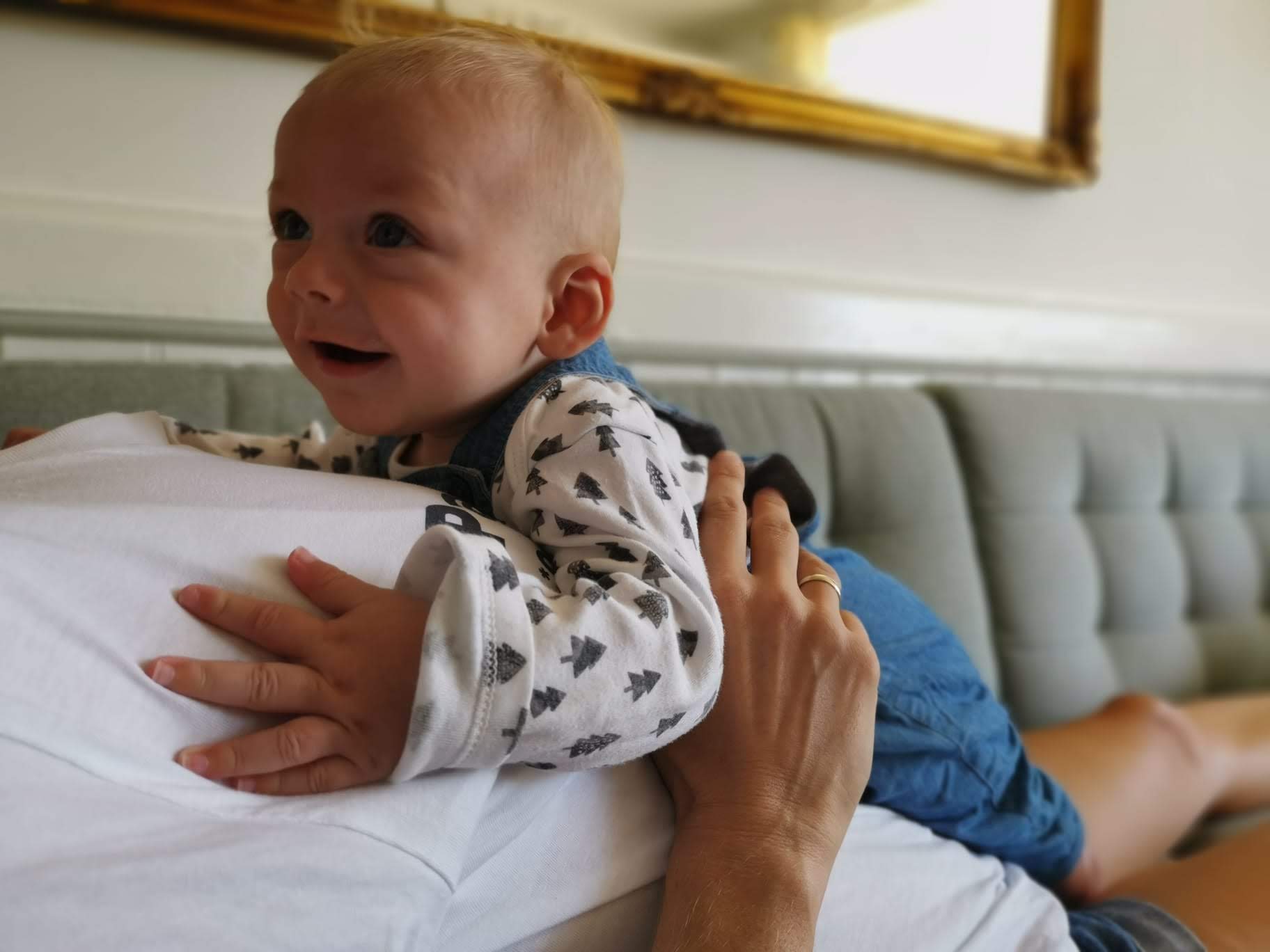
One of the simplest tummy time ideas is placing your baby tummy-down on your chest while you are reclining. In this position, your baby naturally lifts their head slightly to look at your face. Because your body supports most of their weight, the movement feels easier while still strengthening the neck muscles.
Your face also provides the strongest motivation. Babies are naturally drawn to faces and expressions, so they often lift their head repeatedly just to see you.
Another helpful position is the horizontal carry, sometimes called the “helicopter hold.” In this position the baby lies belly-down along your forearm while you support their body.
This position is often used to soothe babies with tummy discomfort, but it also encourages them to lift their head and observe their surroundings. For babies who dislike lying on the floor, it can be a very gentle way to practise the same movements.
Tummy Time Ideas From Around 2 Months
As babies grow stronger, spending short periods on the floor becomes easier. At this stage, offering something interesting to look at can make tummy time more enjoyable.
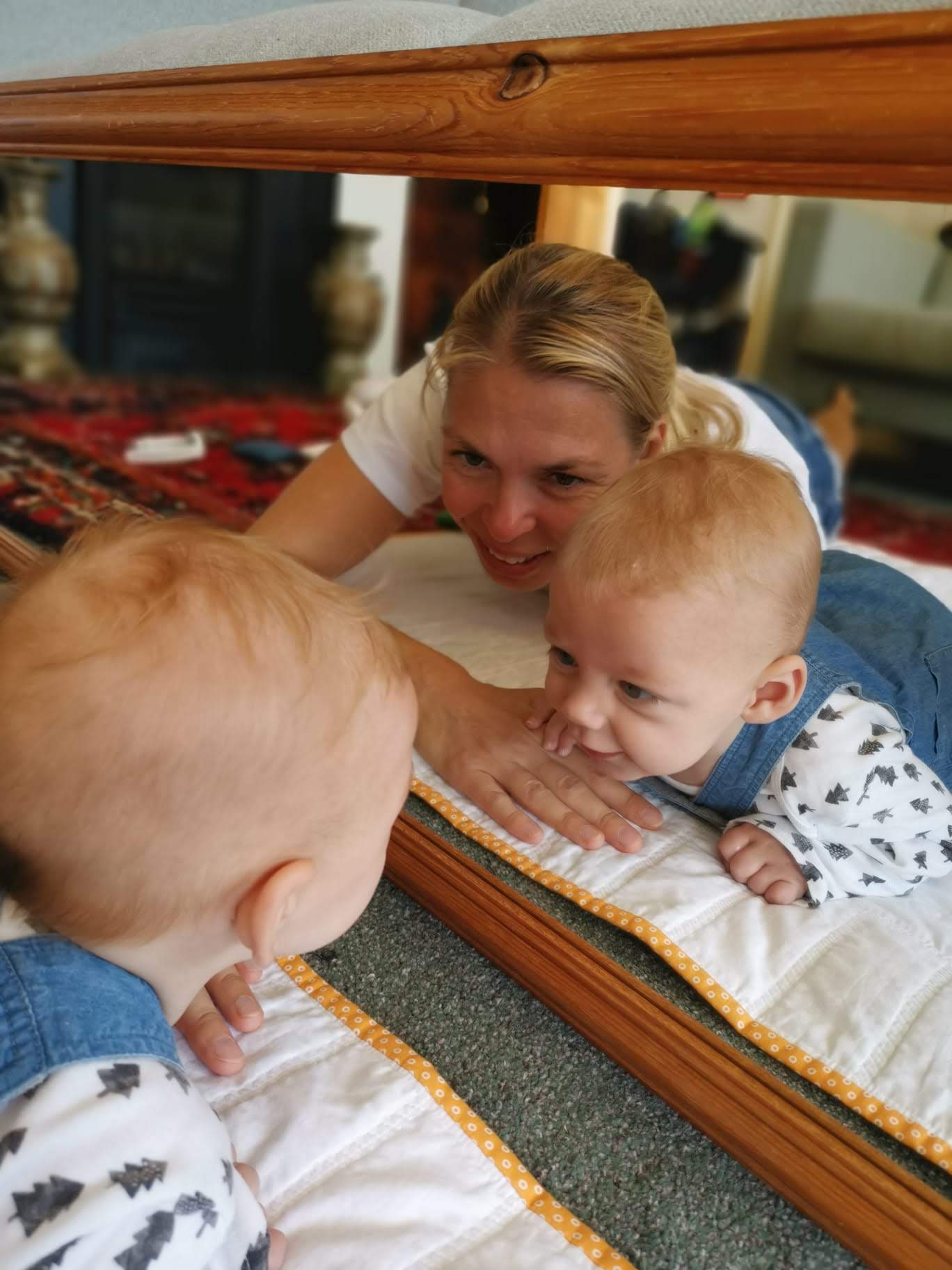
A side-lying mirror next to the Movement Mat is often one of the most engaging objects for a young baby. Even though babies do not yet recognise themselves, they are fascinated by the moving face they see in the reflection. Watching this movement often motivates them to lift their head and remain on their tummy longer.
You can also lie beside your baby and look into the mirror together. Talking, smiling, and making facial expressions often turns tummy time into a playful moment of connection.
Placing simple objects nearby can also encourage babies to stay on their tummy. Often the most interesting object is simply the caregiver. Lying down in front of your baby and talking or singing can hold their attention surprisingly well.
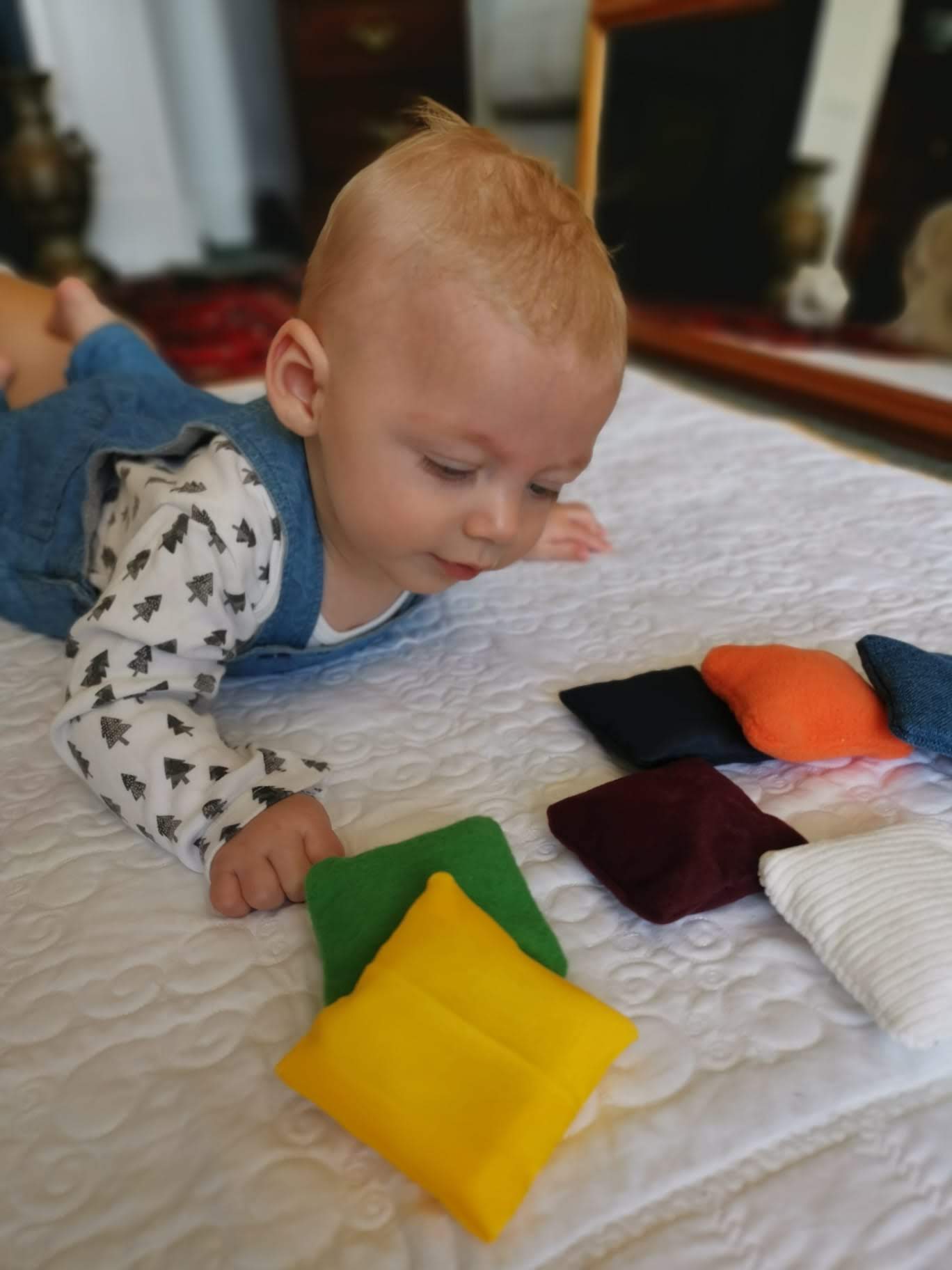
Some babies are also drawn to textured toys or soft sensory objects. These items offer shapes, colours, and surfaces that invite visual observation and eventually reaching.
Tips for Making Tummy Time Easier
Tummy time works best when the baby is awake, alert, and content. Trying it with a tired or hungry baby often leads to frustration.
For newborns, tummy time sessions may last only thirty seconds or a few minutes. This is completely normal, because lifting the head against gravity requires real effort. As the baby’s muscles strengthen, these moments naturally become longer.
Offering many short opportunities throughout the day is usually more effective than trying to extend one long session.
The surface also matters. A firm but comfortable mat allows babies to push against the floor while cushioning their body if their head drops.
Many older siblings enjoy joining floor time with the baby as they grow. Finding simple ways to participate can help strengthen the relationship naturally over time. Read more in Helping Your Firstborn Feel Included When a New Baby Arrives.
Frequently Asked Questions about Tummy Time
What If My Baby Hates It?
Many babies initially protest when placed on their tummy. This does not necessarily mean something is wrong. It often simply means the position requires effort. Short sessions, chest-to-chest contact, carrying positions, mirrors, and interesting objects nearby can all help babies gradually become more comfortable with tummy time.
Over time, most babies grow stronger and begin to enjoy exploring the world from this new perspective.
When should you start tummy time?
Most health professionals recommend starting tummy time from the first days of life, as long as the baby is awake and supervised. In the beginning, this may happen naturally during chest-to-chest contact or while carrying your baby.
How Long Should It Last?
In the earliest weeks, tummy time may last only 30 seconds to a few minutes at a time, and that is completely normal. As babies grow stronger, these moments gradually become longer. Many pediatric recommendations suggest aiming for around 30–60 minutes of total tummy time per day by three months, spread across many short sessions.
Final Thoughts
Tummy time does not need to become another source of stress for new parents. It can happen naturally through everyday interactions such as holding your baby, placing them on your chest, or offering short moments on the floor with something interesting to observe. As nowadays we often go on long journeys, it is even more important on those days. What matters most is that babies have opportunities to move their bodies and explore the world from different positions.
Very often, parents discover they have been practising tummy time all along — without even realising it.
Further Reading
If you’d like to explore how babies learn through movement, observation, and everyday interactions, these articles offer additional perspective:
- Baby Sensory Learning – Simple Objects That Encourage Exploration A closer look at how simple objects and everyday experiences help babies explore the world through their senses.
- Breaking the news – How to tell your firstborn – Preparing an older sibling for a new baby can be a big emotional transition. This article shares gentle ideas for introducing the news and supporting your child through the change.