
Among the Montessori visual mobiles, the Montessori Butterfly mobile is often the most visually striking. Bright colours, delicate shapes, and gentle movement make it captivating not only for infants but for adults as well.
By the time this mobile is introduced, babies have already spent several weeks observing earlier Montessori mobiles. Their visual system has gradually developed the ability to track movement, shift their gaze between objects, and notice finer details. This mobile builds on these abilities. Its multiple elements move independently through space, inviting the eyes to follow shifting colours and shapes for longer periods of time.
Because of this complexity, the Montessori Butterfly mobile is usually offered toward the end of the Montessori visual mobile sequence.
What the Montessori Butterfly Mobile Looks Like
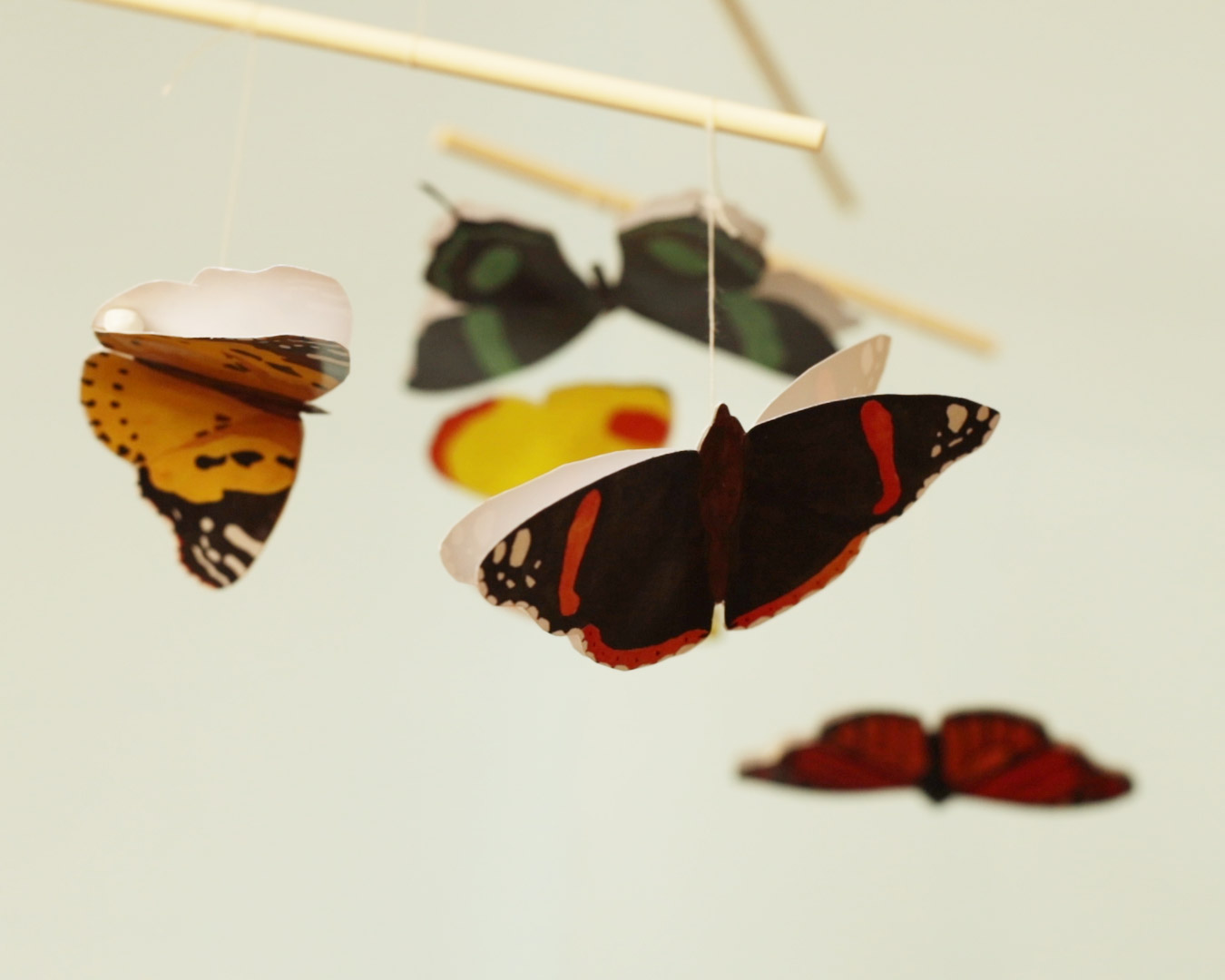
This mobile typically consists of five butterfly shapes suspended at slightly different heights. Each butterfly represents a real species commonly found in nature. Following Montessori principles, the shapes are usually designed to resemble real insects rather than stylised or fantastical ones. This preference for realistic imagery helps babies gradually build a coherent understanding of the world around them.
The butterflies are lightweight and move gently in the air. As they drift and rotate slowly, the baby can observe their colours, shapes, and the way they move relative to each other. The overall effect resembles butterflies floating through the air on a quiet day.
Why the Butterfly Mobile Captures Babies’ Attention
By the time the Montessori Butterfly mobile is introduced, babies have already practised observing earlier mobiles that present contrast, colour, and movement step by step.
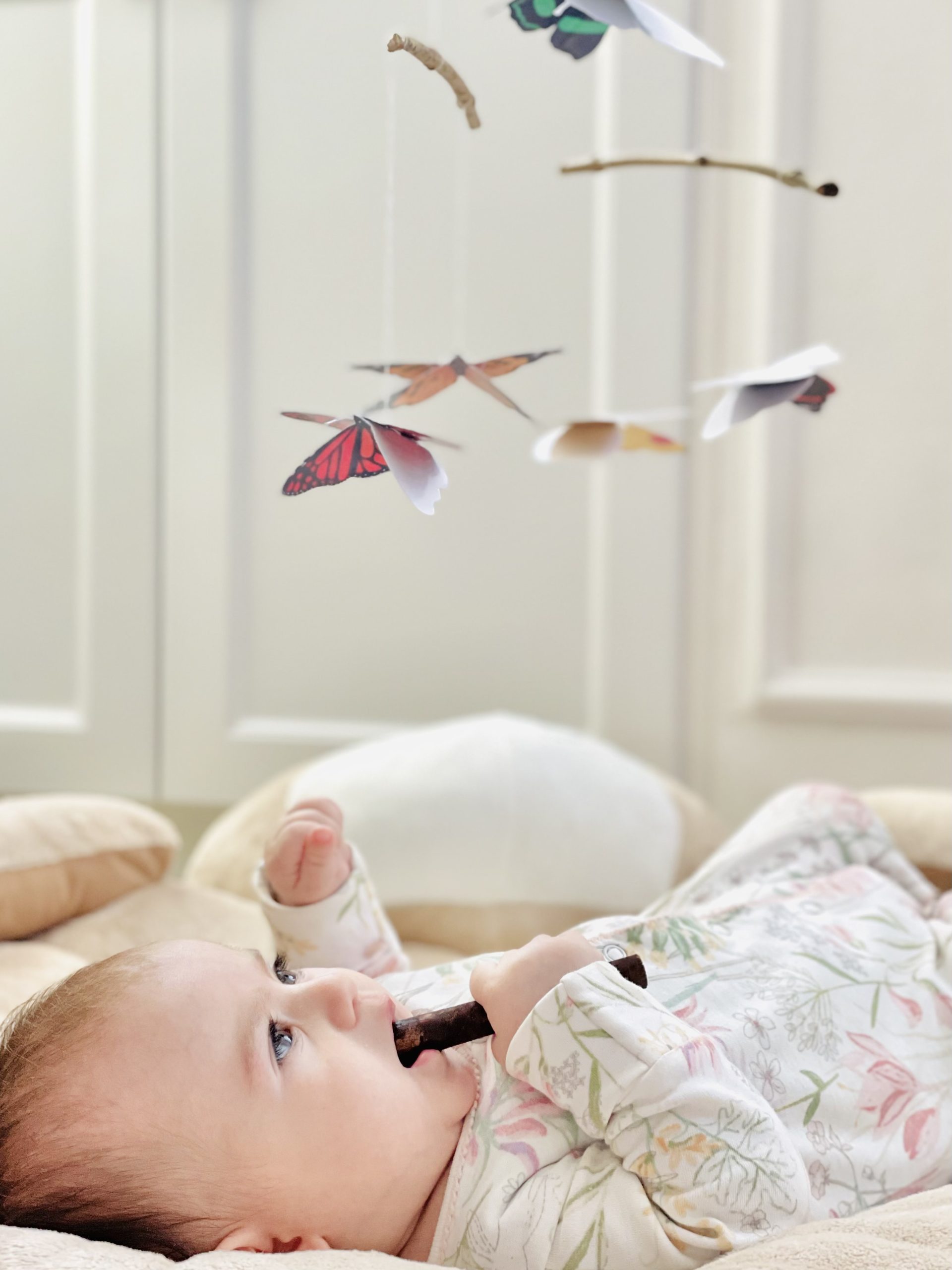
This mobile brings these elements together. The colourful wings and gentle motion naturally draw the baby’s gaze, while the separate butterflies move independently through the air. This creates a calm but visually rich scene that encourages sustained observation.
Because the movement remains slow and predictable, babies can continue watching without becoming overstimulated.
Visual Development Supported by the Butterfly Mobile
As infants observe this mobile, their visual system practises several abilities at once.
Their eyes follow the drifting butterflies across a wider visual field, strengthening visual tracking. The different heights of the elements also introduce spatial relationships, helping babies perceive how objects relate to each other in depth.
At this stage infants are also becoming more sensitive to differences in colour and shape. Watching multiple butterflies move independently allows them to notice these variations while maintaining visual focus.
These abilities develop gradually through repeated observation of calm movement.
How the Butterfly Mobile Fits into the Montessori Mobile Sequence
Within the Montessori visual mobile sequence, the Butterfly mobile represents one of the most visually complex stages. Although there’s no fixed moment for it, this mobile is usually introduced after other animal mobiles such as whales, swallows, or seagulls. By this stage, babies are already familiar with observing moving shapes and following them with their eyes. The Butterfly mobile extends this experience by introducing greater visual variety and colour.
Because it combines many visual elements at once, it often becomes one of the most engaging mobiles in the sequence.
Some families alternate animal mobiles weekly or when the baby begins to lose interest. Reintroducing a previously used mobile later can also be interesting, as babies observe it again with newly developed visual skills.
Preparing the Butterfly Mobile
For families who enjoy preparing materials at home, this mobile is available through Montessori Edited in two formats.
For families looking for a Montessori Butterfly mobile DIY option, a kit is available which includes all the materials needed to assemble the mobile. Others choose the digital version, an instant-download pattern that allows you to prepare the mobile yourself.
Both options follow the same design and allow you to prepare the material at home before offering it to your baby.
Final Thoughts
The Montessori Butterfly mobile brings together many of the visual experiences babies have been practising during the earlier mobiles. By this stage, infants can follow movement more smoothly, notice colour differences, and maintain their attention for longer periods of time.
Unlike many modern baby toys, this mobile does not rely on flashing lights, sounds, or constant stimulation. The movement comes only from the air in the room. The butterflies drift slowly and independently, giving the baby time to observe without being overwhelmed. This simplicity is intentional. Montessori materials aim to offer just enough interest to invite observation, while leaving space for the baby’s own concentration to develop.
When introduced at the right moment, the Butterfly mobile often becomes one of the most engaging stages in the sequence, as babies are able to follow multiple elements while maintaining focus. For many families, the Butterfly mobile becomes a quiet moment in the day — a small scene of gentle movement and colour that babies can return to again and again.
Further Reading
If you’d like to explore how babies respond to visual materials and how Montessori mobiles are used in practice, these articles offer additional perspective:
- Insider Tips for Using Montessori Mobiles
Practical advice on positioning, timing, and observing your baby’s reactions when introducing visual mobiles - Understanding Baby Reactions to Mobiles
How babies show interest, when they are ready for a new mobile, and what their reactions can tell us about development.