
When parents first encounter Montessori for babies, it often feels both appealing and confusing at the same time. The language promises calm, respect, and natural development — yet the reality online is frequently overwhelming, visually loud, and filled with rules that seem hard to live up to. This article clarifies what the Montessori prepared environment means for babies between 0–6 months. You don’t need prior knowledge of Montessori, and you don’t need to change everything at once. The goal here is clarity: to explain what the Montessori prepared environment actually means for babies between 0–6 months, and just as importantly, what it does not mean.
Rather than focusing on trends or aesthetics, we’ll look at principles that support your baby’s earliest development — in ways that are realistic, adaptable, and grounded in everyday life.
When “Montessori for Babies” Feels Overwhelming
If you search for Montessori for babies today, you’ll likely find an endless stream of images, product lists, and confident claims about what your baby needs in the first months of life. Carefully styled rooms. Neutral colour palettes. Long checklists that seem to suggest you can get Montessori “right” — or wrong.
It’s no wonder so many parents feel unsure.
At its core, Montessori was never meant to be another parenting trend or aesthetic to keep up with. It is not a shopping list, and it is certainly not a test of how well you’re doing as a parent. For babies especially, Montessori is far simpler — and far more human — than the internet often makes it seem.
The idea of the Montessori prepared environment is not simply a room, but a relationship between the baby, the space around them, and the time allowed for growth to unfold.
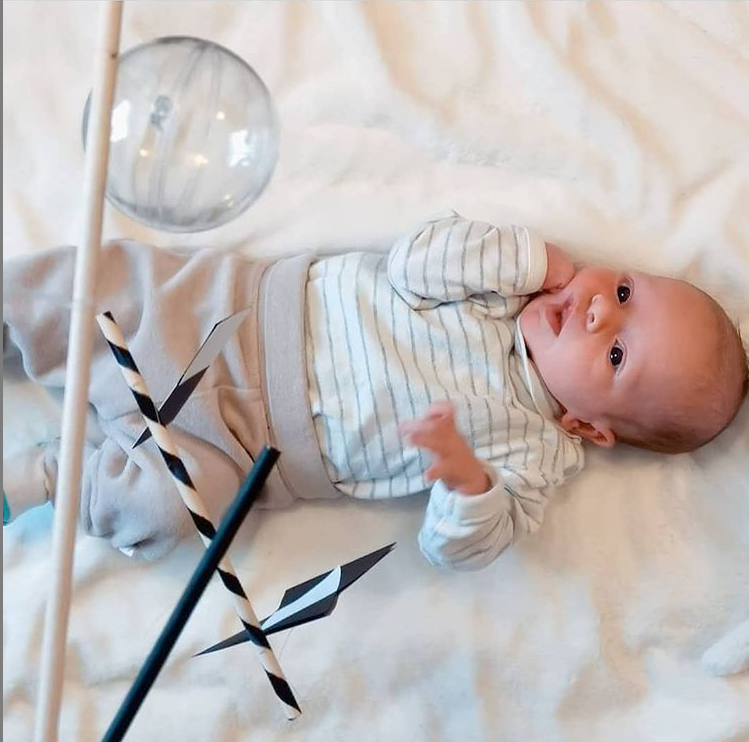
What the Montessori Prepared Environment Means for Babies (0–6 Months)
In the first six months of life, babies are not learning through instruction. They are not waiting to be taught. They are absorbing everything.
Maria Montessori described the young child as having an absorbent mind (a Montessori term for how babies and young children take in life around them with extraordinary ease). For babies, learning happens effortlessly — through movement, repetition, sound, light, and human connection. Nothing needs to be explained. Nothing needs to be rushed.
This is why the environment matters more than any individual object. In Montessori language, a prepared environment is one that includes what supports development — and removes what is superfluous. A baby needs a space that allows natural development to unfold without interference.
You may hear the environment described as the “third teacher.” For babies, this simply means that the space either supports calm exploration — or does not. Preparation is not something you do once. It is ongoing, responsive, and constantly adjusted as your baby changes.
Core Principles of a Baby‑Focused Prepared Environment
Simplicity
Research into early visual development supports this sensitivity, showing that newborns respond best to clear, limited visual input in the first months of life. Too much colour, movement, or contrast can compete for attention. Simplicity allows the baby’s gaze to settle, track, and rest.
In daily life, simplicity might mean fewer things within view, calmer transitions, and allowing your baby to focus on one experience at a time.
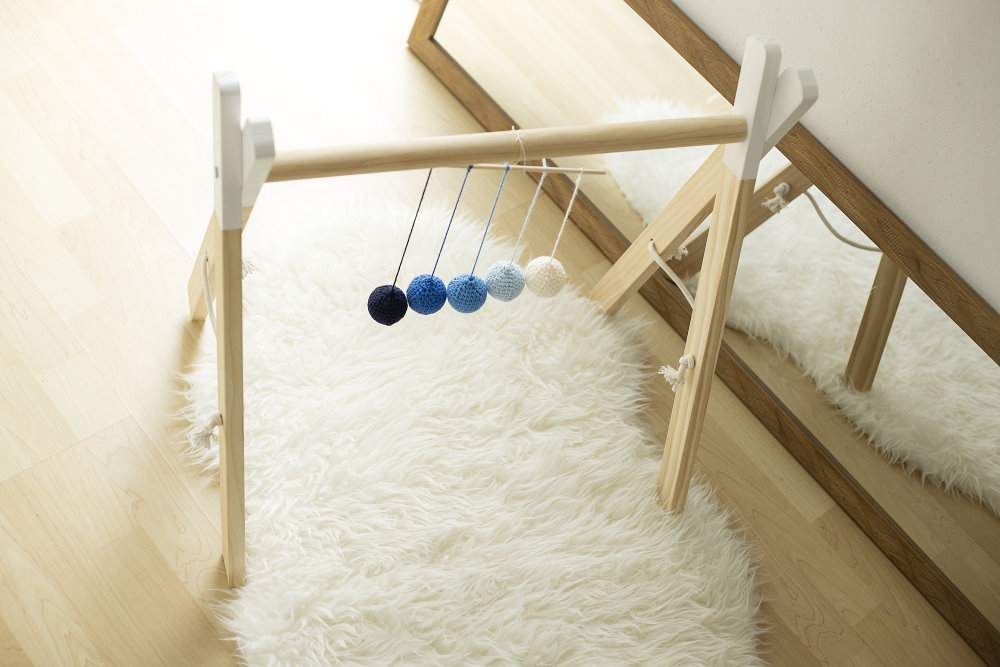
Order
External order supports internal calm. When experiences are predictable — the same place to lie down, familiar routines, gentle repetition — the world becomes more predictable.
Order does not mean rigidity. It means that the world feels understandable.
Respect
Respect in Montessori begins from birth. It shows up in how we touch, speak, wait, and respond. Doing things with the baby rather than to them supports trust.
Even small moments — pausing before picking your baby up, speaking before acting — communicate respect.
Trust
Babies have their own pace. Trust means allowing development to unfold without pushing, comparing, or correcting. A prepared environment supports this by offering space rather than pressure.
Time
Montessori for babies is unhurried. Repetition is not boredom — it is learning. Slowness allows observation, and observation guides thoughtful responses.
What the Montessori Prepared Environment Is Not
It is also useful to clarify what the prepared environment is not.
- It is not about beige rooms or curated interiors.
- It is not about expensive furniture or having the “right” setup from day one.
- It is not about constant stimulation or filling every quiet moment.
- It is not about early performance, milestones, or outcomes.
- And it is certainly not about doing Montessori perfectly.
A prepared environment is flexible. It changes as your baby changes.
Montessori Materials in Context
Montessori materials are often misunderstood as decorations or must‑have items. In reality, they are simply tools — offered at the right moment, for the right reason, and then stepped back from.
For babies, timing and restraint matter far more than quantity. Observation guides when to introduce something — and when to remove it again.
The developmental timeline of Montessori baby materials provides broader context without turning development into a checklist.
The Parent’s Role
In the Montessori approach, the parent’s role in the Montessori prepared environment is subtle but powerful.
- Observation precedes intervention
- Presence matters more than entertainment.
- Trust gradually replaces control.
Often, doing less allows your baby to do more.

Final Thoughts
A Montessori prepared environment is not something you purchase or complete. It is something you live. It asks us to slow down, to notice, and to respond with intention. To prepare ourselves as much as the space around us.
When the environment is calm and respectful, it is sufficient. Development unfolds from within, not from comparison.
For parents who’d like to explore these ideas more deeply, you may also find these articles helpful:
– a clear guide to Montessori mobiles and their purpose
– how the Munari mobile supports early visual calm