
From the moment a baby is born, the world is experienced through the senses. A soft voice, the warmth of a caregiver’s arms, the rhythm of breathing during feeding, or the movement of light across the room all become part of how the baby begins to understand their surroundings. These early experiences are not entertainment. They are the way the brain gradually begins to organise the world.
Baby sensory learning — sometimes also described as sensory development or sensory play — refers to how babies explore the world through touch, movement, sound, smell, taste, and sight. Through these experiences, the brain gradually connects information and begins to recognise patterns in the environment.
When people speak about baby sensory play, it can sound as if parents need to prepare special activities. In reality, sensory learning is already happening in the simplest moments of everyday life. Feeding, bath time, being carried, or lying on a movement mat observing the room all provide information that the baby slowly begins to interpret.
Understanding this process helps us create an environment that supports natural development.
What Is Baby Sensory Learning?
In the early months of life, babies begin exploring the world through their senses. These experiences gradually help the brain organise information about the environment.
A newborn feeding at the breast, for example, experiences many layers of sensory information at the same time. The warmth of the caregiver’s body, the smell of milk, the sound of a familiar voice, and the feeling of skin against skin all become part of the experience. For the baby, feeding is not only nourishment; it is also a complex sensory moment that helps the brain connect sensation with meaning.
The same is true for many everyday activities. Bathing introduces new temperatures and sounds. Being dried with a towel offers different textures and touch. Even lying quietly on the floor allows the baby to observe movement, light, and faces. In the early months, these ordinary moments often provide the richest sensory experiences.
Why Sensory Development Matters in the First Years
During the first years of life, the brain develops at an extraordinary pace. Every sensory experience contributes to the formation of neural connections. As these connections strengthen, the brain becomes better able to process information, coordinate movement, and respond to the environment.
This rapid development is one of the reasons the early years are considered so important. Sensory experiences help the brain organise information and gradually support more complex learning. However, sensory learning does not require constant stimulation or elaborate toys. What babies need most are varied, meaningful experiences that occur naturally throughout the day.
Time to move, time to observe, and time to interact with caregivers all play a role in this process. Through repetition, the brain slowly learns to organise these experiences into patterns that support later development.
Babies as Natural Explorers
Young children approach the world with a strong drive to investigate. They observe, experiment, and repeat actions again and again. A baby reaching for an object, dropping it, and reaching again is not simply playing. They are testing cause and effect, refining movement, and gathering information about their environment.
In their own way, babies investigate the world much like scientists do. They observe, repeat actions, and gradually discover how their movements affect the environment around them. The role of the adult is not to direct every experience, but to prepare an environment where safe exploration can take place.
The Seven Sensory Systems
Although we are often taught that humans have five senses, developmental science often describes seven sensory systems that work together during infancy. Each of them contributes to baby sensory learning, to how babies learn about their bodies and the environment around them.
Touch (Tactile Sense)
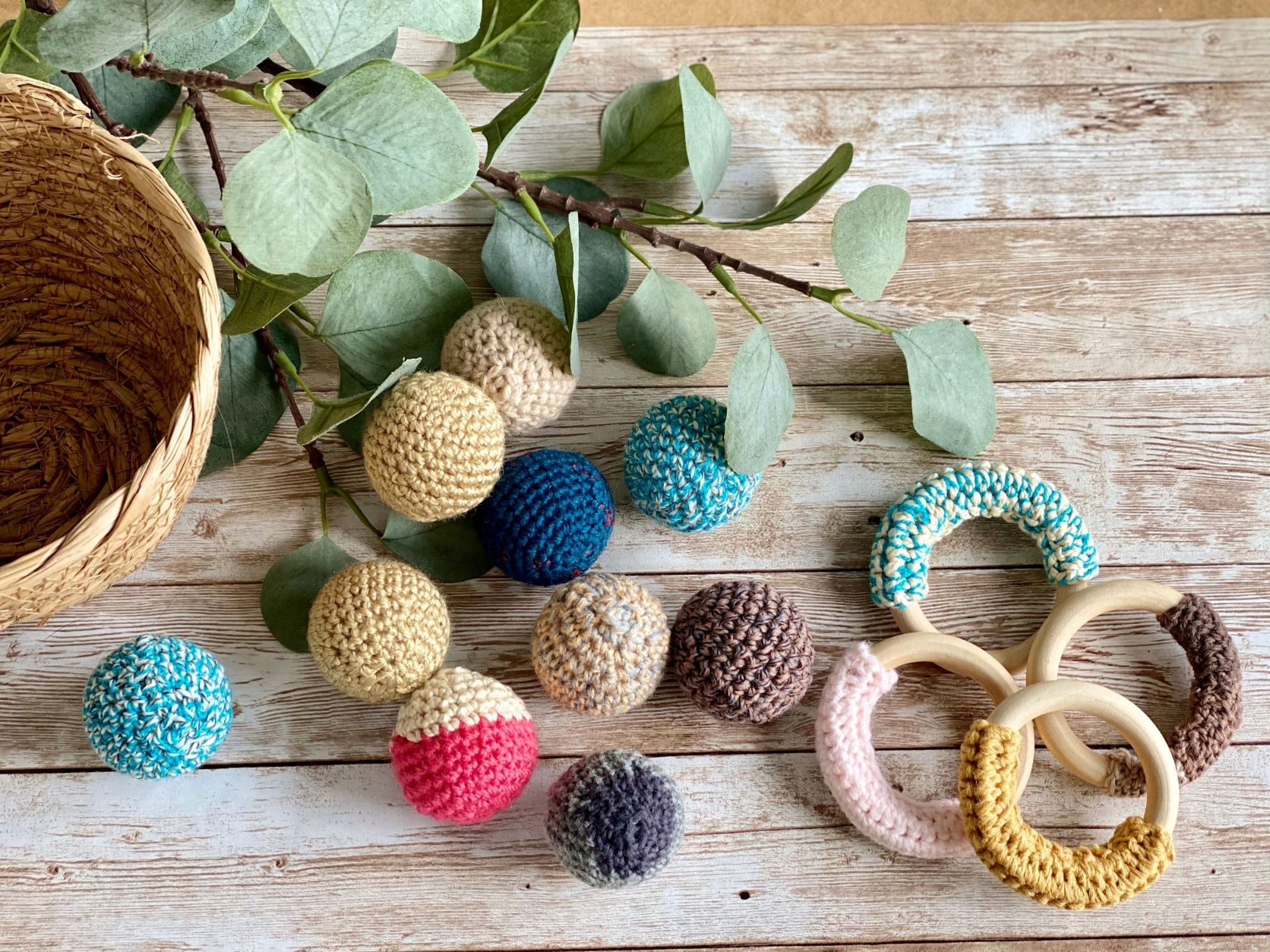
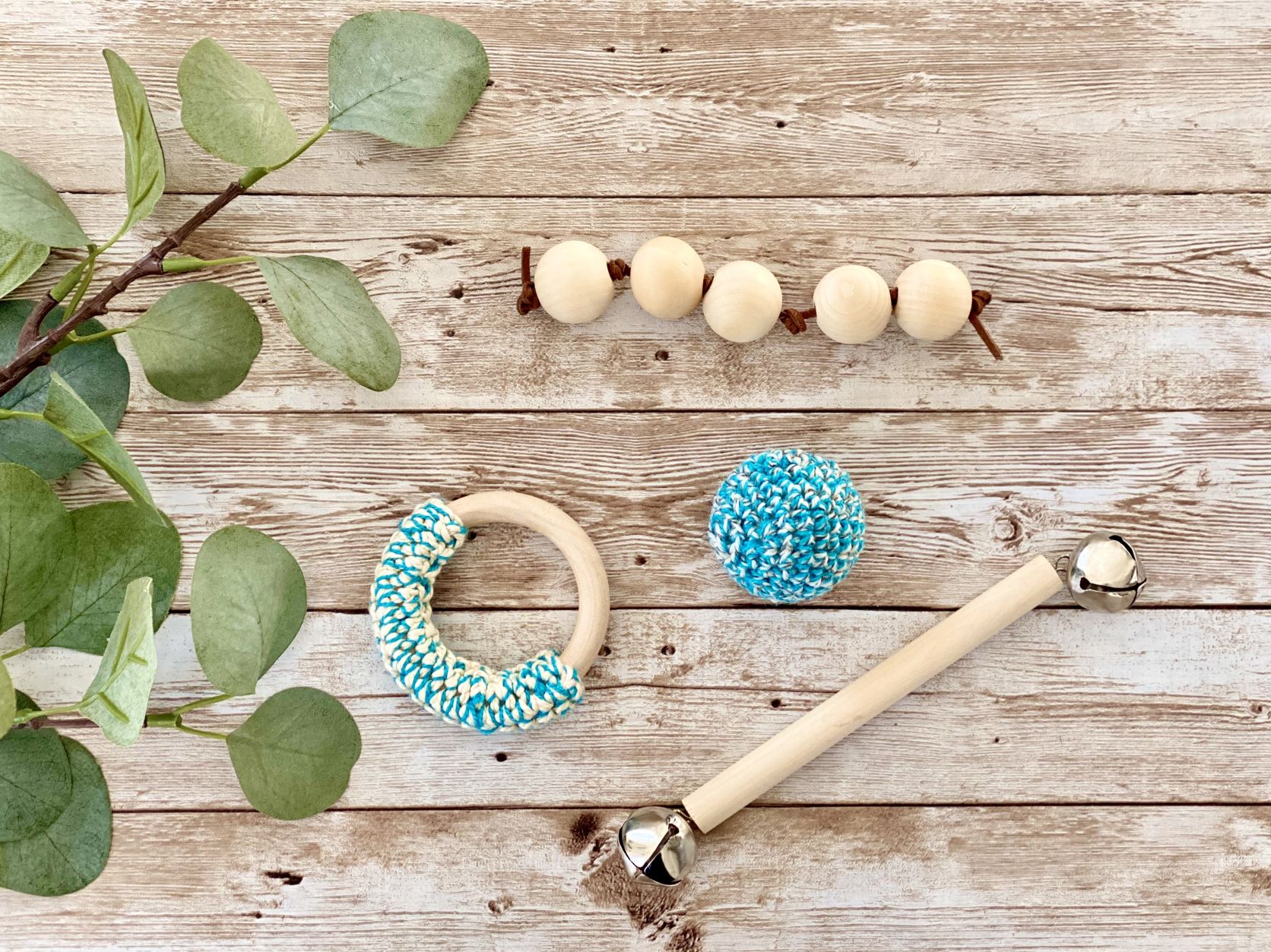
The sense of touch develops through contact with different surfaces and objects. Babies explore textures by grasping, holding, and eventually transferring objects from one hand to the other. They may bring objects to their mouth, squeeze them, or roll them between their fingers. These experiences strengthen fine motor coordination and help the brain understand the properties of objects. Soft fabrics, wooden rings, crochet balls, and textured materials can all offer rich tactile experiences.
Hearing (Auditory Sense)
Babies are sensitive to sound from birth. While loud or sudden noises may startle them, gentle sounds often capture their attention. The voice of a caregiver, the soft sound of music, or the gentle rattle of a toy can all become meaningful auditory experiences. Listening helps babies begin recognising patterns in sound and gradually supports language development.
Vision
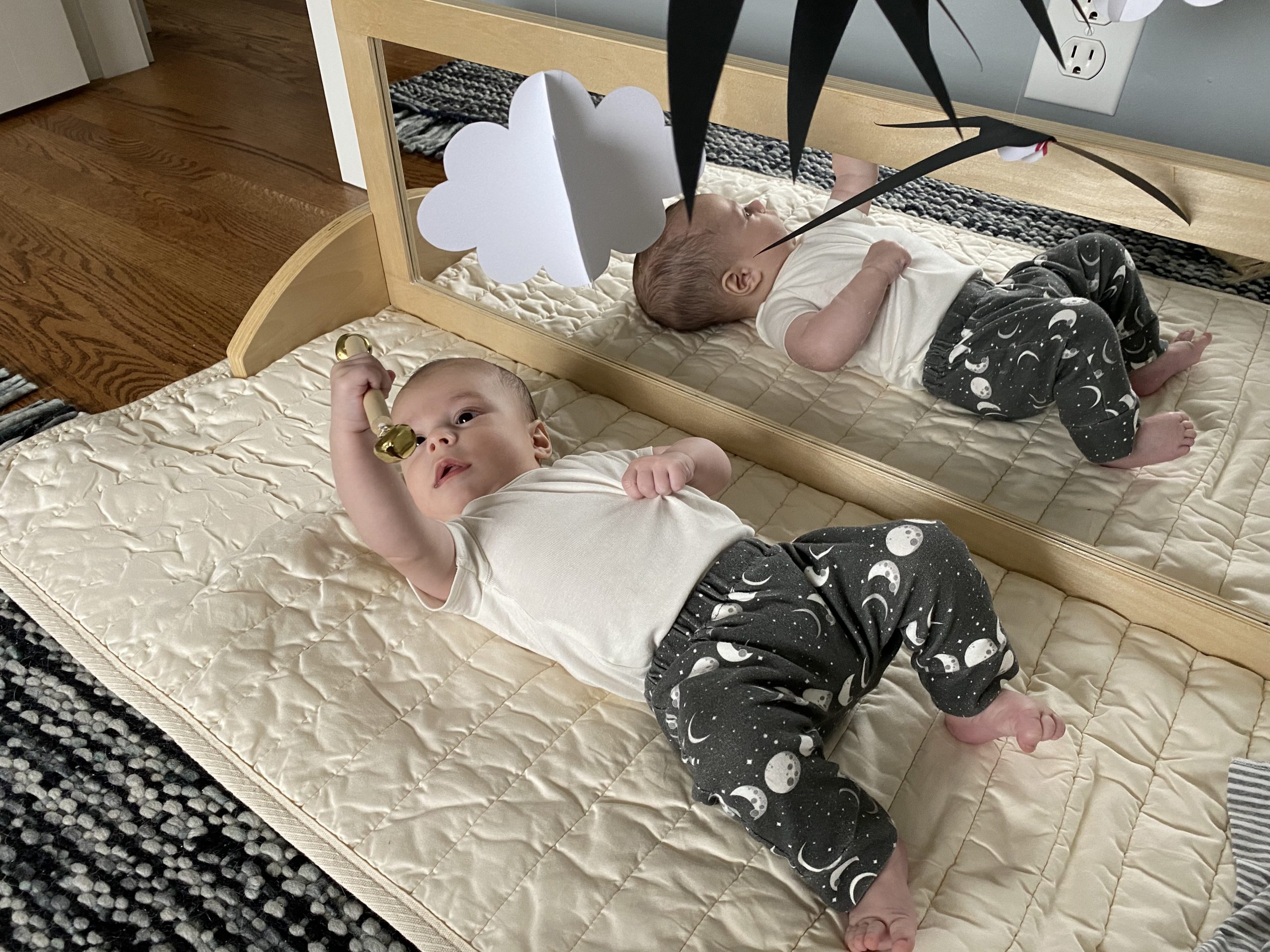
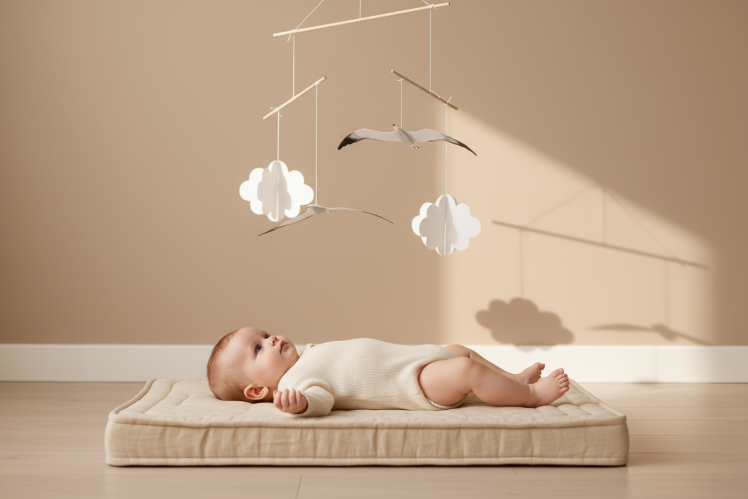
Vision develops gradually during the first months of life. Newborns see best at close distance and are particularly drawn to strong contrast, such as black-and-white shapes. As visual perception develops, babies begin to recognise colours, movement, and depth. Montessori visual mobiles are designed to follow this progression, offering visual experiences that correspond to the baby’s changing visual abilities.
Smell (Olfactory Sense)
A baby’s sense of smell is already quite developed at birth. This is one reason babies often recognise their caregiver quickly. The familiar scent of milk or skin provides comfort and helps the baby feel secure. Smell is also closely connected to emotional memory and bonding.
Taste (Gustatory Sense)
Baby sensory learning also includes tasting as babies explore the world through taste from the earliest days. Breast milk or formula introduces subtle variations in flavour. Later, when solid foods are introduced, babies continue expanding their sensory understanding through taste.
Body Awareness (Proprioception)
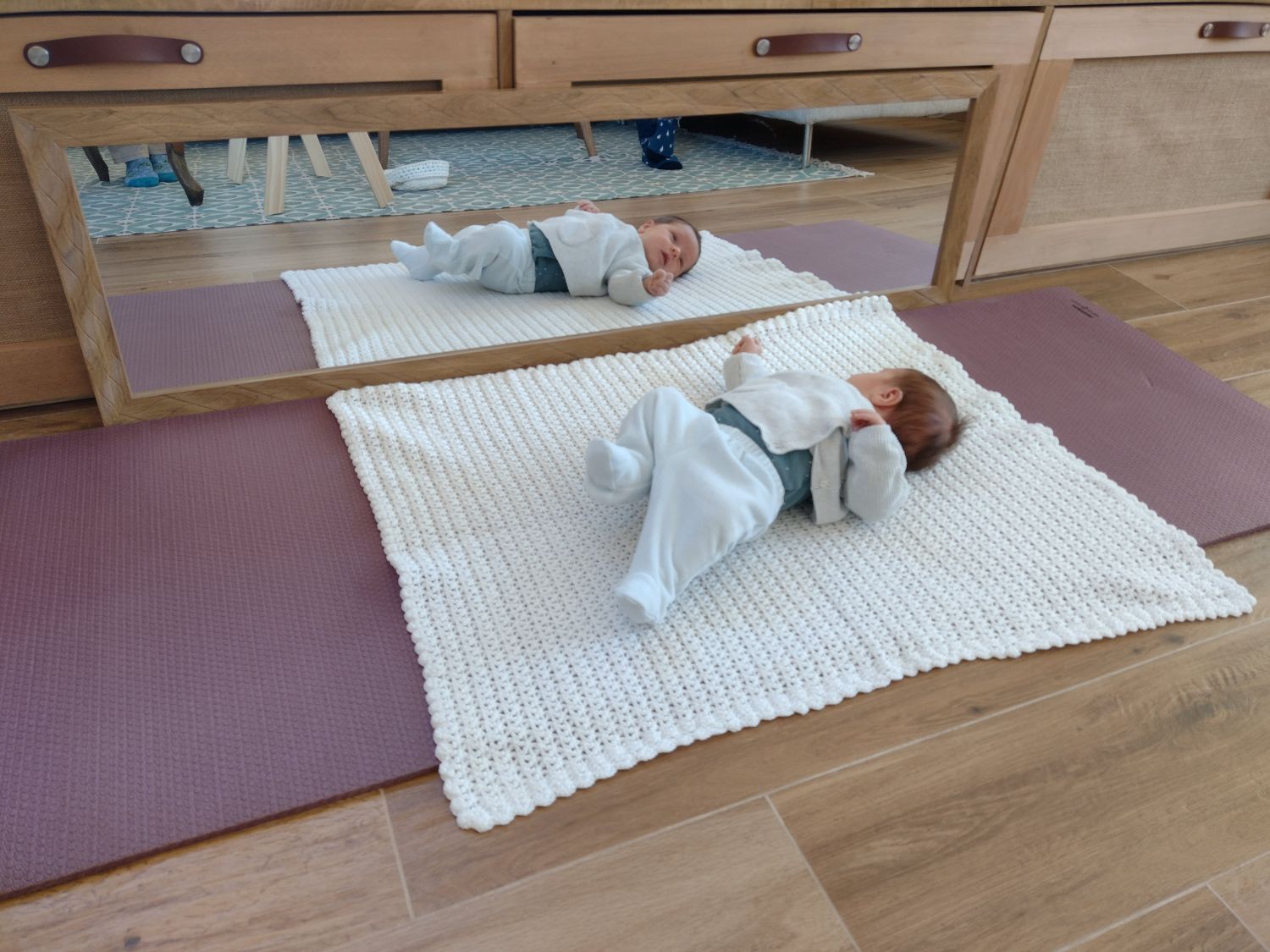
Proprioception refers to the body’s awareness of its own position and movement. This sense begins developing in the womb and continues as babies stretch, kick, roll, and gradually discover how their bodies move. Time on the floor supports this development, and a floor mirror can also help, allowing babies to observe their movements and slowly connect what they feel with what they see.
Balance and Movement (Vestibular Sense)
The vestibular system, located in the inner ear, helps the body understand balance and spatial orientation. Babies experience vestibular input through gentle movement such as being carried, rocked, or slowly swung. These experiences help the brain learn where the body is in space and gradually support balance and coordinated movement.
Simple Ways to Support Sensory Learning at Home
Babies do not need elaborate activities to experience rich sensory learning. Many of the most meaningful sensory experiences already happen in everyday life — during feeding, bath time, movement on the floor, or quiet observation of the environment. What matters most is offering simple opportunities to move, explore textures, listen to gentle sounds, and observe the world around them.
Safe household objects can become interesting items for baby sensory learning. Wooden spoons, fabric pieces, or small baskets often attract a baby’s attention because they offer different textures and shapes. Some families create simple treasure baskets filled with safe everyday objects that babies can explore freely.
Sensory bottles are another simple idea for baby sensory learning. A clear bottle filled with water, rice, or small objects can create visual and auditory interest when gently moved. These do not need to be elaborate to capture a baby’s attention.
Outdoor environments also provide rich sensory experiences. Grass, sand, soil, and leaves all offer textures and smells that are different from those found indoors. Even brief moments outside can introduce new sensory information for the baby to observe and explore.
Final Thoughts
Babies are born with a natural drive to engage with the world through their senses. These experiences help them understand their surroundings and gradually build connections in the brain that support future learning.
What babies need most is not constant stimulation but a calm environment filled with meaningful opportunities to move, observe, and interact. Everyday experiences — feeding, bathing, being carried, and quiet observation — often provide the most valuable baby sensory learning. And this process can be continued during disruptions as well, such as travelling.
Simple objects can also support this process. Materials with different textures, shapes, and sounds allow babies to explore the world through touch, movement, and observation. Tools such as the Montessori Newborn Activity Pack bring together several of these sensory experiences in one place while still keeping the environment simple and uncluttered.
When the environment respects the baby’s natural pace of development, sensory learning unfolds gradually and naturally.
Further Reading
If you’d like to explore how baby sensory learning connect with everyday play and the prepared environment, these articles offer additional perspective:
- Open-Ended and Closed-Ended Toys – What’s the Difference?
A closer look at how different types of toys influence exploration, creativity, and independent play in early childhood. - Crochet Baby Toys – Safety Tips Every Parent Should Know
Crochet baby toys can be safe, but some details matter. Learn what to look for in yarn, stitching, and toy design before giving them to your baby.