
Crochet baby toys are undeniably charming. Soft yarn, gentle textures, and adorable shapes make them appealing both to babies and to parents choosing their first toys. It’s easy to imagine how much a baby might enjoy holding a tiny crocheted octopus, bunny, or lion.
Because these toys are often made from natural materials, many parents assume they are automatically safe. In most cases, they are. However, there are a few important details worth paying attention to before offering crochet toys to a baby.
Some crochet toys are made to look beautiful, but babies experience toys very differently from adults. Understanding what to look for can help you choose crochet baby toys that are both beautiful and safe.
Are crochet toys safe for babies?
Crochet baby toys can be safe for babies, but their safety depends on a few important details. The type of yarn used, how securely the toy is stitched, and whether it includes small parts all play a role.
Many crochet toys are made from soft natural fibres and can provide lovely tactile experiences for babies. However, some designs include decorative elements such as safety eyes, long ears, or loosely attached pieces that may pose a risk for very young children.
For this reason, it helps to choose crochet toys that are simple in shape, tightly stitched, and free of small detachable parts. Checking the materials and construction before offering a toy allows parents to make a more confident decision.
Babies explore the world through touch and taste, so anything they hold will eventually end up in their mouth. For this reason, it helps to choose crochet toys that are simple, durable, and made with safe materials.
Yarn and Materials
One of the first things parents often check is the type of yarn used.
Some yarns are marketed specifically as baby-safe yarn, meaning they are designed to be soft, hypoallergenic, and gentle on sensitive skin. These yarns are often organic or specially processed, which can make them more expensive.
While these options can be reassuring, the most important factor is that the yarn does not bleed dye when washed. If colour runs during washing, the toy may release chemicals that babies could ingest when mouthing the toy.
In practice, choosing good-quality yarn and ensuring it is colourfast is usually sufficient.
Possible Allergies
Wool allergies are often mentioned when discussing crochet baby toys. In reality, they are quite rare. Most babies tolerate wool very well, and allergic reactions are uncommon. However, if your family has a known sensitivity to wool or lanolin, you may prefer toys made from cotton or bamboo yarn instead.
Read more about this on this website .
Choking Hazards
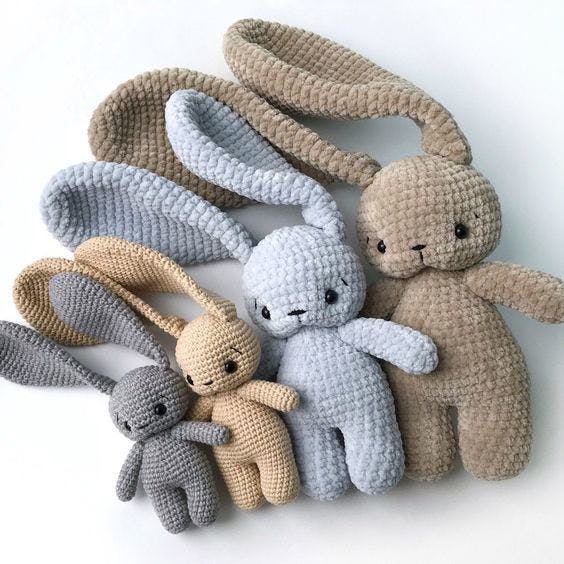
When choosing crochet baby toys, it’s important to consider the shape of the toy. Many crochet toys include long ears, tentacles, or decorative elements. While these designs can be very cute, they can sometimes pose a risk if small pieces become loose or if long parts are easy to pull apart.
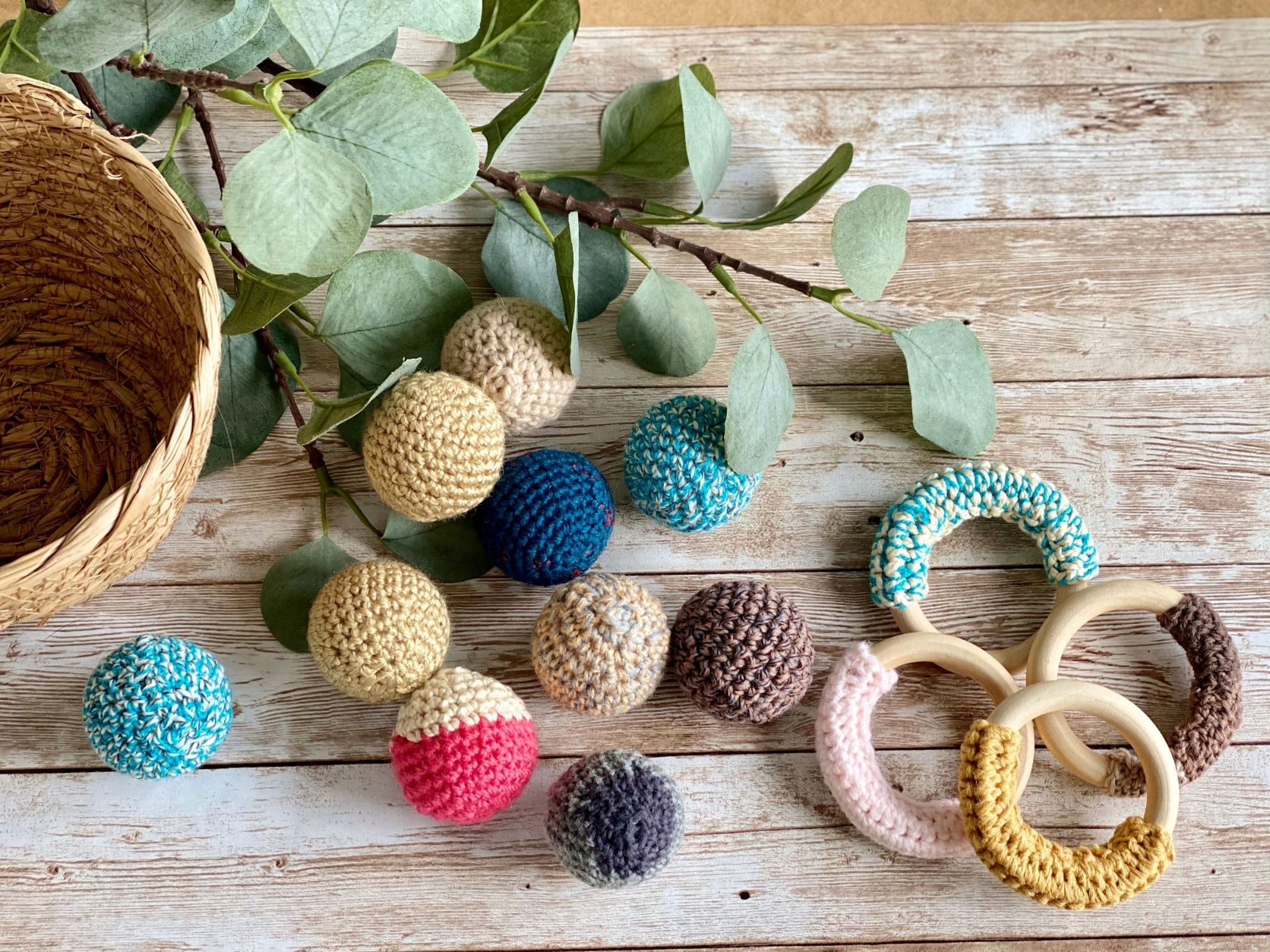
Many parents prefer simple crochet toys for this reason. Objects like crochet sensory balls or crochet-covered teething rings tend to be easier for babies to hold and explore safely because they do not include small decorative parts. Toys designed specifically for babies often focus on texture and grip rather than complex shapes.
Safety Eyes on Crochet Toys
Many crochet toys use small plastic pieces known as “safety eyes.” Despite the name, these pieces are still small parts. Over time, especially when toys are chewed or pulled, they can potentially loosen. For very young babies, embroidered or crocheted eyes are usually a safer option because they cannot detach from the toy.
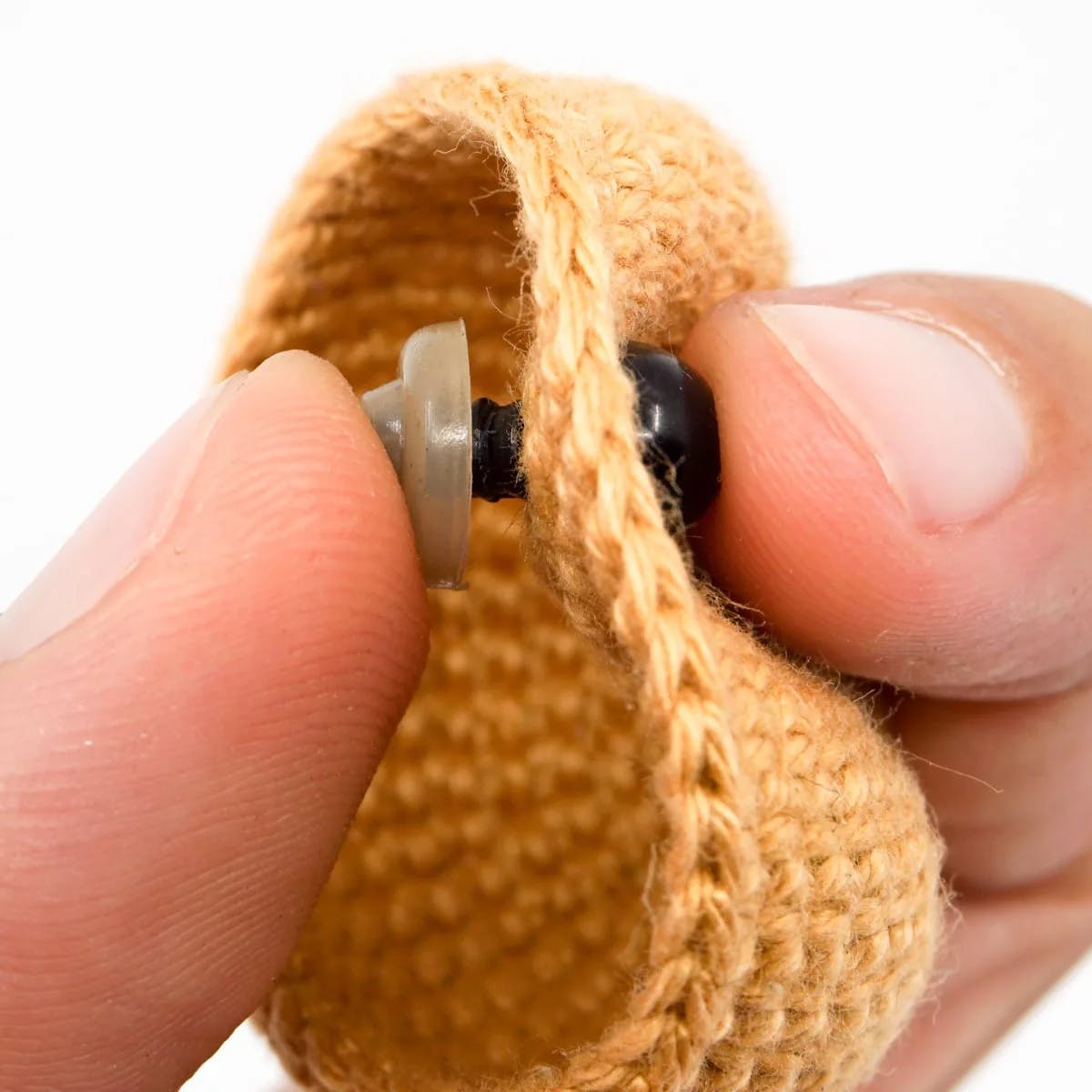
Plastic safety eyes can sometimes loosen over time, so stitched or crocheted eyes are often a safer choice for crochet baby toys, such as these crochet sensory balls and teething rings designed for babies.
Loose stuffing
Some crochet toys contain fibre filling. If the toy becomes damaged or the stitches loosen, the filling may come out. Babies explore with their mouths, so loose fibres could potentially be swallowed. For this reason, crochet toys should be tightly stitched and regularly checked for damage.
Weak stitching or loose seams
Handmade toys vary in quality. If stitches are loose or the yarn tension is uneven, parts of the toy may become loose with repeated chewing or pulling.
Choosing well-made toys with tight stitching helps ensure they remain durable during everyday use.
Simple Objects Often Work Best
In the early months, babies do not need complex toys. Simple objects that are easy to grasp and explore tend to support sensory learning much more effectively than highly decorative toys.
This is one reason why many Montessori-inspired environments focus on simple sensory materials rather than toys with many small parts. Objects that offer different textures, shapes, and weights allow babies to explore freely with their hands and mouths. These kinds of materials are often described as open-ended, meaning that babies can interact with them in many different ways rather than using them for a single fixed purpose.
If you would like to explore this idea further, you may find this article about open-ended and closed-ended toys helpful. And if you are interested in offering a wider variety of safe objects for exploration, you may also enjoy learning about Treasure Basket play, where babies investigate carefully selected everyday items that stimulate their senses.
Final Thoughts
Crochet baby toys can be a lovely addition to a baby’s environment. Their soft textures and handmade appearance make them appealing both to parents and to babies learning to explore the world. Like any baby product, crochet toys can be safe when they are thoughtfully designed and regularly checked for loose parts or damage.
With these small precautions in mind, crochet toys can offer gentle sensory experiences that babies can safely explore.
Further Reading
If you’re interested in how babies explore objects and materials during the first year, these articles may also be helpful:
- Montessori Alternatives to Traditional Baby Toys
A closer look at simple materials that support calm exploration and development. - The Work of the Child – Understanding Exploration in Montessori
Why Montessori describes children’s play as “work” and how exploration helps build concentration, independence, and learning.