
As the first visual mobiles complete their quiet cycle, something subtle shifts. A baby who once focused on contrast, colour gradation, and geometric movement begins to widen their field of interest. Vision no longer rests only on abstract form. It gradually opens toward recognisable shape and flowing motion. Montessori animal mobiles often appear at this stage.
They do not introduce a new skill. They extend what has already begun.
What Are Montessori Animal Mobiles?
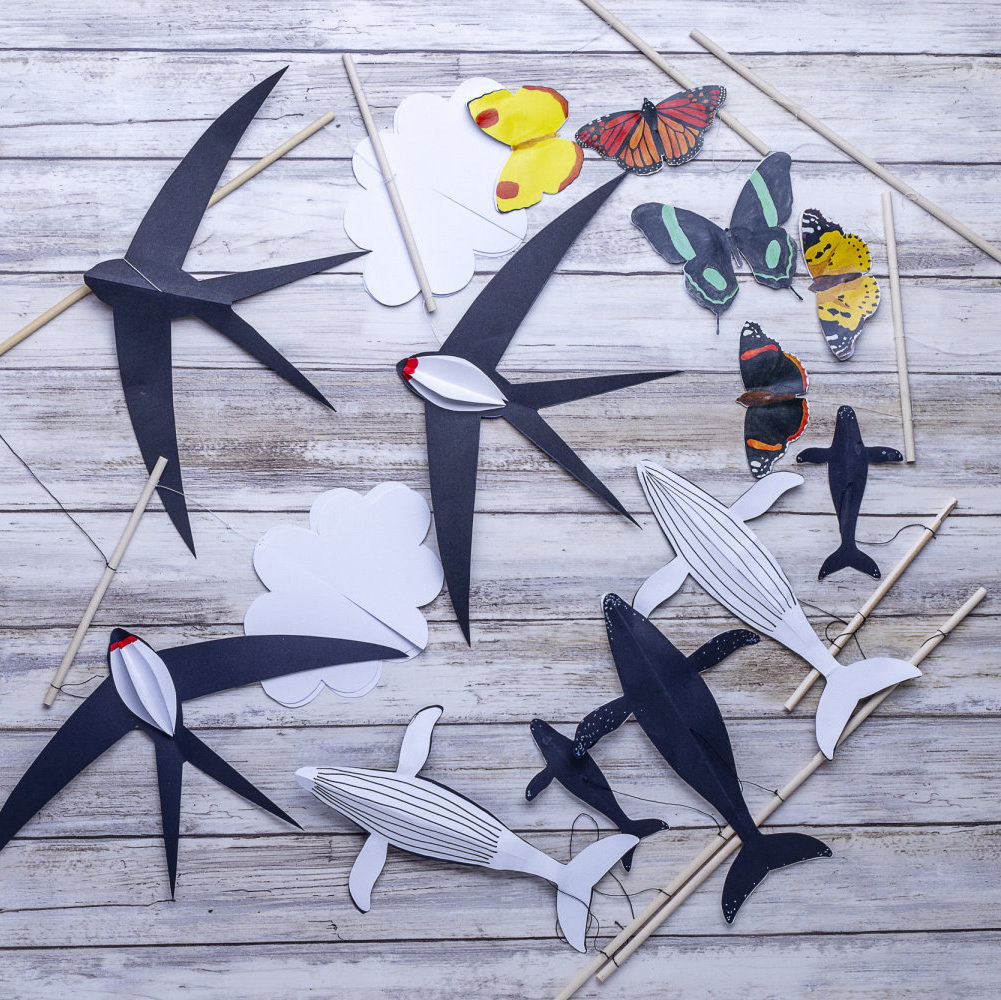
Montessori animal mobiles present simplified, recognisable forms drawn from the natural world. Birds in flight. Marine animals moving through water. Insects suspended in air. In practice, these often include whales, swallows, seagulls, and butterflies — each offering a slightly different quality of movement and spatial perception.
They are not decorative additions. Nor are they intended to stimulate more than earlier mobiles. Instead, they continue the same principles:
- visual clarity
- limited elements
- calm movement
- observation without interaction
Like all visual mobiles, they are meant to be watched, not touched.
A broader medical overview of how sensory and visual development unfold during infancy is available through MedlinePlus, published by the U.S. National Library of Medicine.
Simplicity and Restraint
Animal mobiles typically contain only a few suspended elements. This is intentional. Too many forms would compete for attention and fragment visual focus.
The aim remains coherence.
Even as the shapes become more recognisable, the visual field stays organised. Movement remains slow and irregular, guided by air currents rather than mechanical motion.
This allows observation to deepen rather than scatter.
Realism and Recognition
Unlike the geometric mobiles that precede them, animal mobiles introduce concrete imagery. The forms resemble living counterparts. Birds appear to glide. Whales seem to move through space. Butterflies float lightly.
This realism does not function as early “teaching.” The baby does not need to name or categorise what they see. What matters is that the shapes move in ways that feel continuous and natural.
Vision is now capable of holding more complexity without losing stability.
There Is No Strict Sequence
Animal mobiles do not follow a rigid progression in the way the Munari, Octahedron, Gobbi, and Dancers do.
By this stage, visual organisation is more flexible. Interest may shift naturally between different forms. Some babies observe one mobile for days. Others seem ready for variation sooner.
Observation remains the guide.
The mobile is changed not because a calendar suggests it, but because attention has moved.
The Whale Mobile
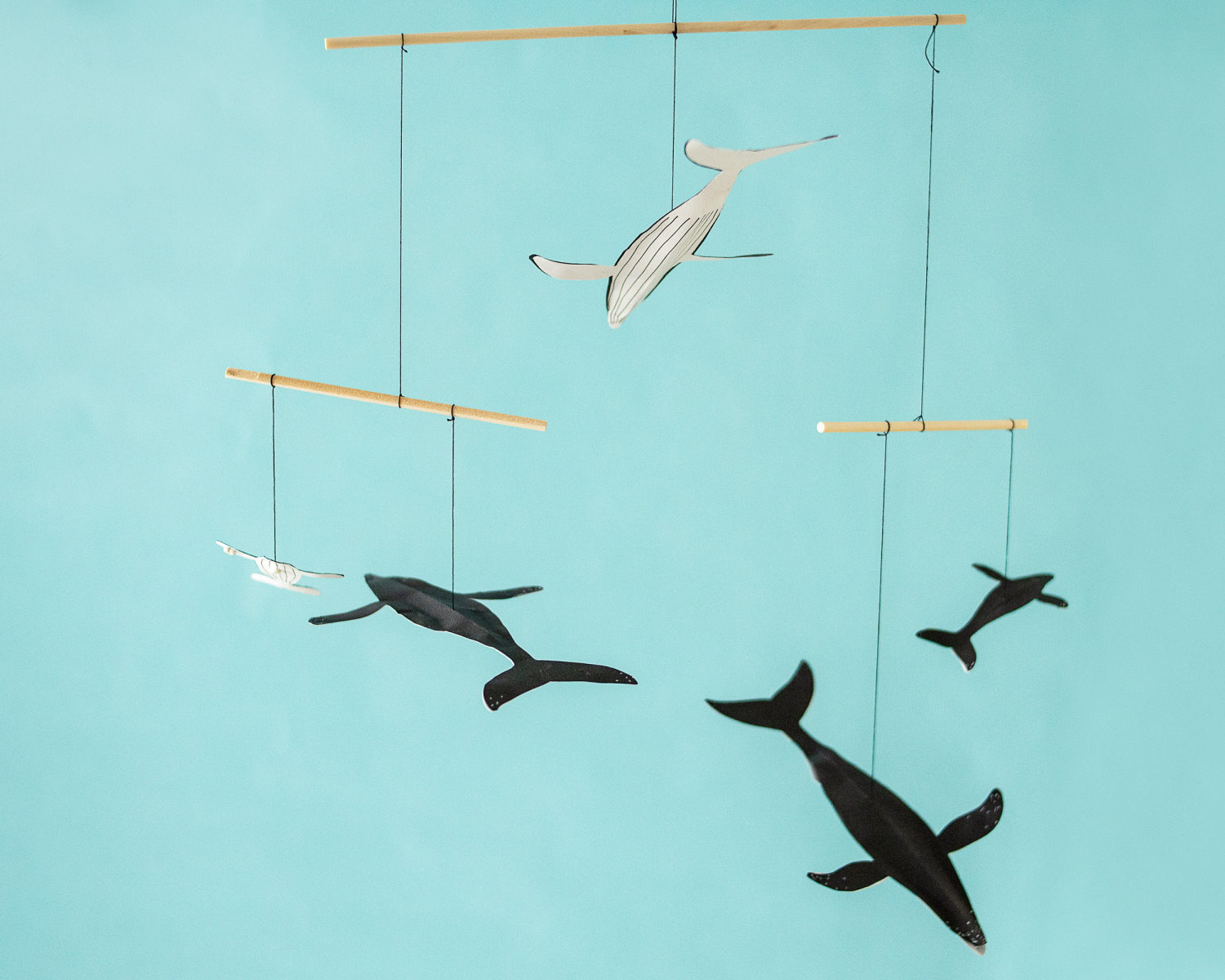
The Whale mobile offers layered depth and gentle marine movement. Differences in size and height invite subtle spatial perception without overwhelming the visual field. In the dedicated article on the Montessori Whale mobile, I explore how this layered arrangement supports early depth awareness.
Even without colour variation, the layered arrangement provides enough visual interest to sustain focused looking.
The Montessori Swallows Mobile
The Swallos mobile introduces directional movement and lightness, allowing the eye to follow motion across space in a clear, rhythmic way. The forms are light and directional. A small contrasting detail — such as a red beak — may draw the eye momentarily before attention settles again. Cloud elements sometimes frame the scene, creating a sense of space without adding visual noise.
These mobiles extend earlier tracking experiences into more fluid, directional movement.

The Seagull Mobile
The Seagull mobile offers a broader glide and a steadier horizontal movement, inviting sustained tracking across a wider visual field. Its movement often appears more horizontal and sustained, offering the eye a longer line to follow through space. The contrast remains clear, but the visual rhythm is calmer and more extended.
Rather than introducing complexity, it stabilises tracking and invites longer observation across a wider visual field.

The Butterfly mobile
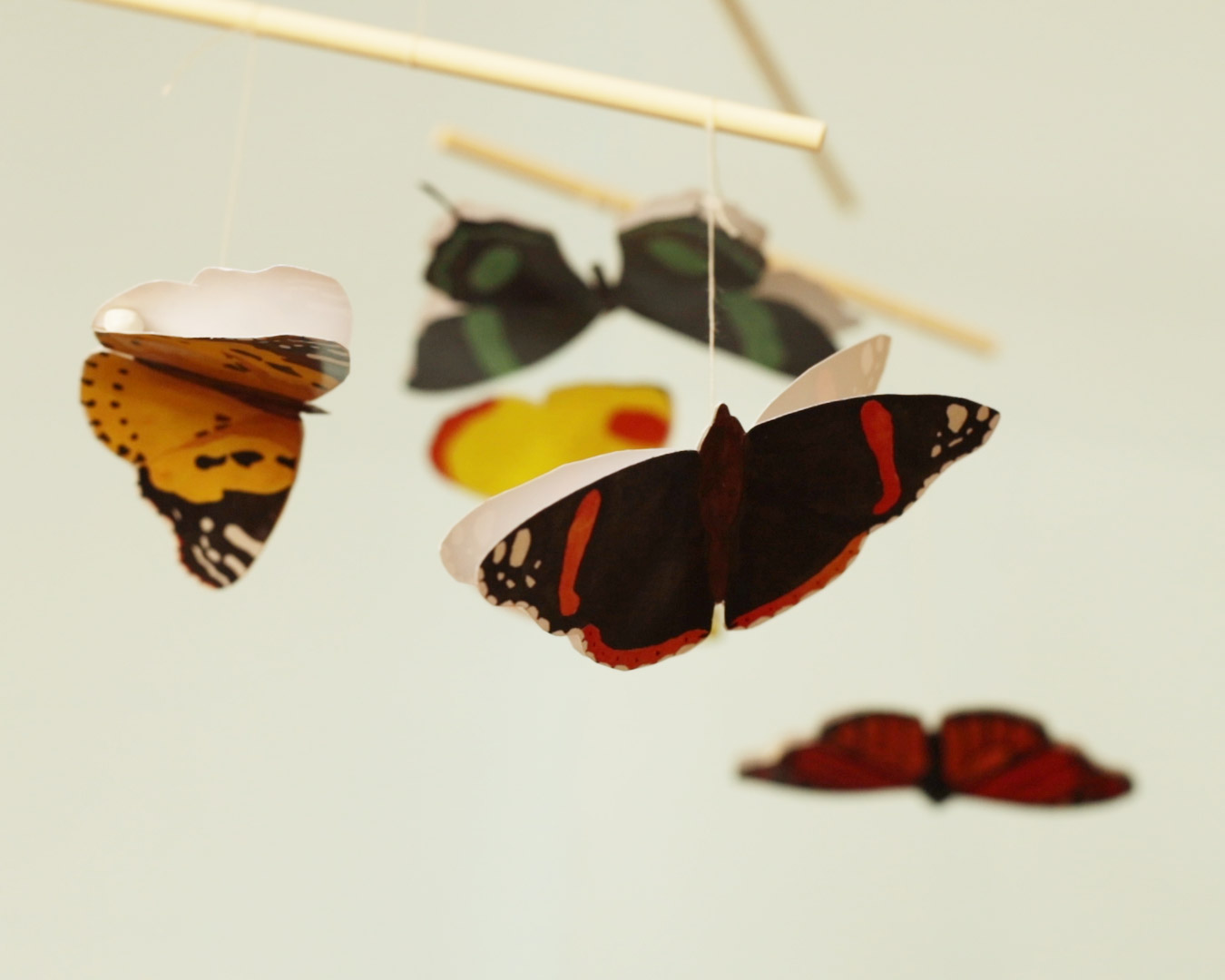
The butterfly mobile introduces refined colour variation while maintaining clarity of form and gentle motion. The forms are smaller, lighter, and suspended to move gently with air currents. Colour at this stage does not function as stimulation, but as refinement. The eye is now capable of distinguishing hue variation without becoming overloaded.
Some families choose to place this mobile in a naturally lit area, where subtle movement mirrors the way butterflies drift outdoors.
I made a video for those of you who prefer to watch information instead of reading:
How Montessori Animal Mobiles Fit Within Development
Animal mobiles do not replace earlier visual materials. They continue them.
They reflect a stage in which:
- depth perception is more stable
- colour differentiation is clearer
- movement tracking is sustained
- visual attention holds longer
But they do not accelerate development. They simply correspond to it.
Observation remains central.
Placement and Use
As with all visual mobiles:
- they are offered during calm, supervised waking time
- they remain out of reach
- they are removed when attention fades
The environment remains quiet. The mobile remains a visual presence, not an object for interaction.
When reaching begins consistently, tactile materials gradually take their place alongside visual observation.
Final Thoughts
Montessori animal mobiles are not a new phase to achieve, nor a milestone to complete. They are a continuation of visual experience — moving from abstraction toward recognisable form, while preserving simplicity and calm. They meet the baby where perception already stands.
Nothing more is required.
For those who prefer to create them at home, the Montessori Animal Mobile Set can be found in DIY format through Montessori Edited, or digital instant-download patterns available for immediate preparation.
Further Reading
As visual observation gradually begins to include movement and touch, these articles offer additional perspective:
- Montessori Tactile Mobiles
An exploration of how early reaching and grasping emerge naturally from visual concentration, and how simple materials support the shift from looking to acting. - Sensory Baby Play in the Early Months
A broader look at how babies integrate touch, movement, and perception through everyday experiences once interaction becomes more intentional.