
Let’s get real—when you’re building your baby registry or staring at the playroom chaos, it’s only natural to wonder: Are Montessori toys worth it? I asked myself the exact same thing after blowing money on light-up plastic things that got tossed aside faster than I could say “Amazon Prime.” My baby didn’t care about talking teddies or techno-rattles. She fell in love with a simple black-and-white toy I had made with my own hands. That moment changed everything. I dove into the Montessori world—and what I found was calm, purpose, and toys that actually supported her development.
In this post, I’ll walk you through which Montessori baby toys are worth it, what’s better to skip, and how to set up a more peaceful, intentional play space—without needing a wooden toy empire.
Why Montessori Toys Feel Different—and Why That Matters
Montessori toys are designed with purpose. They’re not there to entertain but to invite your baby to engage, focus, and learn. They’re often:
- Made from natural materials
- Quiet and simple
- Designed to match your baby’s current developmental stage
So if you’re still wondering are Montessori toys worth it, here’s the short answer:
👉 Yes—when you choose the right ones at the right time.
Which Montessori Toys Are Worth It? Age-by-Age Breakdown
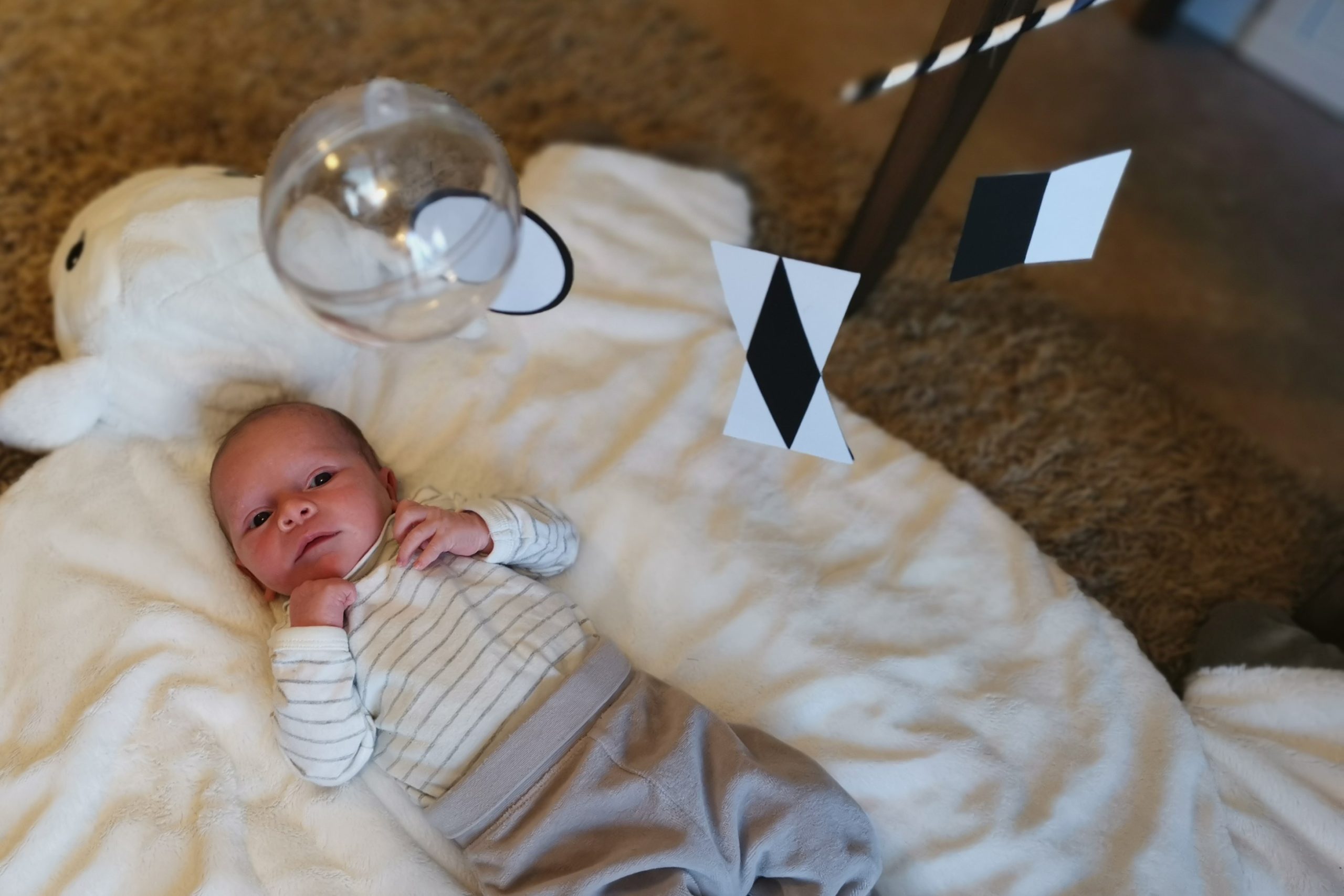
0–1 Months: Visual Magic
Worth it:
- Montessori Munari baby mobile (black & white contrast)
- Movement Mat
- Unbreakable mirror for tummy time
Skip: Plush toys, noise-makers
🖤 Try the DIY Montessori Munari Mobile Kit to start with purpose.
2–3 Months: Color & Focus
Worth it:
- Octahedron mobile (introduces primary colors)
- Gobbi mobile (shade gradation teaches visual depth)
- Dancers mobile (visual tracking skills)
Skip: Grasping toys—your baby’s not quite there yet.
💡 These are part of our DIY visual development kit.
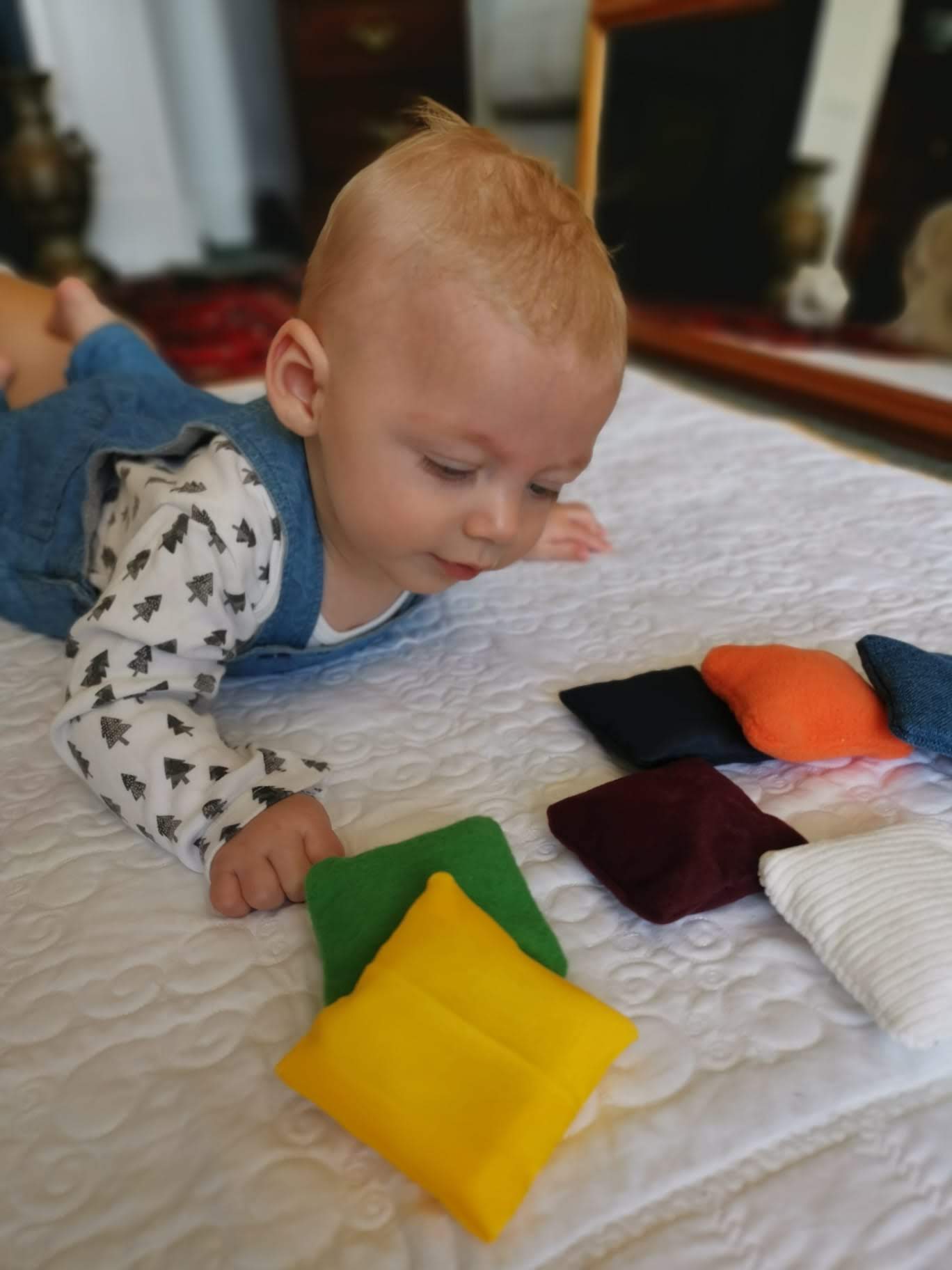
3-5 Months: Time to Reach and Grab
Worth it:
- Montessori Grasping Beads
- Wooden grasping rings
- Interlocking discs
- Sensory bean bags with texture variety
Skip: Teethers with lights, battery-powered toys
👶 Our DIY sensory bean bag kit is designed for this stage.
6–9 Months: Cause & Effect Explorers
Worth it:
- Bell cylinders
- Object permanence boxes
- Treasure baskets
Skip: Baby apps, flashy gyms
🎁 Find sensory toys that encourage grasping, tossing, and exploring here.
9–12 Months: Little Problem Solvers
Worth it:
- Posting boxes
- Simple knob puzzles
- Scooping + sorting tools
Skip: “Talking” toys that say letters and colors
Real Talk: What I Regret Buying
That €45 singing octopus toy with flashing lights and ABC songs? Total waste of money. It ended up buried at the bottom of the toy basket after one confused glance from my baby. But the €5 baby mobile I made with some pre-cut black-and-white shapes? She stared at it for weeks. Her eyes would follow the movement slowly, her body completely still in concentration. I’d never seen her that focused before.
So when people ask me, “Are Montessori toys worth it?”, I always say:
👉 It’s not about how many toys you have. It’s about how meaningful they are—and often, the best ones are the ones you make yourself.
Final Thoughts
Are Montessori Toys Worth It for You?
If you’re drawn to the calm, thoughtful rhythm of Montessori parenting, then yes—Montessori toys are 100% worth it. They won’t clutter your house or overstimulate your baby. Instead, they’ll invite slow moments, spark learning, and build connection.
You don’t need to buy everything. But a few meaningful, age-appropriate toys can make all the difference.
Let’s Build Something Beautiful Together
If you’re ready to get started, I’ve made it easy for you.
🧵 Check out my DIY Montessori Kits — mobiles, sensory play, and visual tools designed for newborns and up.
You’ll get everything you need—pre-cut, organized, and beautiful—so you can focus on what matters: making something with love.
📥 Plus, grab your free Montessori Guide to Baby Toys (0–12 months) right here.