
Concentration is often seen as something that develops later in childhood, yet it begins much earlier. Even in the first months, babies show moments of deep focus — watching a mobile, following a shadow, or repeating the same movement again and again. These early moments are the foundation of baby concentration, even if they are not always recognised as such.
In Montessori, concentration is not something we need to teach. It is something we need to recognise and protect, an idea closely connected to the concept of the work of the child. When we begin to see it this way, our role shifts. Instead of trying to create focus, we start to notice when it is already there, and allow it to continue.
How Baby Concentration Begins with Observation
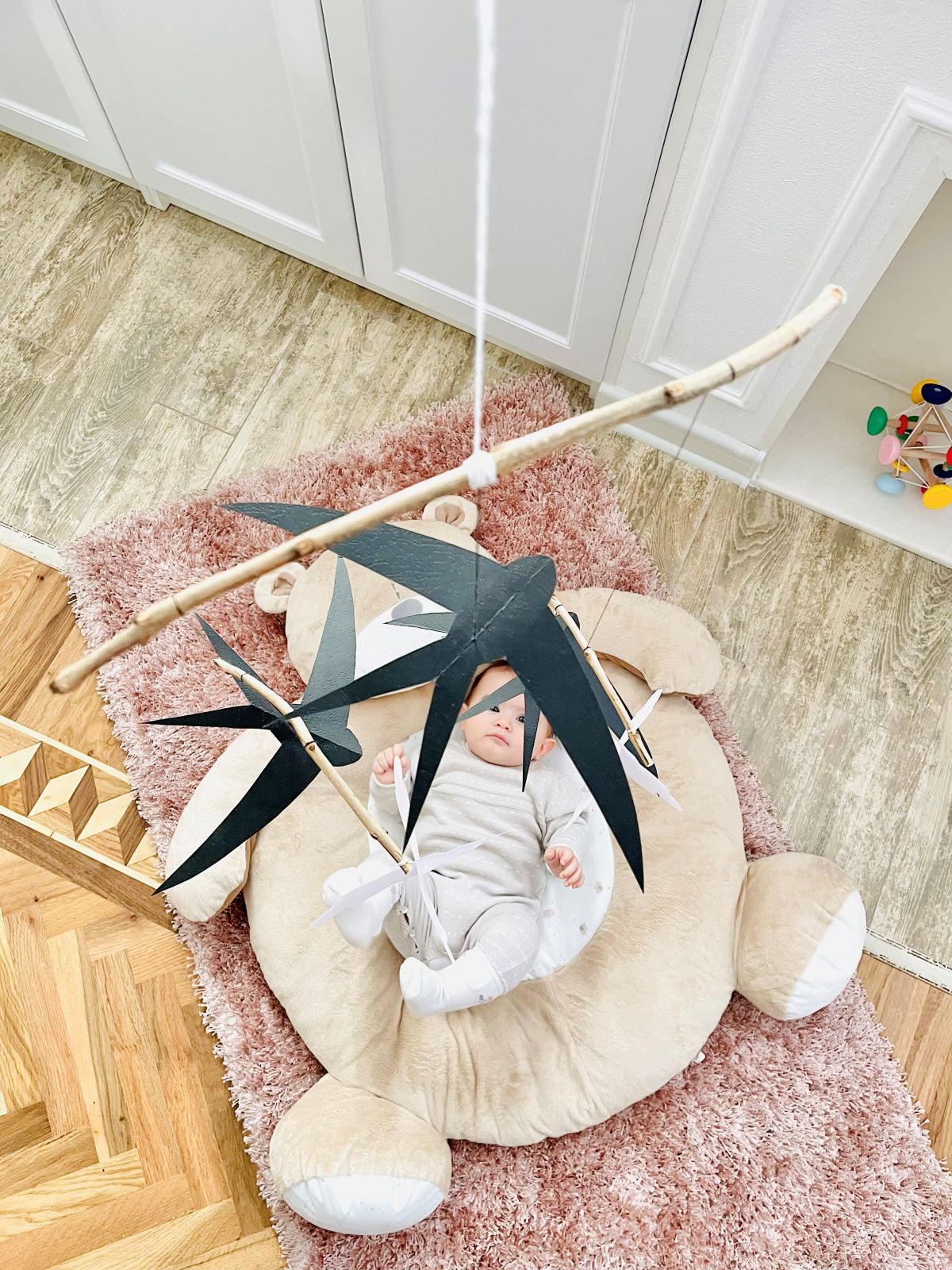
What looks like stillness is often active work. A baby watching a mobile is not passively entertained. They are tracking movement, organising visual input, and building the foundations of attention.
These early moments of concentration are often fragile. They can be easily interrupted, not because the baby cannot focus, but because the environment does not always support it. A sudden noise, a quick movement, or even a well-intentioned interaction can break the flow before it has a chance to deepen.
Understanding this changes how we respond. Instead of filling every quiet moment, we begin to allow space for observation to unfold.
Allowing concentration to unfold
One of the simplest ways to support concentration is to avoid interrupting it unnecessarily. When a baby is focused on something, whether it is an object, a movement, or even light and shadow, they are building their ability to sustain attention. When we see a baby fixed on a single point of interest, we are witnessing the construction of the mind. Protecting this state of ‘flow’ is essential, as early experiences with focus are what allow the brain to build the capacity for deep concentration and self-regulation later in life.
Interrupting this process can make it harder for them to return to that same level of focus. Of course, daily life does not always allow us to wait. But when possible, giving the baby a few more moments before stepping in can make a significant difference.
These quiet periods, where nothing seems to be happening, are often the moments where the most important work is taking place. Supporting baby concentration often begins with simply allowing these moments to continue.
Following the baby’s interest
Rather than directing attention, Montessori encourages us to follow it. Babies are naturally drawn to what they are ready to explore, and when materials match their developmental stage, they invite focus without the need for stimulation.
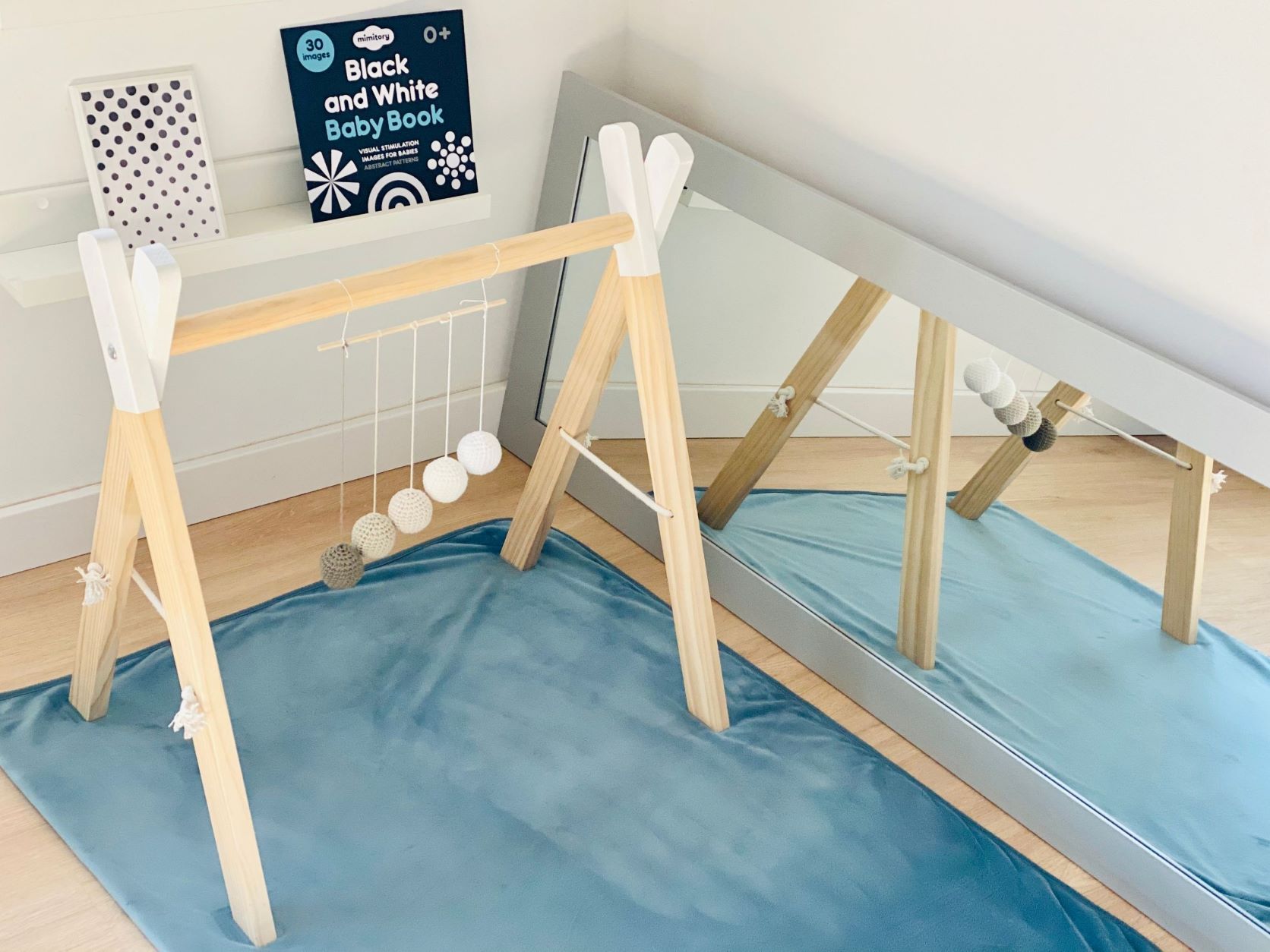
This is where the environment becomes important. When a small number of appropriate materials are accessible, the baby can choose where to direct their attention. This choice supports both independence and concentration.
When we step back and observe, it becomes easier to see what holds their interest, and to offer materials that build on that interest rather than interrupt it.
Repetition and concentration
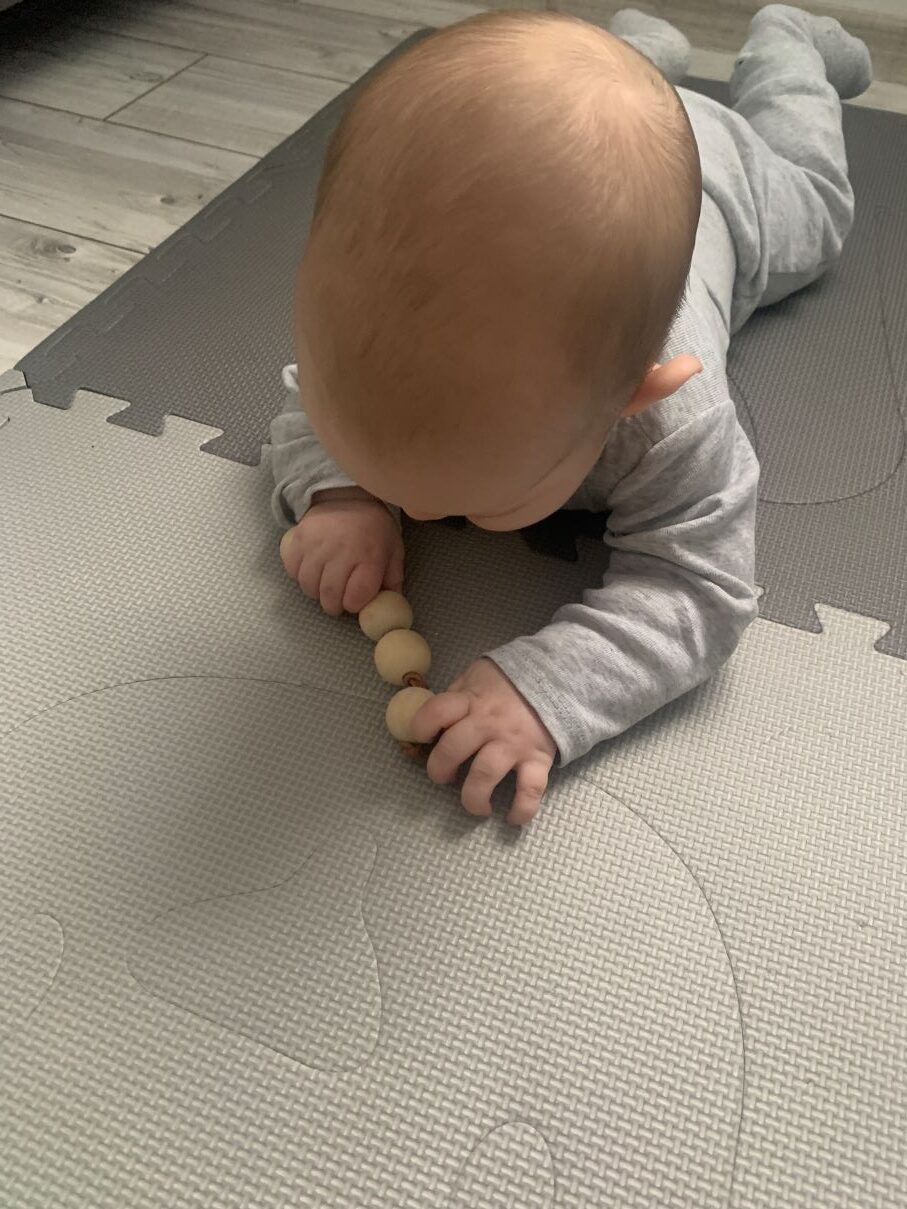
Repetition plays a central role in the development of baby concentration. What may seem repetitive from an adult perspective is, for the baby, a process of refinement.
Each repeated movement strengthens coordination and builds understanding. Over time, actions become more controlled, and attention becomes more sustained. The baby is not repeating out of habit, but because the repetition itself supports development.
Allowing space for repetition, without rushing or redirecting, gives concentration the time it needs to grow.
The role of materials
The materials we offer can either support baby concentration or disrupt it. Simple, open-ended objects invite the baby to act, without overwhelming them with too many features at once.
Materials such as Montessori mobiles, tactile objects, or early sensory tools provide clear, focused experiences. They allow the baby to engage with one aspect at a time, whether it is movement, texture, or sound.
Offering fewer, more intentional materials often supports concentration more effectively than offering many. When there is less to compete for attention, it becomes easier for focus to settle and deepen.
Reducing distractions
A calm environment plays an important role in supporting baby concentration. Background noise, visual clutter, or constant movement can divide attention, making it harder for the baby to remain engaged with a single experience.
Creating a quieter, more ordered space does not mean removing all stimulation. It simply means being mindful of what surrounds the baby while they are exploring. Small changes, such as turning off the television or limiting visual distractions, can have a noticeable effect.
A prepared environment allows the baby to focus without competing input, supporting longer and more meaningful periods of concentration.
Observation as a guide
Observation is one of the most important tools we have. By watching closely, we begin to notice patterns — when the baby is deeply engaged, when they are repeating an action, and when they are ready to move on.
Babies rarely become bored in the way we might expect. Instead, they move between periods of focus and moments of rest. Recognising these shifts helps us decide when to step in and when to remain in the background.
Often, the best support we can offer is simply to observe without interrupting.
Final Thoughts
Baby concentration in early development does not need to be trained or encouraged through external stimulation. It emerges naturally when the environment supports it.
By allowing time, offering appropriate materials, and reducing unnecessary interruptions, we create the conditions where concentration can grow. In these moments of quiet focus, the foundations of learning are already being built.
Further Reading
If you’d like to explore how baby concentration connects to materials and choices, these articles may also be helpful:
- Montessori Baby Play
How Montessori understands early activity as meaningful work rather than passive play. - Are Montessori Baby Toys Worth It?
A closer look at what makes a material truly useful, and how to choose with intention rather than quantity.
To the montessoriedited.com owner, Your posts are always interesting.
Thank you! Glad to have you on board.