
Montessori materials are often one of the first things parents notice when they begin exploring this approach. But very quickly, another question follows: should you buy or DIY Montessori materials? Their calm appearance, natural textures, and simple forms feel very different from the typical baby products available in most shops. At the same time, they can also be expensive, especially when you consider how many materials a baby may use in the first months and years.
This naturally leads to a practical question: when it comes to Montessori materials, should you buy them or make them yourself? The answer is not about choosing the “right” option in general, but about understanding what works in your own situation. What matters most is not the origin of the material, but how it supports your baby’s development and how realistically it fits into your daily life.
What matters more than buying or DIY
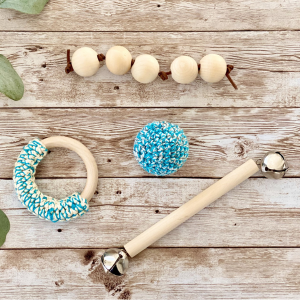
In Montessori, the focus is not on the material as an object, but on the experience it offers to the child. A well-prepared material is simple, purposeful, and appropriate for a specific stage of development. Whether it is bought or made becomes secondary when these qualities are present.
This is where the question of buying versus DIY often shifts. A carefully prepared DIY material can support development just as effectively as a purchased one, provided it maintains clarity and proportion. At the same time, a beautifully made object that does not match the child’s stage will not be used meaningfully. When deciding between buying or DIY Montessori materials, it helps to look beyond appearance and focus on function. For example, some families choose a DIY Montessori mobile set to prepare the first months in advance, rather than sourcing each stage separately.
One of the key ideas in Montessori is that the value of a material lies in the experience it offers. You can read more about this approach in Montessori philosophy for babies.
Should you buy or DIY Montessori materials? Understanding the trade-off
When you look at the decision more closely, it usually comes down to a balance between time and cost. Some materials are used for a short period, supporting a very specific stage, while others remain part of the environment for much longer. This difference alone can influence whether it feels worthwhile to invest money or time.
If you have time before your baby arrives, preparing materials yourself can be a calm and intentional way to get ready. It allows you to understand how each material works and to prepare them at your own pace. On the other hand, if your time is limited, ready-made Montessori materials can simplify the process and allow you to focus on observing your baby rather than making decisions or assembling objects.
How long will the material actually be used?
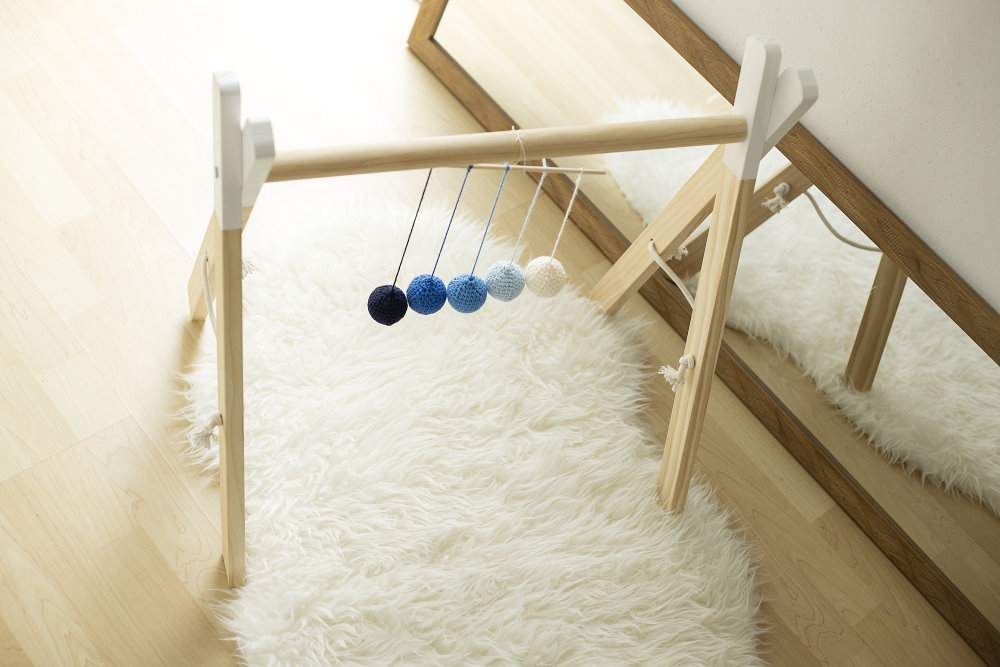
When deciding whether to buy or DIY Montessori materials, it helps to look at how long each material will be used and how precise it needs to be. Some materials, such as visual mobiles, are used for a short, clearly defined stage. You can explore how these progress in the Montessori visual mobile guide. Others remain relevant for months, offering repeated opportunities for exploration.
When a material has a short lifespan, a simpler or DIY version may feel more appropriate. When it is used for longer, investing in a ready-made version may feel more worthwhile. Thinking in terms of duration helps move the decision away from emotion and toward practical use, making it easier to choose between buying and DIY.
Space and long-term considerations
Space is another factor that often becomes more important over time. Montessori materials tend to accumulate gradually, and what begins as a simple setup can expand more quickly than expected. Storage, rotation, and long-term use all become part of the picture.
If space is limited, it may not make sense to invest in every material. Some families choose to rotate a smaller number of items, pass them on once they are no longer needed, or focus only on what feels essential. If you are planning for more than one child, you may look at materials differently, seeing them as something that can be reused. These considerations often clarify whether buying or DIY Montessori materials makes more sense in your situation.
When it makes sense to DIY Montessori materials
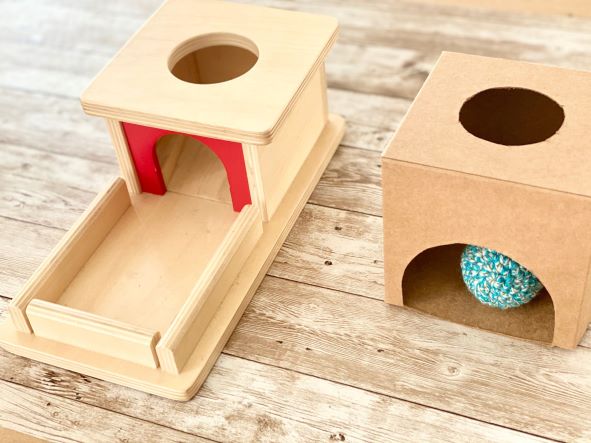
DIY Montessori materials can be a good choice when you have both the time and the inclination to make them. In this case, the process of preparing the materials becomes part of how you prepare for your baby. It allows you to slow down, understand each stage more deeply, and create something that fits your own environment.
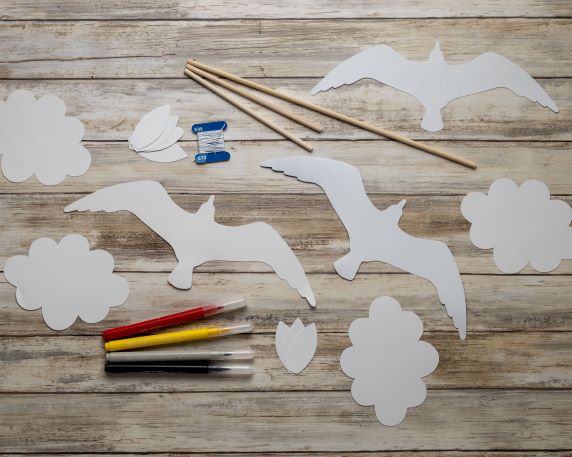
Using a digital assembly guide can make this process more accessible, as it provides the correct proportions and structure without requiring you to design everything yourself. This approach reduces cost while still maintaining the integrity of the material, as long as the focus remains on simplicity and clarity.
When it’s better to buy Montessori materials
There are also situations where buying Montessori materials is simply the more practical choice. Some materials rely on balance, proportion, or precise construction to function properly. In these cases, a ready-made version can save time and ensure that the material works as intended from the start.
For many parents, the decision to buy Montessori materials is not about preference, but about capacity. When time is limited, reducing the number of decisions and preparations can make the entire experience feel more manageable.
If you’d like a simpler way to prepare these materials without starting from scratch, you can explore the full range of Montessori visual baby mobiles.
A simple way to decide
Rather than choosing one approach for everything, it is often more useful to decide case by case. Looking at how long a material will be used, how much time you have available, and whether precision matters can help guide each decision.
This way, the question of whether to buy or DIY Montessori materials becomes a practical process rather than a fixed rule. It allows you to adapt as your situation changes, while keeping the focus on what your baby actually needs.
If you’re building your setup step by step, you can read more about preparing a Montessori baby environment. You can read this guide on which Montessori baby toys are worth it at each stage.
Final thoughts
Montessori materials are often appreciated for their appearance, but their real value lies in their clarity and purpose. Whether you choose to buy Montessori materials or create them yourself, the outcome can be equally effective when the material matches your baby’s stage and is offered with intention.
Whether you choose to buy or DIY Montessori materials, what matters most is that they match your baby’s stage and are offered with intention.
If you are navigating the pressure to acquire a complete collection of materials, this perspective on the true purpose of the Montessori environment offers a helpful reminder: our role as observers is far more essential than the materials themselves.
Further reading
If you’d like to explore how these decisions fit into the bigger picture:
- Montessori pregnancy preparation – a personal perspective on slowing down and preparing your mindset before your baby arrives
- Montessori Alternatives to Popular Baby Toys (0–6 Months) – Explore simple Montessori alternatives to common baby toys that support focus, movement, and early development.