
When you first come across the Montessori approach, it’s easy to feel pulled into choosing more and more materials. Everything looks purposeful, simple, and thoughtfully designed. But very quickly, another question appears:
Do you really need all of this?
For many parents, this is where a more precise question begins to take shape:
which Montessori baby toys are actually worth it in the first year — and which ones truly support development?
Because in the first year, it’s not about how much you offer. It’s about when you offer it.
A well-timed material can hold attention for a long time, while another — even if beautifully made — may be completely ignored if it appears at the wrong moment.
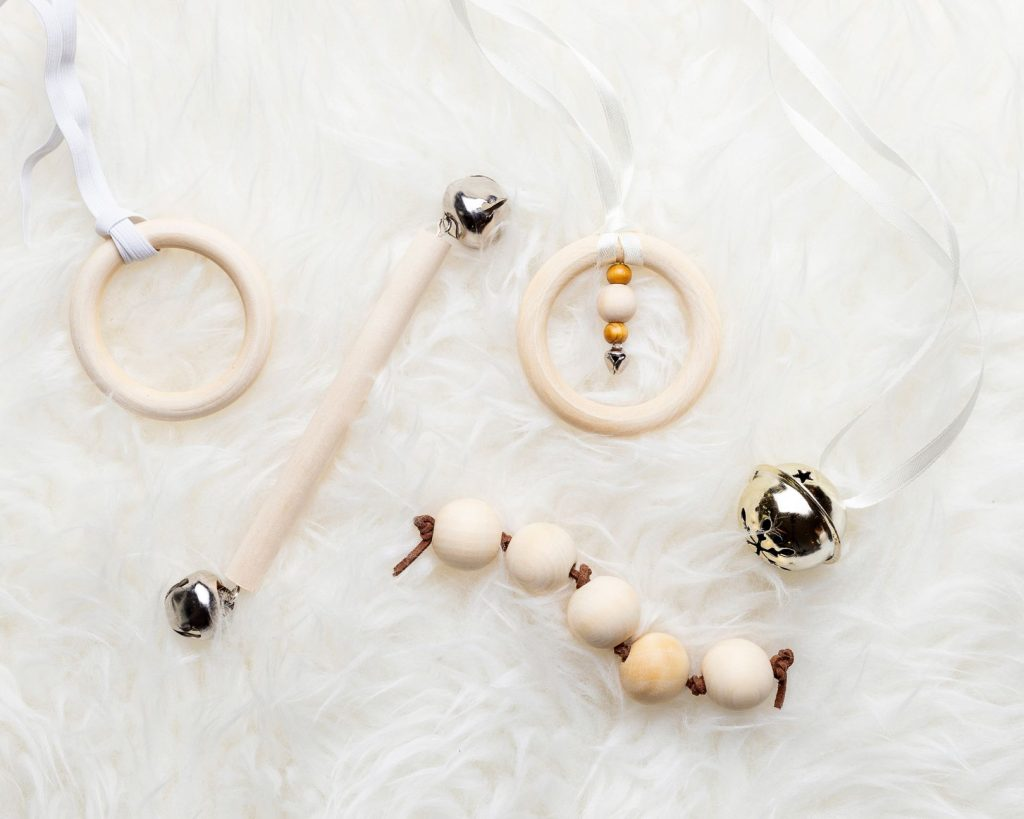
What Makes a Montessori Baby Toy Worth It?
A Montessori toy offers real value when it presents one clear experience — at the right moment.
In the early months, the goal is not entertainment. Attention, movement, and understanding are built gradually, mostly through repetition. Materials that try to do too much at once often interrupt this process rather than support it.
The toys that are truly worth it tend to:
- focus on one clear experience
- match the baby’s current stage
- allow repetition without distraction
This is where it becomes easier to recognise which Montessori baby toys are worth it — and which ones are likely to remain unused.
Which Montessori Baby Toys Are Worth It at Each Stage?
The decision becomes clearer when you look at development step by step, instead of trying to choose everything at once.
0–3 months: the stage of observation
In the early weeks, your baby is not ready to grasp or manipulate objects. Their world is visual — contrast, movement, and gradual organisation. This is where Montessori visual mobiles are genuinely worth it. These are usually the first Montessori baby toys parents choose because they reliably support this stage.
The progression from the Munari to the Octahedron, Gobbi, and Dancers mobile follows visual development step by step. They are used for a relatively short time, but they are difficult to replace. Their design is intentional, and when introduced at the right moment, they support deep and sustained attention. Their design is intentional, and when used at the right time, they support deep focus.
Most other toys at this point — especially plush or noisy ones — are simply not relevant yet.
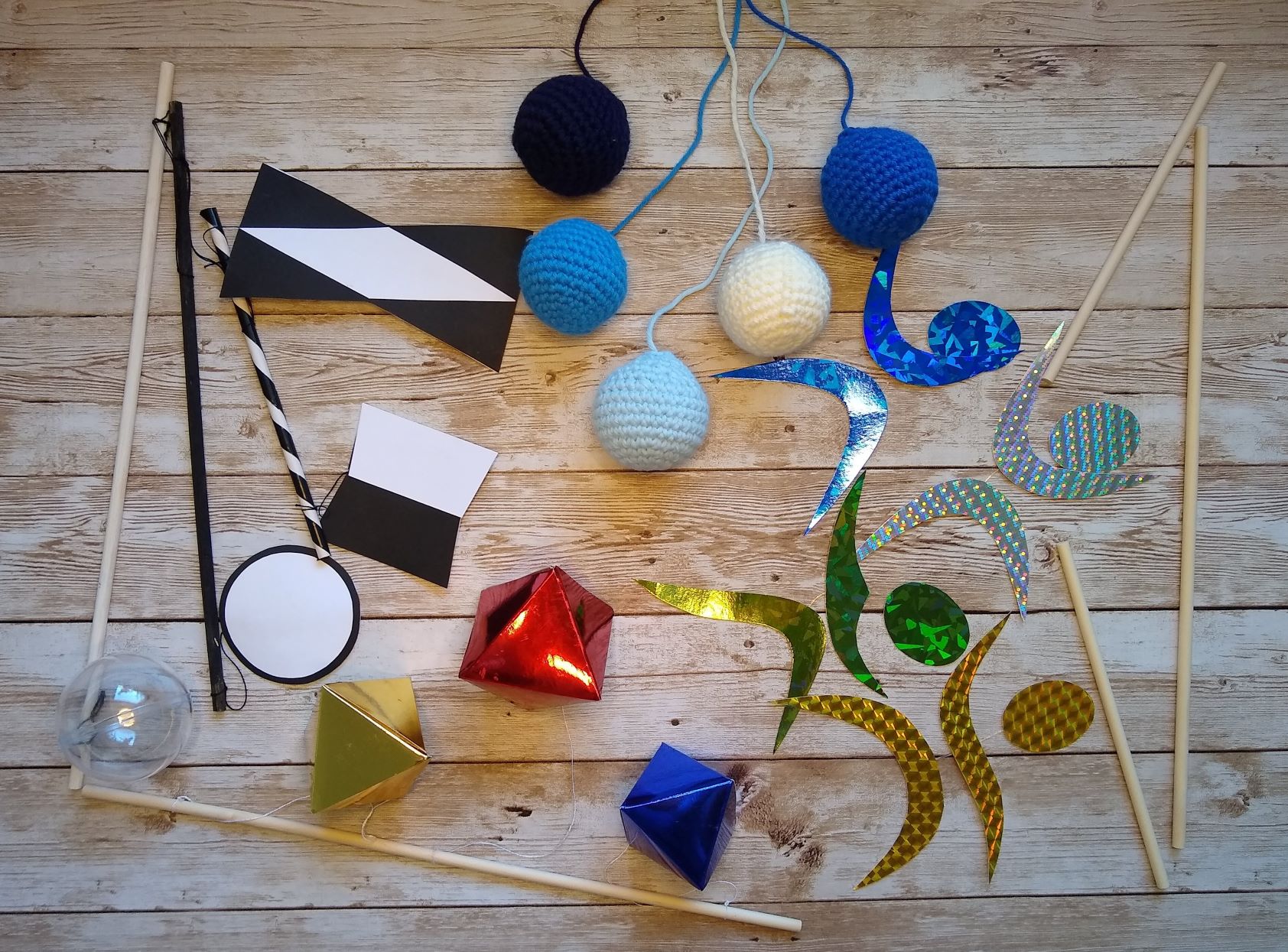
For many parents, this is the point where it helps to prepare ahead, because the sequence and timing of the mobiles matter — a well-prepared mobile set removes that uncertainty completely.
3–6 months: the beginning of movement
Around this stage, your baby begins to reach. Movement becomes intentional, and the hands start to explore.
Now, certain Montessori baby toys become worth introducing. Grasping beads, interlocking discs, and wooden rings support coordination between the eyes and the hands. A crochet teething ring adds tactile contrast and begins to connect hand and mouth exploration.
This is also the point where many parents compare different options, but simple tactile materials tend to be used longer and more consistently than more complex toys. Whether you choose to make them or use prepared versions, their value lies in how naturally they respond to your baby’s movement.
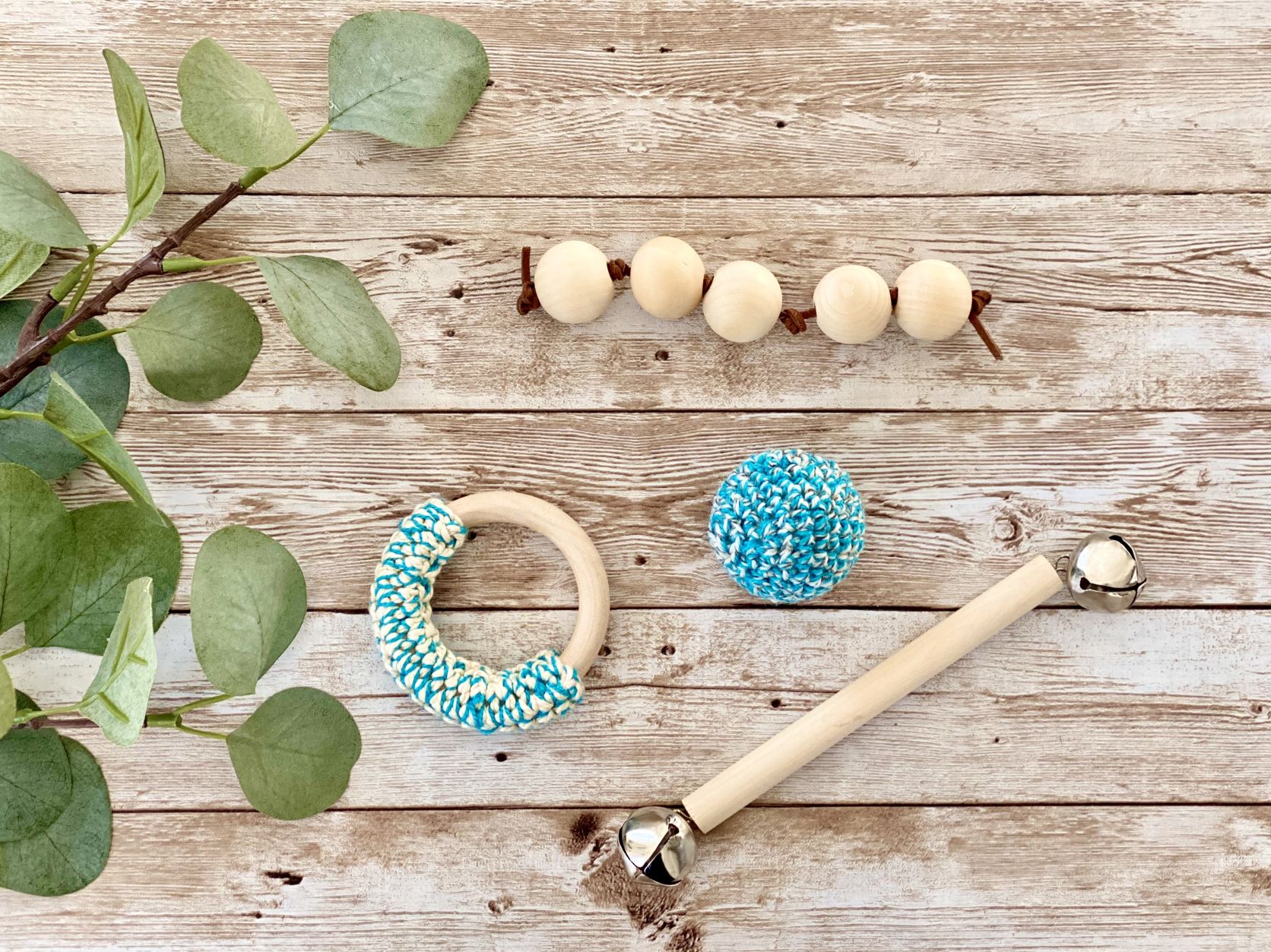
At this stage, it often works best when a small set of well-matched materials is available, allowing the baby to return to the same experience in different ways.
6–9 months: discovering cause and effect
As movement develops, your baby begins to explore cause and effect — what happens when they act on the world. At this stage, certain materials require more precision to function clearly.
Materials like the Montessoi bell rattle or the object permanence box rely on precision. It works best when it is well proportioned and consistent in its design.
A treasure basket play can also be highly valuable here. A small collection of objects with different textures and weights provides rich sensory exploration without overstimulation.
9–12 months: movement with intention
By the end of the first year, your baby’s movements are more controlled and purposeful. Now, simple problem-solving materials begin to make sense. Posting activities, basic puzzles, and objects that involve placing or sorting support coordination and persistence.
At this stage, learning comes through movement and repetition, not instruction.
Toys that attempt to teach letters, numbers, or colours are still unnecessary.
So… Which Montessori Baby Toys Are Actually Worth It?
Looking across these stages, a clear pattern begins to emerge. Montessori baby toys are worth it when they:
- appear at the right time
- offer one clear experience
- allow repetition without distraction
Some materials require precise design to work well. Others remain effective even in simpler forms. What matters most is not how they are made, but what they offer at that moment in development.
If you’re also thinking about how to approach materials more generally, the buy or DIY Montessori materials guide can help you build a clearer framework before choosing specific items.
Final Thoughts
By now, the pattern is clearer: the most useful materials are the ones that match your baby’s stage, attention, and current way of exploring.
Montessori baby toys are worth it not because they are different, but because they are intentional. They do less, but they do it clearly. And for a baby just beginning to understand the world, that clarity makes all the difference.
If you’d like a simple way to begin without overcomplicating things, starting with the visual mobile sequence or a small sensory set is often enough to cover the first stages without overbuying.
FAQ: Which Montessori baby toys are worth it?
Which Montessori baby toys are worth it for a newborn?
In the first weeks, visual mobiles like the Munari mobile are worth it because they support early visual focus and tracking.
Do I need to buy all Montessori baby toys?
No. A few well-chosen materials that match your baby’s stage are more effective than a large collection.
Are DIY Montessori baby toys as effective as bought ones?
Yes, as long as they are simple, well-proportioned, and appropriate for your baby’s stage.
When should I introduce Montessori toys?
From birth, starting with visual materials, and gradually moving to grasping and cause-and-effect toys as your baby develops.
Further reading
If you’d like to explore this step by step:
- Montessori pregnancy preparation — a personal perspective on preparing before birth
- Montessori baby environment — how to create a calm and functional space