
When a baby is born, many parents want to offer the very best from the very beginning. This guide explains Montessori mobiles by age, showing when each mobile is introduced and how it supports development from birth. to help families understand what a baby actually needs at each stage of early development—before getting overwhelmed by the endless selection of baby toys and so-called “must-haves” aimed at newborns.
This is especially true when it comes to toys. The market is saturated with items designed for babies—many visually appealing, some even tempting for adults. But visual beauty alone does not equal developmental suitability. Some toys overwhelm the senses, others offer no real developmental value, and some are made from questionable materials.
So let’s pause and ask a more useful question:
What does a baby actually need at each stage of early development?
That is exactly what we help clarify by aligning Montessori mobiles by age with a baby’s real visual development, rather than marketing trends.
Montessori Mobiles by Age: Overview
Montessori visual mobiles are introduced progressively, in line with the natural development of a baby’s vision. Each mobile builds on the previous one, offering just enough complexity—never more than the child is ready for.
Before looking at the order and timing of Montessori forgók, it helps to understand what a Montessori prepared environment really means for babies — because the materials only make sense when seen in context.
All Seven Montessori Visual Mobiles at a Glance
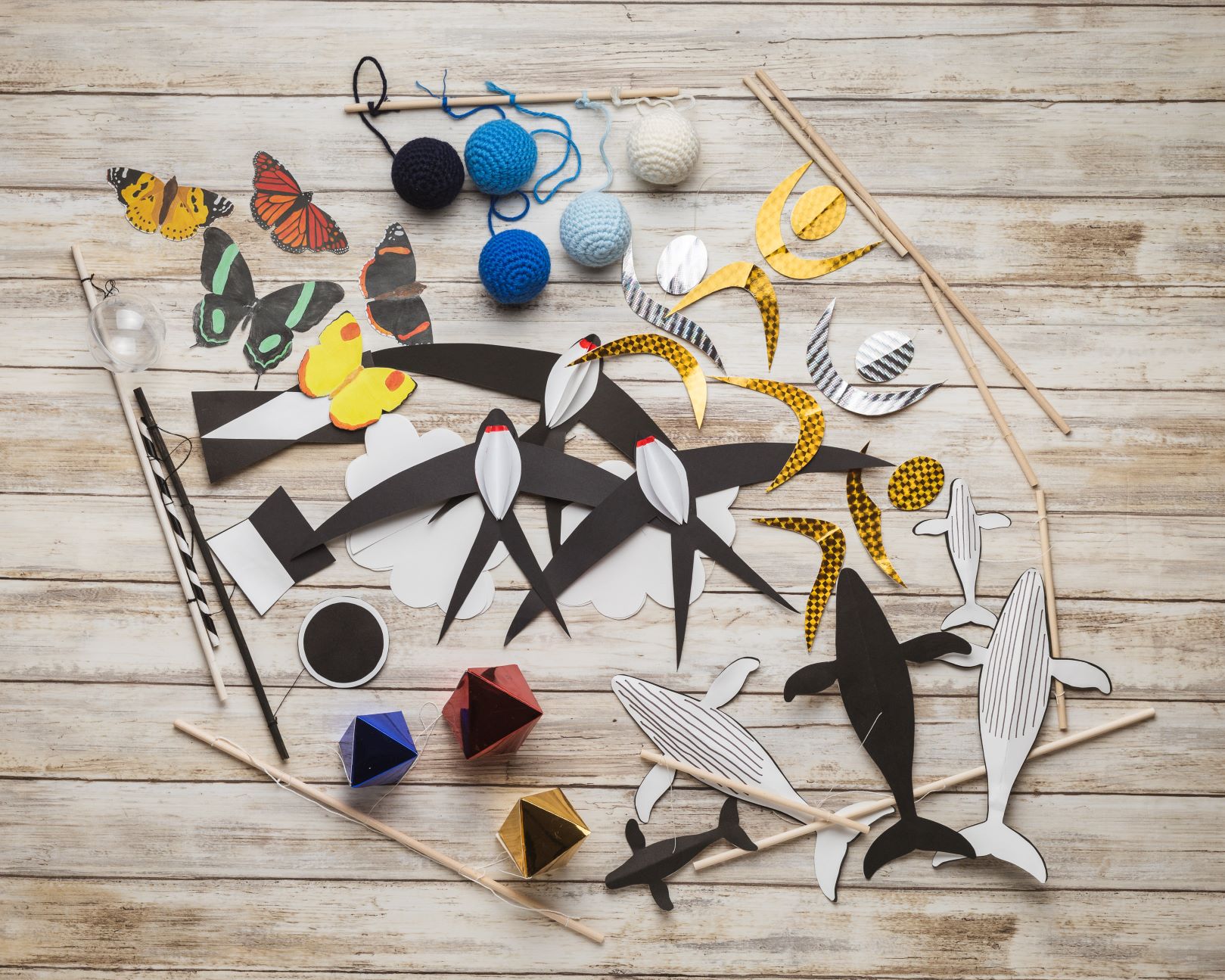
Very Tiny Babies: Before the Mobiles
Newborn babies do not need toys. Their primary needs are physical care—feeding, sleeping, changing, bathing—and, most importantly, human connection.
At birth, vision is the least developed sense. Newborns can only perceive objects that are high-contrast and very close—approximately 30 cm / 12 inches. Interestingly, this is about the distance between a nursing baby’s eyes and a caregiver’s face.
At this stage, the most appropriate visual support is black-and-white, high-contrast imagery, such as simple cards or graphic patterns.
0-3 months: Montessori Visual Mobiles
Montessori visual mobiles designed for the first months of life are not toys. They serve a very specific purpose: to support the gradual development of vision.
Each mobile:
- isolates the visual sense,
- uses calm, predictable movement,
- introduces complexity only when the baby is ready.
Read more about why Montessori mobiles are so special in this post.
The Munari Mobile (from ~2–3 weeks)
From around two to three weeks, babies are ready to move from static observation to gentle movement. This is when the Munari mobile is introduced—the first in the Montessori visual mobile sequence.
Its black-and-white elements, simple geometry, and slow movement support early visual tracking without overstimulation.

The Octahedron Mobile
As a baby’s vision develops, strong, clear colours become easier to perceive. The Octahedron mobile introduces primary colours and three-dimensional form, gently increasing visual complexity.
This mobile supports the transition from flat contrast to spatial perception.

The Gobbi Mobile
Once babies can perceive subtle differences between shades, the Gobbi mobile becomes appropriate within the Montessori mobiles by age timeline. By presenting subtle colour gradations, the Gobbi mobile challenges the baby’s increasingly refined vision without introducing unnecessary complexity.

Some variations of the Gobbi mobile, such as crochet versions, are often introduced slightly later. While they still support visual discrimination through colour gradation, their softer material also responds gently to a baby’s movement, creating a natural bridge between observation and early interaction.
If you’re interested in the specific role of the crochet Gobbi mobile and how it fits into early development, I’ve written a separate article that explores this transition in more detail.
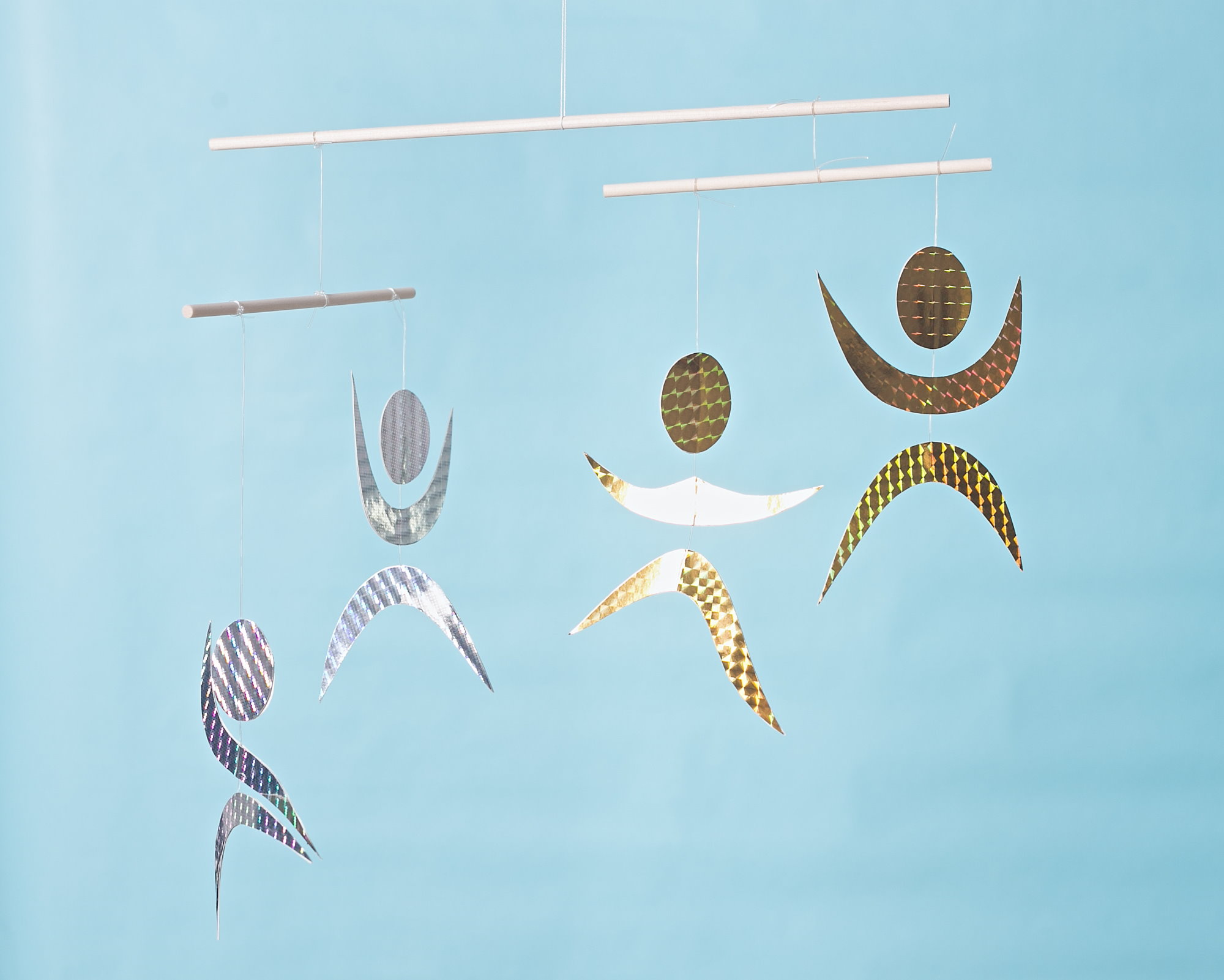
The Dancers Mobile
The Dancers mobile introduces more complex movement and light reflection. The figures appear to “dance,” thus supporting the baby’s ability to follow irregular movement and sustain visual attention for longer periods.
3 Months and Beyond: Animal Mobiles
From around three months, the Montessori mobiles by age becomes more flexible. By this stage, a baby’s visual system is more mature, allowing for longer periods of focused observation and greater tolerance for visual complexity. These mobiles no longer need to follow a strict order and can be alternated based on your baby’s interest and engagement.
Animal mobiles typically include:
These mobiles introduce recognisable, realistic forms and gentle, flowing movement inspired by the natural way animals move through air or water. Unlike the earlier geometric mobiles, animal mobiles invite the baby to observe shape, direction, and rhythm in motion, supporting visual tracking, sustained attention, and visual memory.
Because of their aesthetic appeal and calming presence, animal mobiles often remain engaging well beyond the early months. Many parents find that they are enjoyed not only by babies, but also by older children and adults, making them a natural bridge between the early Montessori visual materials and the next stages of exploration.

Life After the Visual Mobiles: Tactile Mobiles
When babies begin to reach and grasp, they transition from observation to interaction. The Montessori Mobiles by age continues with the Tactile Mobiles, while visual mobiles can still remain part of the environment.
Start with:
Then progress to:
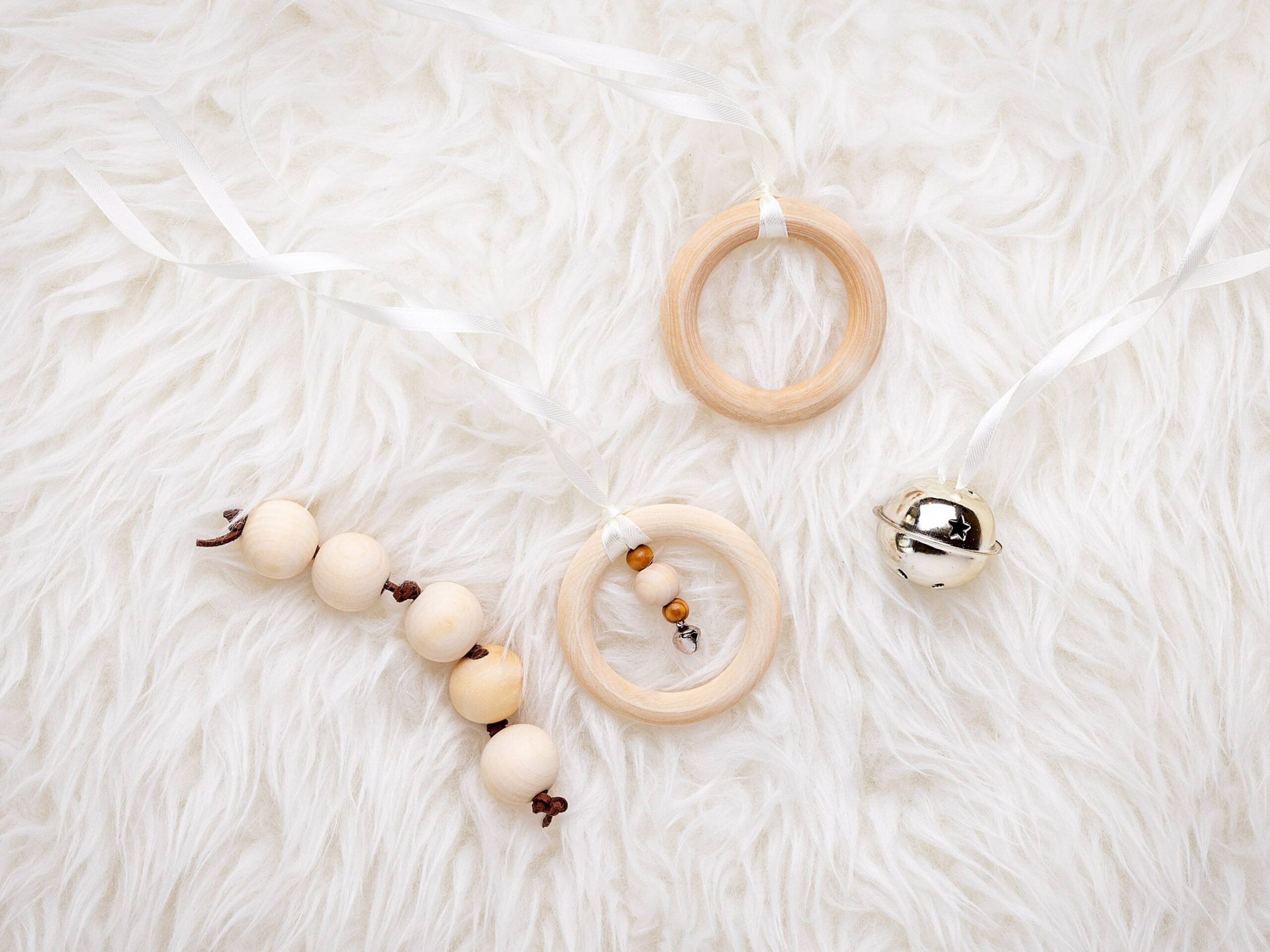
Always supervise your baby when using a tactile mobile.
Sensory Toys and Hands-On Exploration
Once grasping, holding, and releasing are mastered, babies actively seek sensory input. At this stage, learning happens primarily through the hands and the senses. Objects with varied textures, weights, and sounds become especially fascinating, as they allow the baby to explore cause and effect through direct interaction.
This is where sensory toys play an important role. Well-chosen sensory materials support tactile exploration, hand–eye coordination, and the integration of sensory information. By touching, squeezing, lifting, and releasing, the baby refines motor control while building an understanding of texture, resistance, and movement.
Simple sensory toys, such as Sensory Bean Bags or the textured Fabric Ball, offer rich sensory feedback without overwhelming the child. Their softness, varied surfaces, and manageable weight make them ideal for early exploration. For parents who enjoy sewing, DIY sensory toys can also provide a meaningful way to create developmentally appropriate materials that grow with the child’s abilities.

Montessori Expectations and Common Mistakes
Before moving on, it’s important to understand common Montessori misconceptions and set realistic expectations—both toward the materials and toward your baby.
Final Thoughts
The Timeline of the Montessori Mobiles by age supports a baby’s development from birth through the early months by following the child—not trends or aesthetics. This is one reason it often helps to slow down before buying Montessori baby materials and first spend time understanding what your baby is actually working on developmentally.
If you would like to create these mobiles yourself, you can find all related DIY resources in my store. To better understand how babies respond to Montessori mobiles, continue reading here.